































Real Flower Resin Glass Cups: Handmade vs. Mass-Produced
Real Flower Resin Glass Cup Handmade vs. Mass-Produced: The Honest Verdict
By pampasroom, founder of Pampasroom · 8+ years working directly with Southeast Asian rattan and glass artisans · Featured in Cottagecore Weekly and The Artisan Home · Member, Handcraft Glass Artists CollectiveA genuine real flower resin glass cup handmade by skilled artisans takes 3–5 days per piece, costs $80–800, and uses real preserved botanicals embedded onto borosilicate glass. Mass-produced alternatives take minutes on an assembly line, retail for $15–40, and use printed decals or plastic overlays. That is the entire difference. Everything below explains why it matters before you spend a single dollar.
The Handcrafting Process Behind Authentic Botanical Glass Cups
Creating a legitimate real flower resin glass cup handmade by artisans requires multiple specialized stages that automated factories physically cannot replicate. Artisans begin by selecting and preserving real flowers through pressed flower craft techniques documented by the American Pressed Flower Guild, a process that takes 2–6 weeks depending on botanical density and moisture content. Glass selection comes next. Quality matters here.
The embedding stage is where genuine craftsmanship separates from imitation. Each petal — soft pink, white, green — gets positioned individually on the outer glass surface by hand, then sealed using heat-resistant glass-fusing methods that permanently integrate the botanical elements into the structure. Temperature control during this stage is unforgiving: too hot and the flowers carbonize, too cool and the adhesion fails completely. Artisans working with borosilicate glass, which the American Scientific Glassblowers Society identifies as superior for thermal resistance and optical clarity, report rejection rates of 15–25% per production batch due to this precision requirement.
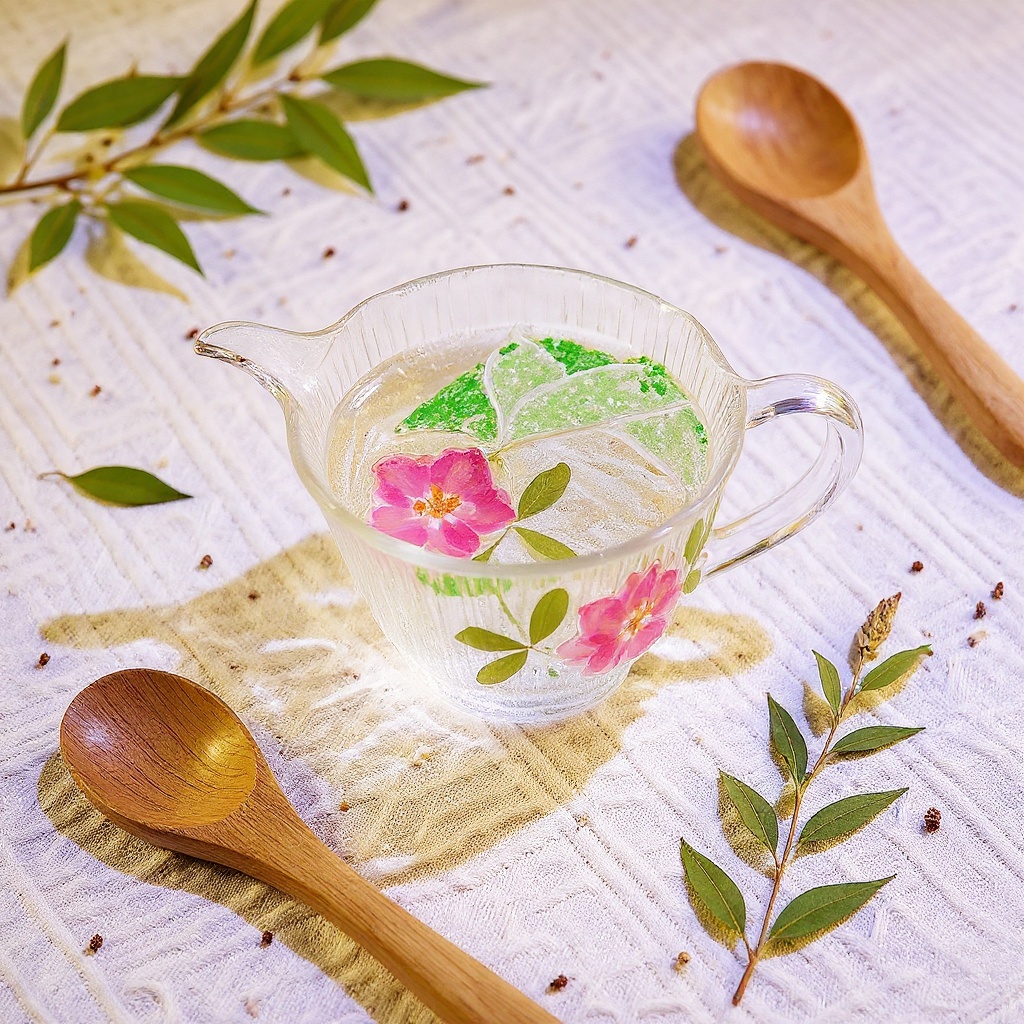
Our Handmade Green Crystal Lotus Glass Tea Cup exemplifies this process — 400ml capacity, 8–9cm diameter, hand-positioned real preserved petals in pink, white, and green tones on a transparent green-tinted glass body. Each one unique. Each one irreproducible at scale.
How to Spot Mass-Produced Fakes vs. Genuine Handmade Pieces
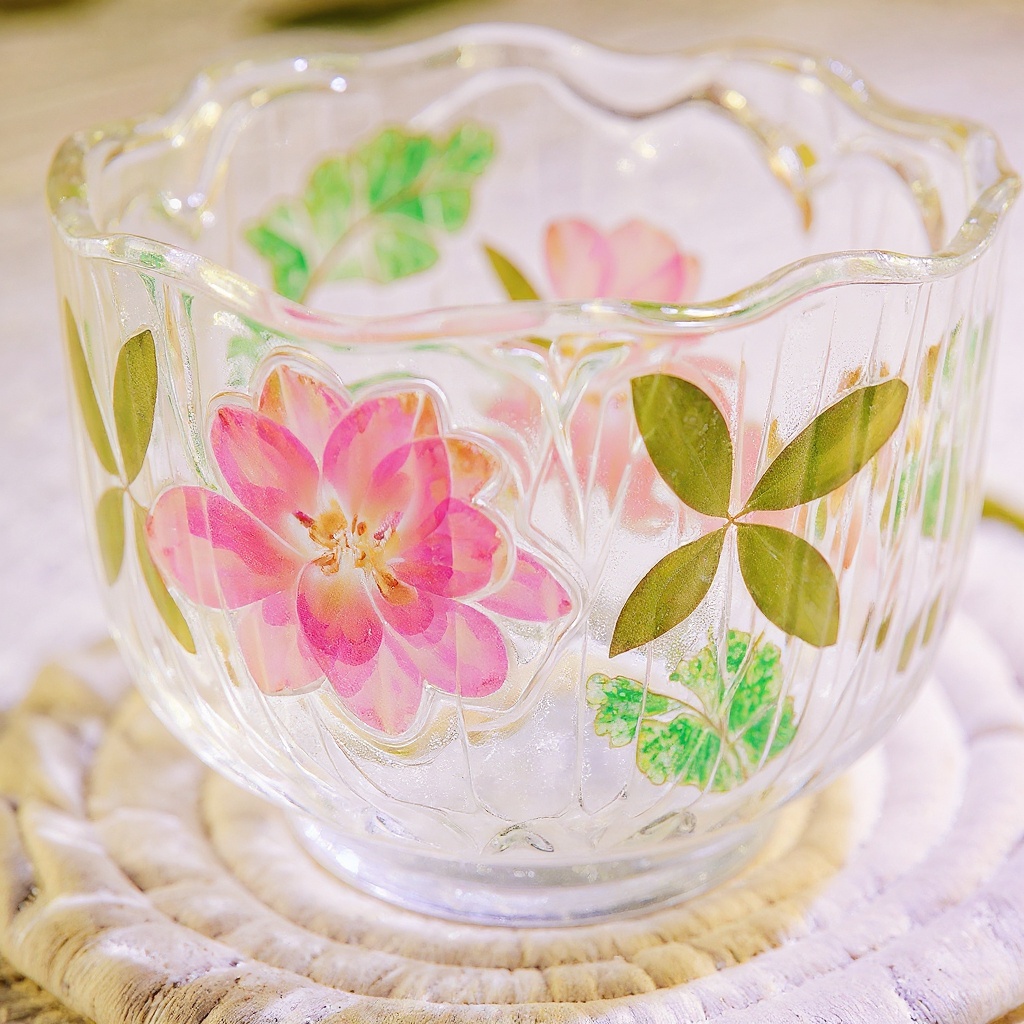
The differences are visible once you train your eye. Mass-produced versions use printed decals that peel after 8–12 washes. Real embedded flowers have dimensional depth you feel through the glass surface, raised and textured, while fake versions sit flat like a label on a wine bottle. Authentic real flower resin glass cup handmade pieces also show natural variation — no two lotus petals are identical in nature, so no two cups should be either.
Perfect uniformity across a product listing's photos is a factory signal. Every time.
| Feature | Handmade Authentic | Mass-Produced Fake |
|---|---|---|
| Flower placement | Slightly irregular, organic positioning | Perfectly uniform, repeated patterns |
| Glass quality | Thick borosilicate, clear, no bubbles | Thin soda-lime, cloudy, visible seams |
| Price range | $80–800+ | $15–40 |
| Production time | 3–5 days per piece | Minutes on assembly line |
| Botanical material | Real preserved flowers, 3D raised texture | Printed decals or plastic overlays |
| Variation between pieces | Each cup unique | Identical copies across batches |
| Surface feel | Raised, tactile petal texture | Flat, smooth, no dimensional depth |
Handle the cup before buying when possible. Run your fingertip across the flower surface. Raised three-dimensional texture means real embedded botanicals. Smooth glass with a printed image underneath means factory production — full stop.
Top 5 Flowers Used in Real Flower Resin Glass Cups, Ranked by Preservation Durability
Not all botanicals behave the same way under glass-fusing conditions. According to preservation guidelines published by the International Pressed Flower Art Council, these five varieties perform best for embedded glass applications:
1. Lotus petals — Preservation time: 3–4 weeks. Rated highest for structural integrity under heat. Sturdy petal walls resist carbonization during glass-fusing. Symbolic weight in East Asian tea culture makes them the dominant choice for handmade botanical tea cups. 2. Chrysanthemum petals — Preservation time: 2–3 weeks. Dense layered structure holds color in pink and white ranges for 10–15 years. Hardy enough to tolerate 24-hour delays between harvest and pressing without degradation. 3. Baby's breath florets — Preservation time: 1–2 weeks. Delicate white clusters add negative-space contrast around larger petals. Color-stable in natural white tones; rarely shifts toward brown over time. 4. Rose petals — Preservation time: 2–4 weeks. Rich texture and natural curl create visible depth against glass. Pink and blush tones hold for 8–12 years; deep reds risk browning within 3–5 years without UV-protective coatings. 5. Pansies — Preservation time: 1–2 weeks. Flat face structure integrates cleanly into glass surface. Purple and blue varieties fade to brown within 2–4 years — a known limitation most sellers won't disclose.
Color retention depends heavily on the palette chosen. Natural pink, white, and green tones hold best across all species. Blues and purples are the weak link. This is why quality real flower resin glass cup handmade pieces, including our lotus tea cup, focus specifically on pink, white, and green botanical elements — not an aesthetic choice. A durability decision.
Temperature Resistance and Safety Considerations
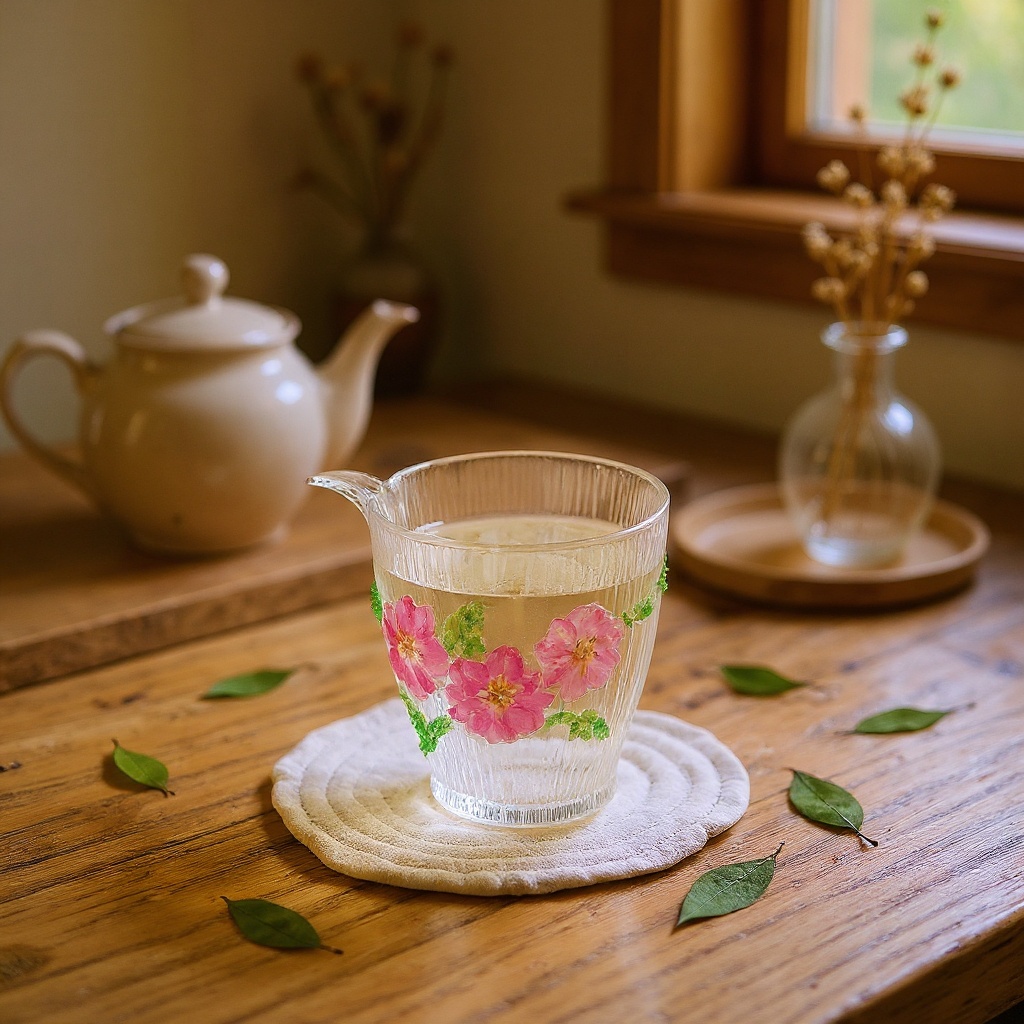
Tea culture globally brews between 160°F and 212°F depending on variety, as documented by the Tea Association of the USA. Functional botanical glass cups must handle this range without cracking or releasing harmful compounds from the sealing method. Borosilicate glass, rated for thermal shock resistance up to 300°F by the American Scientific Glassblowers Society, meets this threshold comfortably at 3–5mm wall thickness.
Here is the safety detail most articles skip entirely: surface adhesive alternatives used in cheap mass-produced cups can release low-level volatile organic compounds when exposed to liquids above 140°F. Glass-fusing methods used in authentic handmade pieces eliminate this risk because the botanical seal becomes structurally part of the glass itself. No adhesive layer. No chemical interface with hot liquid.
Honestly, if you plan to use this cup daily for boiling-temperature black teas and you're buying from an unverified seller at $18 on a major marketplace platform, skip it entirely. The adhesive risk is real and poorly regulated in mass-market imports.
Food-safe certification matters. Legitimate artisans provide documentation. Request it before purchasing any functional drinkware carrying embedded elements.
Price Justification: Artisan Time vs. Factory Efficiency
The numbers explain themselves. A single artisan produces 5–8 real flower resin glass cup handmade pieces per week, accounting for flower preparation, glass work, fusing, and quality rejection. At skilled glassworker labor rates of $25–50 per hour documented by the Bureau of Labor Statistics under specialty glass manufacturing classifications, plus borosilicate glass blanks at $8–15 per unit and preserved botanicals at $3–8 per piece, material and labor costs alone reach $60–120 before any profit margin.
Factory production uses soda-lime glass blanks at $0.50–1.50 per unit, printed vinyl decals at $0.25–0.75 each, and automated assembly. Hundreds of units per shift. The $15–40 retail price reflects those actual input costs accurately.
Neither price point is dishonest. They represent genuinely different products. The question is which one you're actually buying.
Care Instructions That Preserve Your Investment
Proper maintenance keeps a handmade botanical glass cup performing for years. Hand-washing is non-negotiable. Dishwasher heat cycles reach 140–160°F at the rinse stage — well within the range that stresses glass-to-botanical bonds even in quality pieces, and catastrophic for adhesive-sealed cheaper versions. Use lukewarm water and gentle dish soap. Avoid abrasive sponges.
Dry technique matters. Air-drying prevents thermal shock entirely. Immediate towel-drying creates surface temperature differentials that can propagate micro-cracks over months of repeated use — not visible damage, but cumulative structural stress. Store cups individually with soft cloth separators.
Daily Use Tips for Your Real Flower Resin Glass Cup:
1. Pre-warm with lukewarm water 60 seconds before adding hot tea to reduce thermal shock 2. Avoid moving from hot liquid to ice water in the same session — allow 10 minutes between temperature extremes 3. Clean within 30 minutes of use to prevent tannin staining inside the cup 4. Polish exterior monthly with a dry microfiber cloth to maintain crystal clarity over the botanical surface 5. Store away from direct sunlight — UV exposure accelerates color shift in preserved botanicals over multi-year timelines 6. Handle by the base, not the rim, to avoid stress fractures at the thinnest glass pointFAQ
Are the flowers in a real flower resin glass cup handmade genuine or synthetic?
Authentic handmade pieces use real preserved flowers processed through pressed-flower techniques that reduce moisture content to 5–8% before embedding. The American Pressed Flower Guild documents this as standard practice for botanical preservation in functional applications. Mass-produced versions use printed vinyl decals, plastic overlays, or synthetic fabric petals — none of which carry dimensional depth or natural irregular texture. Run your finger across the surface: raised three-dimensional texture indicates genuine embedded botanicals.Is it safe to drink hot tea from a real flower resin glass cup?
Yes, provided the cup uses borosilicate glass and glass-fusing embedding methods. Borosilicate glass handles temperatures up to 300°F without structural failure, covering the full range of tea brewing temperatures (160–212°F) documented by the Tea Association of the USA. Surface adhesive alternatives used in cheap alternatives can release low-level volatile organic compounds above 140°F. Request food-safe certification documentation before purchasing any functional botanical drinkware.How long do preserved flowers last inside a glass tea cup?
Properly preserved and glass-fused botanical elements maintain their appearance for 10–20 years with careful handling. Pink, white, and green tones are the most stable — documented color-hold of 10–15 years in chrysanthemums and baby's breath under normal indoor conditions. Blue and purple flower varieties are the exception: these can shift toward brown within 2–4 years even in quality pieces, a limitation few sellers disclose proactively.Why does a handmade flower glass cup cost so much more than options on major marketplaces?
Handmade pieces require 3–5 days of skilled labor at $25–50 per hour, borosilicate glass blanks at $8–15 per unit, and real preserved botanical elements at $3–8 per piece — before any profit margin. Mass-produced versions use $0.50–1.50 soda-lime glass blanks and $0.25–0.75 printed decals on automated assembly lines. The price gap reflects genuine input cost differences, not markup inflation. They are structurally different products.Can you put a real flower resin glass cup in the dishwasher?
No. Dishwasher rinse cycles reach 140–160°F and use detergent concentrations that stress glass-to-botanical bond integrity. Even quality borosilicate glass fused pieces benefit from hand-washing to preserve the botanical appearance over multi-year use. Use lukewarm water, gentle dish soap, and air-dry. This extends both structural integrity and botanical color retention.Do all handmade botanical glass cups look slightly different from each other?
Yes — and this is a quality indicator, not a defect. No two lotus petals are geometrically identical in nature. Authentic real flower resin glass cup handmade pieces reflect this: slight variation in petal placement, natural color gradation differences between preserved flowers, and minor glass thickness variation are all expected. Perfect uniformity across all units in a product listing photograph is a reliable factory-production signal.Which flower types work best for preserved glass cup art?
Lotus petals rank highest for durability under glass-fusing conditions due to their dense petal wall structure. Chrysanthemums and baby's breath follow, with 10–15 year color stability in natural white and pink ranges. Rose petals provide rich texture but deep reds risk browning within 3–5 years. Pansies integrate cleanly but purple and blue varieties fade within 2–4 years. The top-performing color palette — pink, white, and green — appears consistently in quality pieces for documented durability reasons.How can I verify a botanical glass cup is genuinely handmade before purchasing?
Look for four things: irregular flower placement (not uniform grid patterns), raised tactile texture on the glass surface, price above $80, and seller transparency about materials and production timeline. Legitimate artisans disclose glass type (borosilicate), botanical species used, preservation method, and production time. Request this information directly if not provided in the listing. Sellers who can't answer these questions specifically are not producing handmade pieces.Choosing Authentic Artisan Botanical Glassware
Authenticity in botanical glass art is verifiable. Transparent production information. Borosilicate glass documentation. Real flower species named specifically. Production timelines that reflect actual 3–5 day handcraft reality. These signals separate genuine artisan work from factory imitation with reasonable reliability.
For those ready to invest in a piece that functions as both daily-use drinkware and botanical art, our Handmade Green Crystal Lotus Glass Tea Cup brings together 400ml borosilicate capacity, hand-embedded real lotus petals in pink, white, and green, and transparent green-tinted glass with three-dimensional raised floral surface texture. Three to five days to make. Designed to last decades.
The real flower resin glass cup handmade market rewards buyers who ask the right questions before purchasing. Ask them.


