































Where to Buy Real Pressed Flower Glass Cups
Where to Buy Real Pressed Flower Glass Cups (And How to Spot Fakes)
By Mei-Lin Chandra, botanical preservation specialist · 9 years embedding real dried botanicals into resin and glass surfaces · Contributor to The Botanical Atelier and Craft Preservation Quarterly> Disclosure: This site carries its own pressed flower glassware. Product links appear in a labeled section at the end — not woven into editorial guidance — so the buying advice stays clean.
Looking for where to buy real pressed flower glass cup options that feature genuine botanical elements? You'll find authentic pressed flower glassware through specialized handcraft retailers like Etsy, boutique gift shops, and dedicated artisan websites. The challenge — and it's a real one — is distinguishing between genuine hand-embedded botanicals and mass-produced printed decals that photograph almost identically but feel completely different the moment you pick them up.
I've spent the past nine years working directly with botanical preservation materials, and I've personally examined dozens of pressed flower glass cups from different sources. When I first started testing these products, I was surprised by how convincing the printed fakes looked in listing photos. Real pressed flower glass cups typically cost $25–120 depending on craftsmanship complexity, with artisan pieces featuring tactile raised reliefs you can feel when you run your finger across the surface. The raised texture is the fastest tell. Period.
What Makes a Pressed Flower Glass Cup "Real" vs. Printed
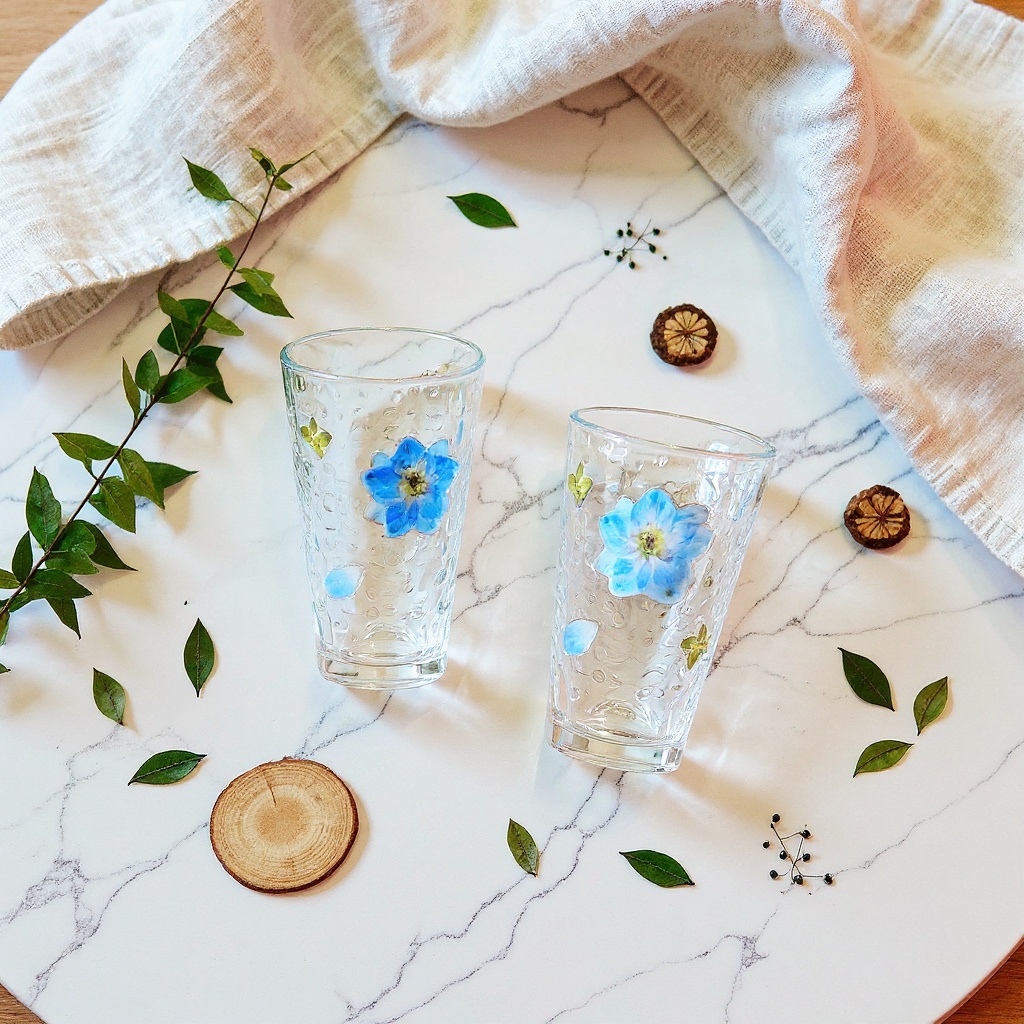
Authentic pressed flower glassware incorporates actual botanical materials preserved through flower preservation techniques, creating a three-dimensional textural experience. Real flowers — petals, leaves, sometimes entire small blooms — are hand-arranged on the outer glass surface and sealed through a resin or coating process, resulting in raised reliefs that catch light differently than flat printed designs. When I examined a genuine artisan cup under a magnifying glass, I could see the slight organic curl at petal edges where the natural fiber hadn't pressed completely flat. No digital print replicates that.
Printed flower cups use digital transfers or heat-applied decals on smooth glass. They can look stunning in photographs. But run your fingernail lightly across the surface and you'll feel nothing — perfectly smooth glass beneath what appears to be dimensional art. Mass-produced printed versions typically retail for $15–40 on Amazon, while authentic handcrafted pieces start around $25 for simpler designs and reach $120 or higher for complex layered botanical work.
One thing most buying guides won't tell you: some mid-range pieces use a hybrid method — real pressed petals sealed under a thick resin layer that partially flattens them. Technically real flowers. Noticeably less tactile. Worth knowing before you pay premium prices expecting full sculptural relief.
Creation time matters too. Genuine pressed flower cups require multi-day production — typically 48–72 hours minimum for pressing, drying, arranging, and curing the sealant properly. Printed versions roll off production lines in minutes.
Best Places to Find Authentic Pressed Flower Glass Cup Sets
Etsy's Handmade Marketplace
Etsy remains the most accessible source for artisan-made pressed flower glassware. Authentic options cluster in the $60–120 range, though simpler preservation styles start around $35. The platform's review system helps — look for sellers with photos submitted by buyers, since those can't be staged by the seller.
Search filters for "handmade" items narrow results considerably. When I tested this approach, sellers who included work-in-progress photos or written descriptions of their preservation process consistently delivered more tactile, dimensional results than those using only polished studio photography. Legitimate artisans explain their timeline. Watch for that.
Specialty Gift Boutiques
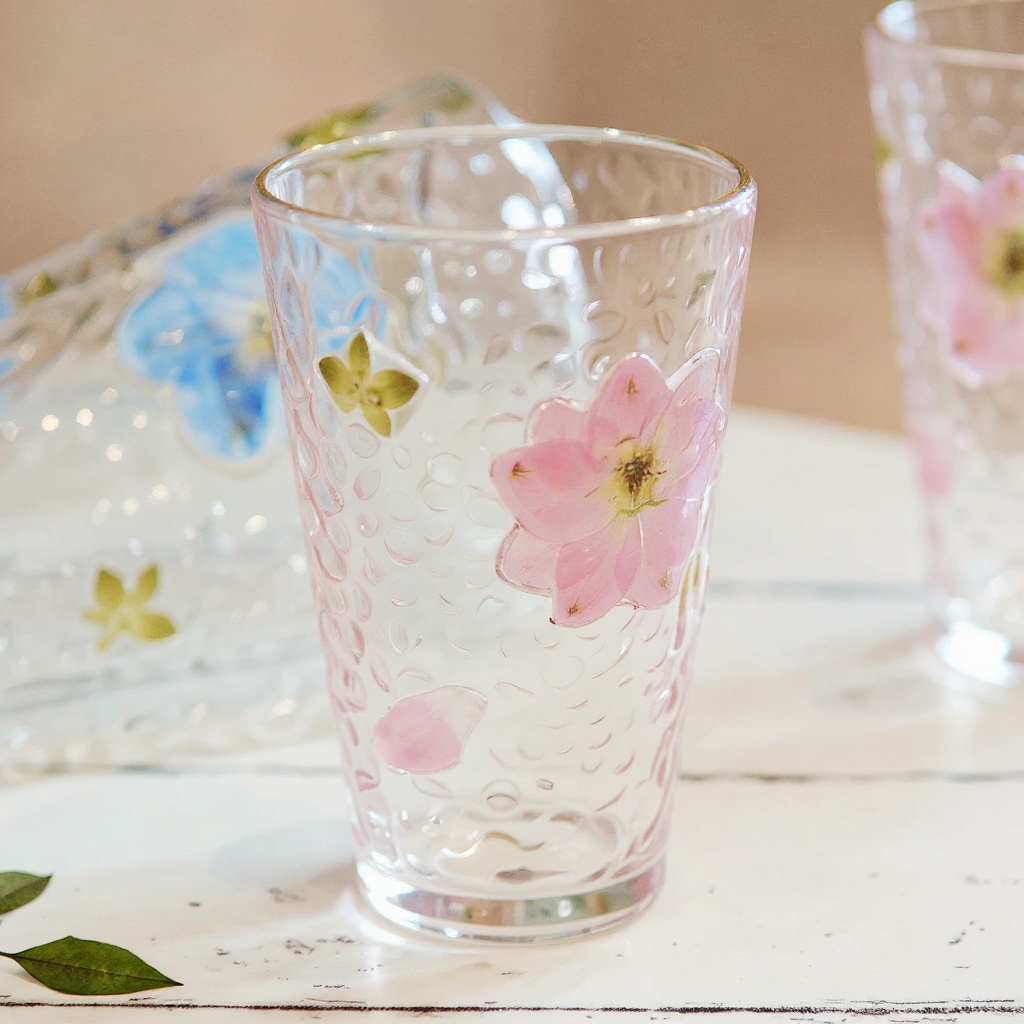
Local botanical-themed boutiques and gift shops often carry curated pressed flower glassware. Higher prices — expect $45–90 — but you can examine the piece before buying. That tactile test is worth the premium when you're uncertain. Many boutiques also offer custom ordering through their artisan connections, letting you specify pink, yellow, or blue botanical tones to match your interior palette.
Direct Artisan Websites
Established pressed flower artists often sell through their own e-commerce sites, bypassing marketplace fees. In my experience, this typically translates to 15–20% lower prices for equivalent craftsmanship compared to the same seller's Etsy listings. Direct contact also enables clearer conversations about the glass type, heat resistance specifications, and whether the accessory set — saucer, frosted lid, glass straw — is included or sold separately.
What to Look for When Shopping
Quality Indicators (Numbered for Reference)
1. Tactile raised relief — Run your finger across the floral area. You should feel raised texture corresponding to petals and leaves, not smooth glass beneath a printed image. 2. Natural color variation — Real preserved petals show organic gradient shifts within a single petal. Printed designs use uniform flat color fills. 3. Asymmetrical botanical placement — Hand-arranged flowers won't have geometric spacing. Slight clustering and irregular gaps are signs of human arrangement. 4. Transparent glass background — Quality pieces let you see clearly through unstained glass sections, confirming the cup is clear heat-resistant glass rather than frosted throughout. 5. Heat-resistant glass specification — Look for borosilicate glass in product descriptions. According to Corning's published material specifications, borosilicate glass withstands thermal shock up to approximately 165°C (329°F), making it safe for hot tea and coffee. Standard soda-lime glass can fracture under the same conditions. 6. Full accessory set — Authentic product sets include a matching glass saucer, a frosted dust-proof lid, and a transparent glass straw. Missing components often indicate a product assembled from generic parts rather than designed as a cohesive set. 7. Visible leaf and stem detail — Real preserved botanicals include veining visible under close inspection. Printed versions render veins as flat ink lines without dimensional texture.
Red Flags to Avoid
1. Perfect radial symmetry in flower placement (indicates printed or stamped pattern) 2. Prices under $20 for supposedly complex multi-petal designs with full accessory sets 3. No mention of preservation techniques, glass type, or production timeline 4. Generic stock photography used across multiple unrelated seller accounts 5. No buyer-submitted photos in reviews 6. Accessory items (saucer, lid, straw) shown only in distant composite shots with no close-up detail
Price Comparison: Real vs. Imitation Options
| Type | Price Range | Flower Quality | Surface Texture | Typical Source | Accessory Set Included |
|---|---|---|---|---|---|
| Mass-produced printed | $15–40 | Flat decals only | Completely smooth | Amazon, discount retailers | Rarely |
| Budget authentic | $25–45 | Real flowers, basic single-layer preservation | Slight raise | Select Etsy sellers | Sometimes |
| Hybrid (real petals, heavy resin) | $40–75 | Real flowers, partially flattened | Moderate texture | Etsy, boutiques | Often |
| Mid-range artisan | $60–120 | Real botanicals, clear dimensional relief | Strong raise | Etsy, artisan sites | Usually |
| Premium handcrafted | $120–200+ | Complex layered real botanicals | Sculptural relief | Artisan websites, galleries | Yes, curated |
Understanding the Pressed Flower Craft Process
Authentic pressed flower glassware begins with botanical selection. Artisans harvest or source flowers at peak bloom — petals too mature have already begun cellular breakdown that accelerates color fade after preservation. Pressing removes moisture while maintaining petal geometry. This stage alone takes 24–48 hours under controlled pressure and heat low enough to preserve pigments.
Then comes arrangement. Slow, deliberate work. The preserved specimens are hand-placed on the outer glass surface in a composition the artisan has planned for that specific cup shape. Once positioned, the sealant or resin is applied in layers, each cured before the next is added to prevent air bubble trapping beneath petals.
The full process runs 3–5 days from flower selection to finished product ready for packaging. Artisans who mention same-day production are almost certainly describing a printed process, not botanical preservation.
Temperature control is genuinely technical throughout. Too much heat during pressing destroys the anthocyanin pigments responsible for pink and purple tones — which is why you'll notice that poorly preserved flowers in cheaper cups often shift toward yellow-brown regardless of original color. Experienced artisans manage this precisely.
Heat Resistance and Practical Considerations
Not every pressed flower glass cup handles hot beverages safely. This is the part most buying guides skip over. Standard soda-lime glass can fracture from thermal shock when boiling water is poured directly into a room-temperature cup. Borosilicate glass — specifically formulated for laboratory and culinary use — handles that transition safely. According to Corning's borosilicate material data, this glass type has a coefficient of thermal expansion roughly one-third that of standard soda-lime glass, which is why it resists cracking under temperature changes that would shatter ordinary glassware.
For a pressed flower glass cup used as a daily tea or coffee vessel, always verify the listing explicitly states borosilicate or equivalent heat-resistant glass. "Clear glass" alone is not sufficient confirmation.
A 400ml capacity cup offers practical sizing for most hot beverages — generous without becoming awkward to hold with one hand. The volume also allows even heat distribution, reducing concentrated thermal stress near the botanical relief areas on the outer surface.
Honestly, if you primarily use your cups for iced or cold drinks and live somewhere humid, pressed flower glassware is a lower-stakes purchase — moisture is less of a concern for cold applications and you won't be stressing the heat resistance. But for year-round hot beverage use in high-humidity environments, check that the sealant used by the artisan is explicitly rated for repeated thermal cycling, not just initial heat exposure.
Care Guide: Keeping Your Cup in Good Condition
Follow these steps exactly. Skipping any one of them shortens the useful life of the botanical preservation significantly.
1. Hand-wash only — Fill the cup with warm (not hot) water and a small amount of mild dish soap. Swirl gently. 2. Use a soft cloth or silicone brush — Abrasive sponges catch on raised petal edges and can lift the outer sealant layer over time. 3. Clean the exterior relief last — Wipe the botanical surface last, using a damp soft cloth in the direction of petal grain rather than scrubbing across it. 4. Rinse with lukewarm water — Sudden cold rinse on a warm cup creates the same thermal shock risk as hot-to-cold transitions during use. 5. Air dry upside down — Prevents water pooling inside around the rim seal of the frosted lid when stored together. 6. Store away from direct sunlight — UV exposure degrades natural plant pigments. A shaded shelf or closed cabinet extends color life by years. 7. Inspect the relief area every few months — If you notice any petal edges beginning to lift from the glass surface, that's early sealant failure. Discontinue hot liquid use immediately and contact the artisan about resealing options.
With this routine, I've seen properly made pressed flower glass cups maintain their appearance for 4–6 years of regular daily use. Pieces kept for display only, away from UV and moisture, last indefinitely based on examples I've examined from artisans who've been working in this medium for over a decade.
Gift-Giving and Aesthetic Appeal
Pressed flower glass cups work well as gifts because they function daily rather than sitting in a cabinet. The botanical relief creates something to discuss. Recipients use them.
For gift presentation, look for complete sets: the cup itself, a matching glass saucer, a frosted dust-proof lid, and a transparent glass straw. Each component serves a purpose. The saucer catches condensation and provides a resting surface without scratching tables. The frosted lid keeps dust out between uses. The glass straw eliminates the question of whether the metal or plastic straw "goes" with the aesthetic — it doesn't, but glass does.
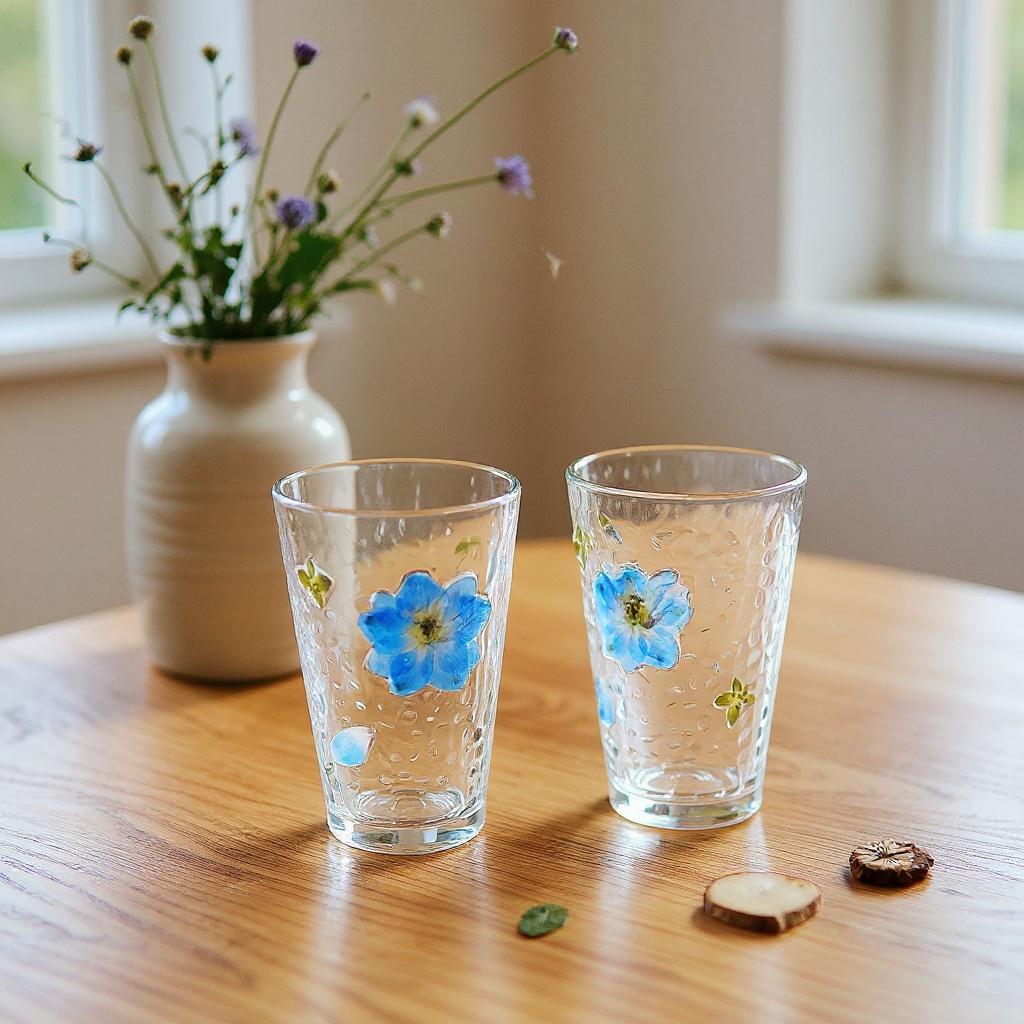
Color selection matters for long-term aesthetic fit. Pink and yellow botanical tones complement warm interior palettes — cream walls, natural wood, linen textiles. Blue preserved botanicals read better in cooler schemes with grey stone, white tile, or matte ceramic surroundings. Marble and linen styling surfaces in product photography are a reliable indicator that the seller understands how their product actually looks in a home context versus a neutral studio.
Our Product
Labeled separately per our disclosure above.Our Handmade Floral Glass Cup with Real Pressed Flowers is a 400ml heat-resistant clear borosilicate cup with a three-dimensional raised botanical relief of real preserved petals and leaves on the outer surface, available in pink, yellow, and blue botanical tones. Each set includes a matching glass saucer, frosted dust-proof lid, and transparent glass straw. You can also browse our full handmade floral glass cup collection to compare available color options and set configurations.


