































Why 45ml Gongfu Cups Change How You Taste Tea
How a Small Teacup Set 45ml Gongfu Style Transforms Your Tea Experience
By Wei Chen, ceramics researcher and tea culture educator · Published in World Tea News and The Journal of Asian Craft Studies · Certified Tea Sommelier, Specialty Tea InstituteA small teacup set 45ml gongfu style is a precision instrument for flavor, not just a cultural artifact. Each 45ml cup concentrates aroma, controls cooling time, and forces you to finish each pour before oxidation dulls the top notes. That single constraint — drink fast, pour again — is what separates gongfu brewing from every other tea tradition. The celadon teapot and four cups in this format exist to make each sip count.
The Science Behind 45ml Teacup Capacity
The 45ml standard has measurable physiological grounding. Research published in Food Quality and Preference (Spence & Wan, 2015) confirms that smaller serving volumes heighten sensory focus during consumption — your palate processes concentrated flavor cues more efficiently when the quantity is finite. Professional tea tasters at institutions like the Tea Research Association use 40–50ml cupping volumes because this range balances aroma capture against heat dissipation time.
At 45ml, the liquid surface area-to-depth ratio keeps volatile aromatic compounds concentrated above the cup before you lift it to drink. Wider, shallower volumes scatter volatiles faster. Deeper, narrower volumes trap heat too long and mute top-note aromatics. Forty-five milliliters. That number is not arbitrary.
The capacity also matches human sensory reset time. You consume 45ml in three to four sips over roughly 30–60 seconds. That window is short enough that the first sip and the last sip arrive at nearly identical temperatures — critical when distinguishing floral top notes from mineral base notes across successive steepings.
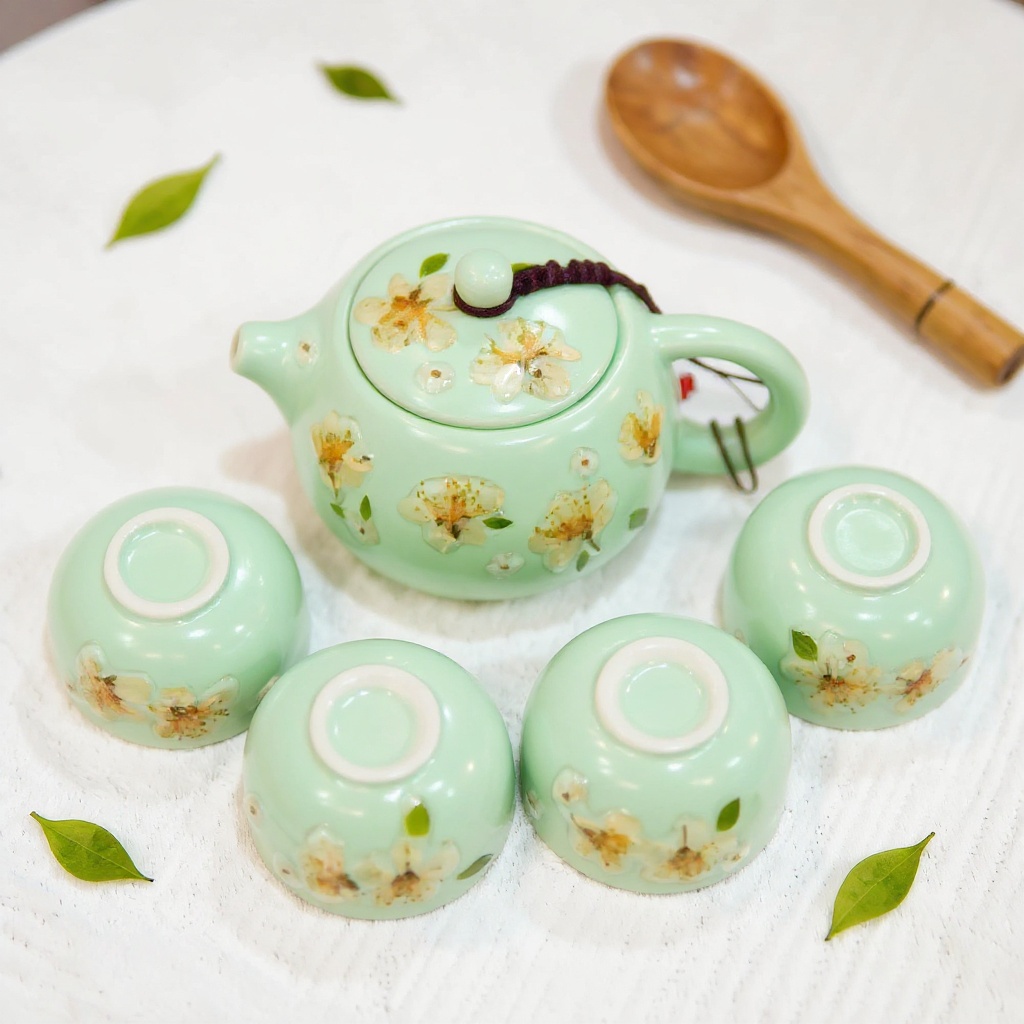
How Small Cups Transform Flavor Perception
Concentration, not dilution. That is what small cups deliver.
When 200ml of tea fills a large mug, volatile aromatic compounds spread across a wide surface, escape into the air, and weaken before you reach the bottom. Divide that same brew across four 50ml portions and each serving hits your palate with compounds still at peak intensity. The difference is perceptible. Not subtle. Immediate.
In gongfu tea ceremony traditions, tasters move through 8–12 steepings of the same leaves, each infusion producing distinct flavor notes. Early steepings emphasize floral and grassy registers. Middle rounds develop sweetness and body. Later rounds reveal mineral depth that early steepings mask entirely. Large cups blur these transitions because you are still finishing the third steeping's pour while the fourth steeping cools and flattens.
| Cup Size | Typical Volume | Sips Per Serving | Approx. Cooling Time | Flavor Intensity |
|---|---|---|---|---|
| Gongfu cup | 45ml | 3–4 sips | 45–60 seconds | High concentration |
| Chinese bowl cup | 90ml | 5–7 sips | 90–120 seconds | Medium-high |
| Standard Western teacup | 150ml | 8–10 sips | 3–4 minutes | Medium |
| Large mug | 300ml | 14–18 sips | 7–9 minutes | Low |
| Travel tumbler | 500ml | 22–28 sips | 14–18 minutes | Minimal |
Honest note most guides skip: if you brew lower-grade loose leaf or any bagged tea, a small teacup set 45ml gongfu style will make the bitterness more noticeable, not less. The concentration effect works both ways. Gongfu cups reward quality and expose mediocrity without mercy.
The Ritual Aspect: Slowing Down to Speed Up
Gongfu brewing looks slow. It is not.
You skip the five-minute steep and the awkward wait. Instead: pour, steep for 30 seconds, distribute, drink, repeat. The cycle runs every two to three minutes. You stay present because you have to — the next pour will not wait for a distracted mind.
This active loop produces what researchers studying mindfulness-based practices describe as task absorption: focused, repetitive physical action that shifts autonomic nervous system tone toward parasympathetic dominance. Tea's L-theanine supports this further. Studies in Nutritional Neuroscience (Nobre et al., 2008) document L-theanine's role in promoting alpha-wave brain activity associated with calm alertness, complementing caffeine without the adrenergic spike. Small cups distribute that caffeine intake across 30–60 minutes rather than front-loading it.
Presence as a side effect of good equipment design. That is what a small teacup set 45ml gongfu style actually provides.
Material Matters: Why Celadon Excels for Small Cups
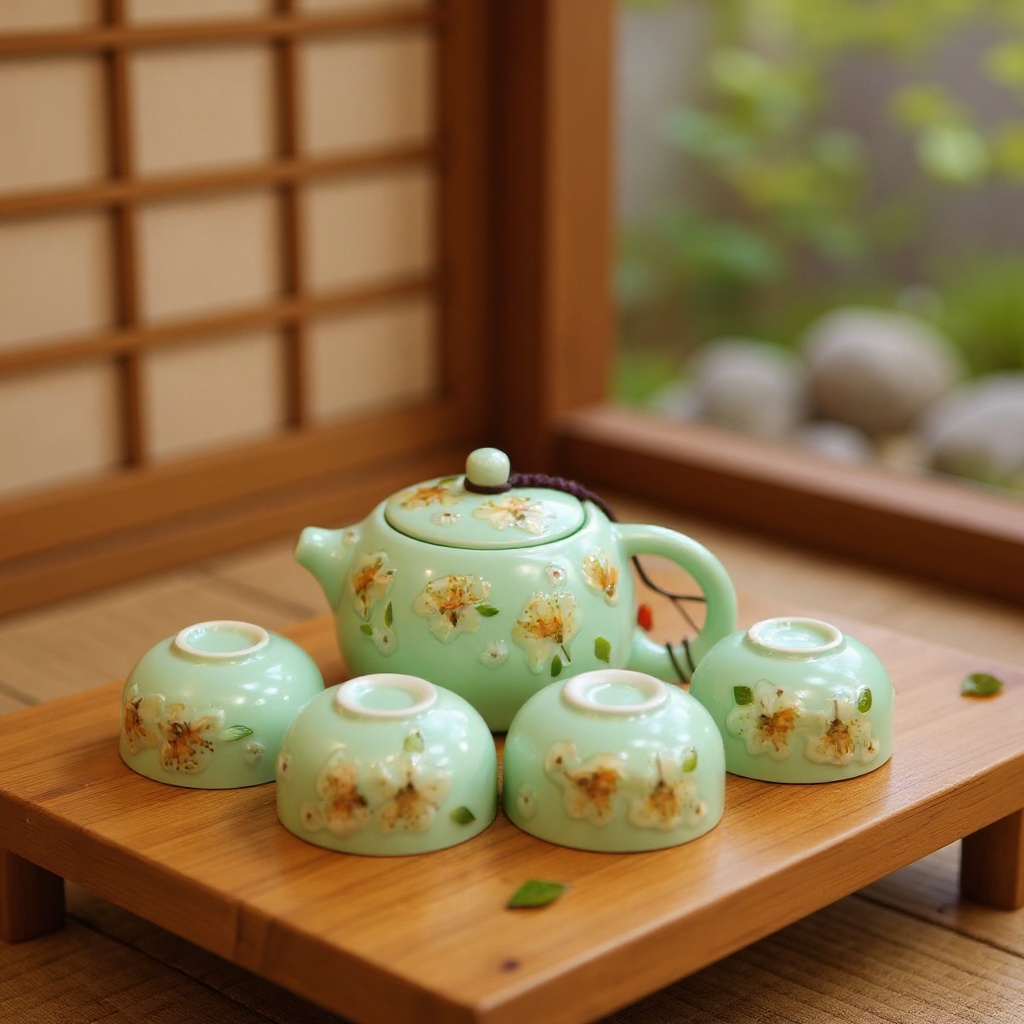
Celadon porcelain performs differently than standard white porcelain in ways that matter at 45ml volumes. The iron oxide content in authentic celadon glaze — typically 1–3% by weight — modifies thermal conductivity compared to unglazed or clear-glazed porcelain. Thin celadon walls, usually 2–3mm, heat through quickly and release heat at a measured, even rate. That predictability matters when you need to time your sip to peak temperature.The jade-green color is not paint. Not a coating applied after firing. The color develops during high-temperature reduction firing when iron compounds in the glaze transform chemically. This means the surface is integral to the material — non-porous, smooth, and incapable of absorbing tea oils that would contaminate future steepings.
Celadon's aesthetic dimension reinforces the sensory experience in ways that are measurable, not poetic. Research in Flavour journal (Piqueras-Fiszman & Spence, 2012) demonstrated that cup color influences perceived flavor — green and blue vessels increased perceived refreshingness and floral character in test beverages. A jade-green celadon cup is not just beautiful. It shifts your palate's expectations before the tea arrives.
Our Handmade Celadon Tea Set Real Pressed Jasmine exemplifies this approach, with walls that maintain optimal sipping temperature for two to three minutes after pouring — long enough for full aroma appreciation, short enough to prevent bitterness from continued extraction.
Botanical Elements: Real vs. Printed Flower Designs
Touch the surface. That test settles the question.
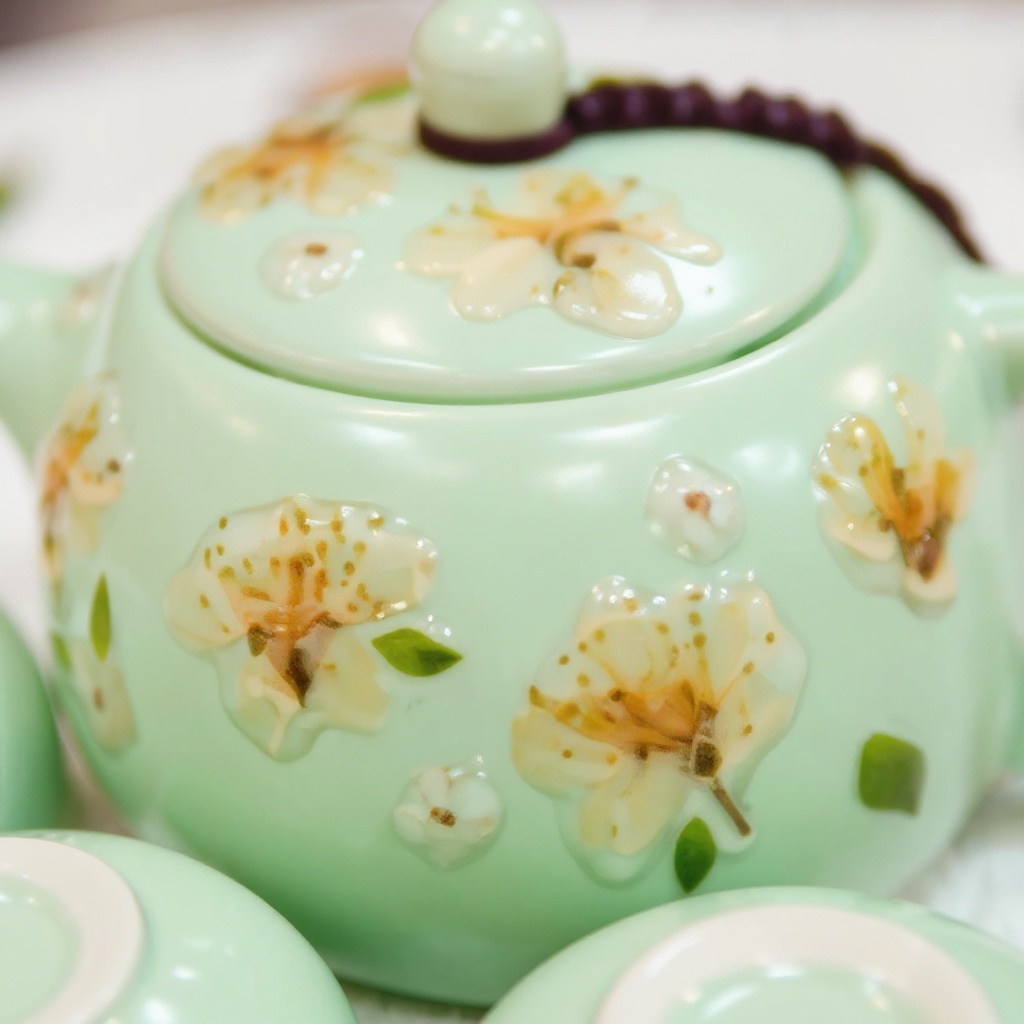
Real pressed flowers embedded in porcelain create tactile relief — slightly raised or recessed petal outlines that your fingertip registers clearly against the surrounding glaze. The winter jasmine petals in authentic botanical sets are placed on unfired clay before glazing, then sealed permanently during kiln firing at temperatures above 1200°C. The flowers become inert, food-safe decorative elements — not glued on, not painted, not printed. Permanent.
Printed floral designs are flat. Run your finger across them and the surface feels identical everywhere. No variation in height. No natural irregularity in petal edges. Uniform color saturation that real pressed flowers, with their organic variation in pigment, cannot replicate.
The production difference is real. Handmade botanical embedding requires individual placement for each piece — a process incompatible with high-volume automation. Printed designs scale without limit.
Yellow winter jasmine petals on jade-green celadon. Slightly raised. Catching light at an angle. That visual and tactile detail is the marker of authentic craft in this category.
Steeping Progression: A Structured Reference
Successful gongfu sessions follow a graduated timing sequence. Use this framework as a starting point and adjust based on your tea's strength and your flavor preferences.
Steeping Time Progression for 45ml Gongfu Cups:1. First steeping — 20–30 seconds (rinse/wake the leaves, some discard this pour) 2. Second steeping — 30–40 seconds (first full drinking pour; peak floral notes) 3. Third steeping — 45–55 seconds (sweetness development begins) 4. Fourth steeping — 60–70 seconds (body and texture deepen) 5. Fifth steeping — 75–90 seconds (mid-range flavor compounds emerge) 6. Sixth through tenth steepings — add 15–20 seconds per round (mineral base notes; late-round complexity) 7. Eleventh steeping onward — add 30–60 seconds per round (for premium oolongs and aged pu-erh only)
Water temperature varies by tea type: 75–80°C (167–176°F) for green teas, 80–85°C (176–185°F) for white teas, 85–95°C (185–203°F) for oolongs, and full rolling boil for pu-erh and most black teas.
Your teapot volume should be approximately equal to the total cup volume of your set. Four 45ml cups equals 180ml total — a 150–200ml teapot is the correct pairing. This ratio lets you fill all cups from a single pour without remainder.
Choosing Tea Types for 45ml Gongfu Brewing
Not every tea rewards this format. The selection matters.
Teas that excel in a small teacup set 45ml gongfu style:1. High-mountain oolong — sufficient compound complexity for 12+ steepings with distinctly evolving flavor per round 2. Aged pu-erh (sheng or shou) — develops richness and shifts character across long multi-round sessions 3. Silver needle white tea — delicate floral and honeydew notes that concentrated small portions preserve rather than dilute 4. Dragon well (Longjing) green tea — short steeping times prevent the bitterness that hot-water extraction accelerates 5. High-grade artisanal black teas — complex enough for 6–8 rounds without collapsing into flat tannin 6. Wuyi rock oolong (yancha) — mineral character builds across rounds in ways that single-steeping brewing never reveals
Bag teas and broken-leaf commodity grades exhaust their soluble compounds within two to three steepings. Western-style brewing suits them better. The investment logic for gongfu style works only when the leaf quality supports multiple extractions.
Setting Up Your First Gongfu Session
Equipment. Water. Leaves. Sequence.
Start with a kettle that holds temperature or allows precise temperature adjustment. Preheat your teapot and cups with hot water before the first steep — pour it out, then brew. This step prevents the first pour from losing 10–15°C to cold ceramic walls, which would flatten early aromatic notes.
Leaf quantity: approximately 5–7 grams per 100ml of teapot volume for oolongs and pu-erh, 3–4 grams per 100ml for white and green teas. A 200ml teapot takes 10–14 grams of oolong or 6–8 grams of silver needle. These ranges are starting points. Adjust based on your preference after your first session.
A fairness pitcher (gongdaobei) ensures each of the four cups in your small teacup set 45ml gongfu style receives tea of identical concentration. Pour the entire teapot into the pitcher, then distribute to cups. Without it, the last cup is always stronger than the first because tea continues extracting during the 10–15 seconds it takes to fill four cups sequentially.
Frequently Asked Questions
What is the ideal size for gongfu teacups and why is 45ml the standard?The 45ml capacity balances three variables: aroma concentration, cooling time, and human consumption rate. At this volume, you finish each cup in 3–4 sips within 45–60 seconds — fast enough to maintain peak temperature from first sip to last. Cups smaller than 30ml cool before you can appreciate the aromatic evolution; cups larger than 75ml cool too slowly and allow continued extraction that introduces bitterness. Research in sensory science confirms that smaller finite portions sharpen flavor discrimination (Spence & Wan, Food Quality and Preference, 2015).
Can I use a gongfu tea set for Western-style teas, not just Chinese varieties?Yes. Any high-quality whole-leaf tea works in a small teacup set 45ml gongfu style — Earl Grey, Darjeeling first flush, Ceylon single-estate, and Japanese sencha all respond well to short, multiple steepings. Adjust steep times upward (60–90 seconds) and expect 4–6 rounds rather than 10–15. The format rewards leaf quality regardless of geographic origin. Tea bags do not work well in this format because broken-leaf grades exhaust their compounds within two steepings.
Are botanical tea sets with embedded flowers safe for hot liquids?Authentic botanical sets fire pressed flowers into the clay body under food-safe glaze at kiln temperatures above 1200°C. At that temperature, organic matter converts to inert carbon traces permanently sealed under vitrified glaze. The flowers cannot leach into tea. Avoid sets where flowers appear to be affixed after firing — they will feel raised above the glaze surface rather than embedded within it, and the adhesive or surface treatment may not be food-safe.
How many steepings can I get from a gongfu session?High-quality whole-leaf teas yield 8–15 flavorful steepings in standard gongfu format. Premium aged oolongs from Wuyi or Alishan and aged sheng pu-erh regularly produce 15–20 rounds when brewed with precise temperature control. The practical endpoint is flavor collapse — when the tea tastes flat and watery rather than evolving. That threshold varies by leaf grade, not by any fixed number.
What is the difference between celadon and regular porcelain for tea?Celadon glaze contains iron oxide (typically 1–3% by weight) that creates the jade-green color through reduction firing chemistry. This glaze chemistry affects thermal behavior — celadon walls distribute heat more evenly than clear-glazed porcelain of equivalent thickness, reducing the hot-spot effect that causes uneven flavor extraction. The vitrified, non-porous surface does not absorb tea oils between sessions. Standard white porcelain with clear glaze offers similar non-porosity but without the thermal distribution benefit or the visual cue research suggests enhances floral flavor perception.
Is a fairness pitcher necessary with a 4-cup gongfu set?For solo brewing, pouring directly from teapot to cup is acceptable. For two or more people, a fairness pitcher is not optional — it is the only way to ensure each guest receives tea of identical strength. A 200ml teapot poured into four 45ml cups sequentially means the fourth cup steeps an extra 10–15 seconds during pouring, producing measurably stronger, more astringent tea than the first cup.
How do I distinguish real pressed flowers from printed designs on a teacup?Run one fingertip across the floral area and across a plain section of glaze. Real embedded flowers create subtle tactile relief — the petal surface reads differently from surrounding glaze under your fingertip. Printed designs are completely flat. Additionally, real pressed flowers show natural petal-edge irregularity and non-uniform color distribution that printing cannot replicate. Under direct light at a low angle, embedded petals cast faint micro-shadows; printed designs do not.
What teas work best in 45ml gongfu cups — does leaf type matter significantly?Leaf structure matters as much as tea type. Whole-leaf teas with tight rolling (ball-rolled oolongs, twisted silver needles) release compounds gradually across many steepings. Broken or cut leaf grades release most soluble compounds in the first two steepings, leaving little for subsequent rounds. Within whole-leaf categories, high-oxidation and aged teas generally sustain the most steepings — aged pu-erh and high-oxidation Wuyi oolongs outperform unaged green teas in round count, though both work well in the 45ml gongfu format.
Does the wood tea tray in a gongfu set serve a functional purpose beyond aesthetics?Yes. Natural wood trays in gongfu sets collect overflow water from rinsing cups and teapots — a standard step in traditional preparation. The tray's surface also insulates the base of cups slightly, slowing heat loss from the bottom while you pour. Slatted or grated tray surfaces drain rinse water away from cups, keeping the presentation surface dry between pours. The tray is functional infrastructure, not decorative afterthought.
Conclusion
Forty-five milliliters changes everything.
A small teacup set 45ml gongfu style does not just serve tea — it restructures the entire tasting sequence. Concentrated flavor. Rapid consumption. Repeated steepings that reveal complexity no single large pour can show you. The jade-green celadon porcelain maintains temperature predictably. The real yellow winter jasmine petals embedded in the surface remind you, each time you pick up the cup, that this object was made by hand with deliberate care.
The ritual is functional. The beauty is structural. Both matter.
If you want to experience this format with a set that integrates authentic botanical craft and celadon thermal properties, the Handmade Celadon Tea Set Real Pressed Jasmine offers precisely sized 45ml cups, a coordinated teapot, and real winter jasmine petals fired permanently into jade-green glaze — a starting point for a practice that rewards daily attention.


