































Cottagecore Kitchen Ideas That Actually Use Baskets
Cottagecore Kitchen Ideas with Baskets: What Actually Works (And What Doesn't)
By Patrick Gao, founder of Solace & Straw · 8+ years working directly with Southeast Asian rattan artisans · Featured in Cottagecore Weekly and The Artisan HomeThe best cottagecore kitchen ideas with baskets center on three workhorses: a rectangular handwoven rattan basket for dry produce, a seagrass piece near the sink for moisture-prone items, and a smaller wicker catch-all near your coffee station. That's it. Everything else is decoration.
Most basket guides treat your kitchen like a mood board. This one treats it like a kitchen.
The Real Difference Between Natural and Synthetic Basket Materials
I couldn't tell real from fake rattan when I started. Now I spot synthetic from across a room. Real rattan feels slightly rough. It has visible joints where strips connect, and it weighs more than you'd expect—typically 2–3 pounds for a medium basket versus under 1 pound for plastic imitations. That weight difference alone tells the story.
Natural materials also carry subtle color variation. According to Britannica's overview of rattan palm species, genuine rattan comes from climbing palms in the Calameae tribe, which explains why no two handwoven baskets look identical. Synthetic versions have that uniform, too-perfect appearance. Mass production. No soul.
Price reflects the labor. Quality handwoven rattan baskets typically run $45–150. Synthetic lookalikes cost $8–25. You're paying for 3–4 hours of skilled handwork per piece, not just raw material.
| Material | Price Range | Lifespan | Food Safe | Water Resistance | Best Kitchen Use |
|---|---|---|---|---|---|
| Natural Rattan | $45–150 | 10+ years | Yes (unfinished) | Low | Dry produce, bread, linens |
| Seagrass | $30–80 | 8–12 years | Yes | Medium | Near-sink storage, market hauls |
| Wicker (various) | $25–120 | 5–15 years | Depends on material | Varies | General counter storage |
| Bamboo | $20–90 | 7–12 years | Yes (unfinished) | Low–Medium | Pantry, utensil corralling |
| Paper Wicker | $8–30 | 1–2 years | No | Very Low | Display only—avoid for kitchens |
| Synthetic Rattan | $8–25 | 1–3 years | Usually | High | Outdoor or bathroom use |
Counter Styling That Doesn't Look Like a Farmers Market Exploded
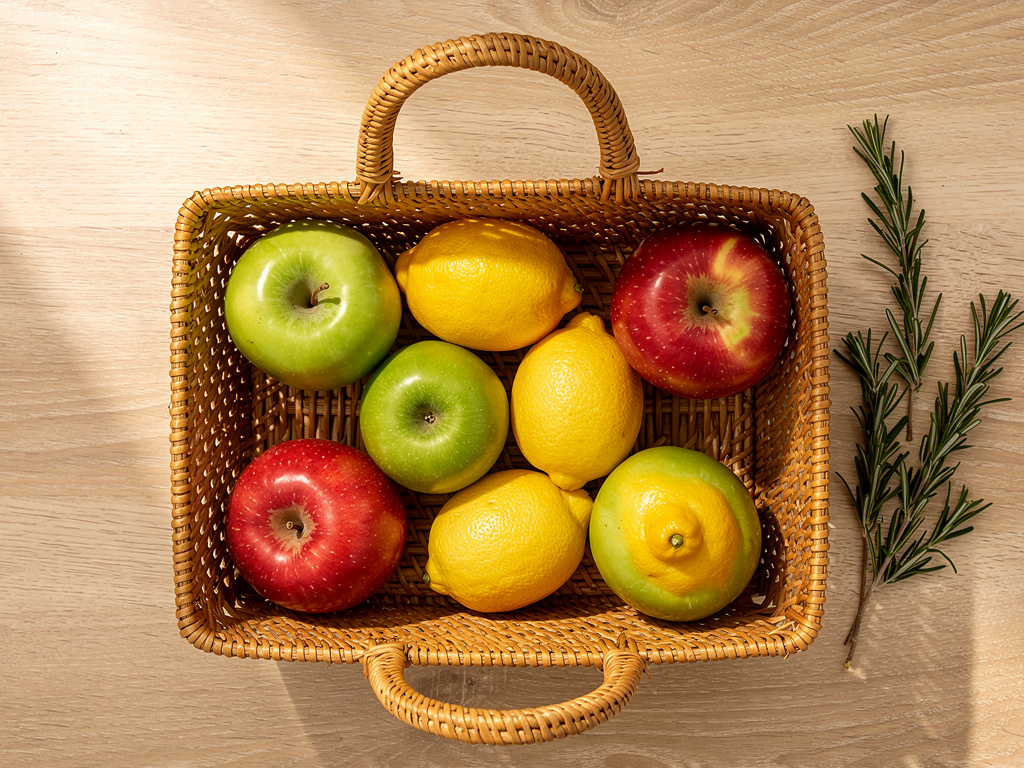
The biggest mistake in cottagecore kitchen ideas with baskets? Cramming every surface with woven storage. Your counter isn't a craft fair booth. Start with one statement piece—something around 38cm (15 inches) wide that holds your daily fruit or bread. Position it slightly off-center. Not dead in the middle.
Varied heights matter more than quantity. Add a smaller basket (20–25cm) nearby, elevated on a wooden cutting board or a small cake stand. This creates visual interest without chaos. Keep at least 45cm (18 inches) of clear counter space between basket groupings—a figure grounded in standard kitchen workflow clearance guidelines from the National Kitchen & Bath Association's planning standards.
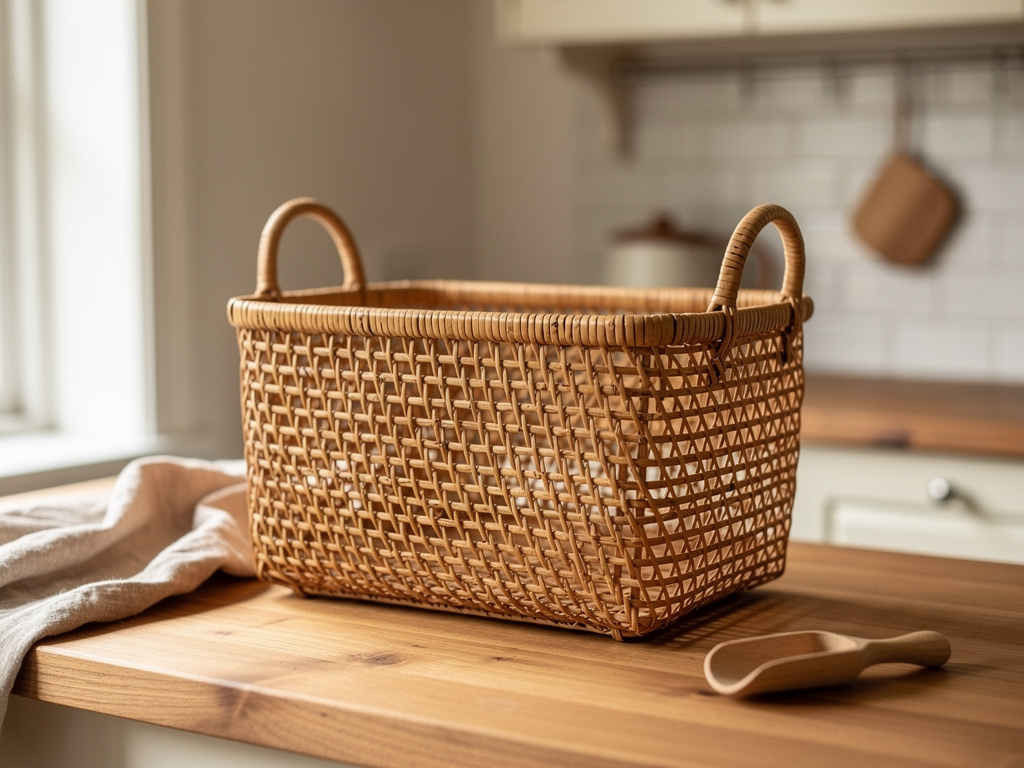
Our rectangular handwoven rattan basket measures approximately 38cm wide with dual arched handles and a honey-tone finish. The rectangular shape fits against appliances far better than round baskets. The dual handles make it genuinely easy to move when you're actually cooking, not just reaching around it.
Honest thing most articles won't say: if your kitchen runs humid—coastal climates, poorly ventilated apartments, older homes without exhaust fans—natural rattan is a risky daily-use choice. Mold develops inside the weave before you notice it on the surface. In those conditions, seagrass or treated wicker handles moisture far better. Skip the rattan entirely rather than fight your climate.
What Actually Goes in These Baskets (Beyond Pretty Photos)
Research published in Postharvest Biology and Technology confirms that increased airflow around harvested produce measurably slows moisture buildup and ethylene accumulation—the two main drivers of spoilage. That's the science behind why rattan's open weave structure actually extends freshness. Not just aesthetic logic. Real biology.
Here's what works for daily storage in a rectangular handwoven rattan basket:
1. Bread and baked goods — The open weave prevents condensation. Artisan loaves stay fresh 2–3 days without a bag trapping steam against the crust. 2. Root vegetables — Potatoes, onions, and garlic keep better with air circulation than sealed in plastic. Keeps them separate from each other too, which slows ripening. 3. Fresh fruit — Apples, pears, and citrus benefit from airflow. Avoid mixing ethylene-producers like apples with ethylene-sensitive items like bananas in the same basket. 4. Kitchen linens — Dish towels, cloth napkins, and trivets stay organized and within reach during cooking. 5. Dry pantry overflow — Individually wrapped snacks, tea boxes, small condiment bottles that don't fit in the cabinet. 6. Utensil overflow — Wooden spoons, whisks, and serving pieces that won't fit in your crock. 7. Market hauls — The dual arched handles on our 38cm basket make it practical for carrying groceries from car to counter before unpacking.
Avoid wet, sticky, or strongly scented items. Rattan absorbs odors. Moisture causes mold in the interior weave layers.
The Rattan vs. Wicker vs. Seagrass Breakdown
Retailers use these terms interchangeably. They shouldn't. The Smithsonian's definitions of natural fiber craft materials and Wikipedia's entry on wicker both confirm the distinction: wicker is a technique, not a material.
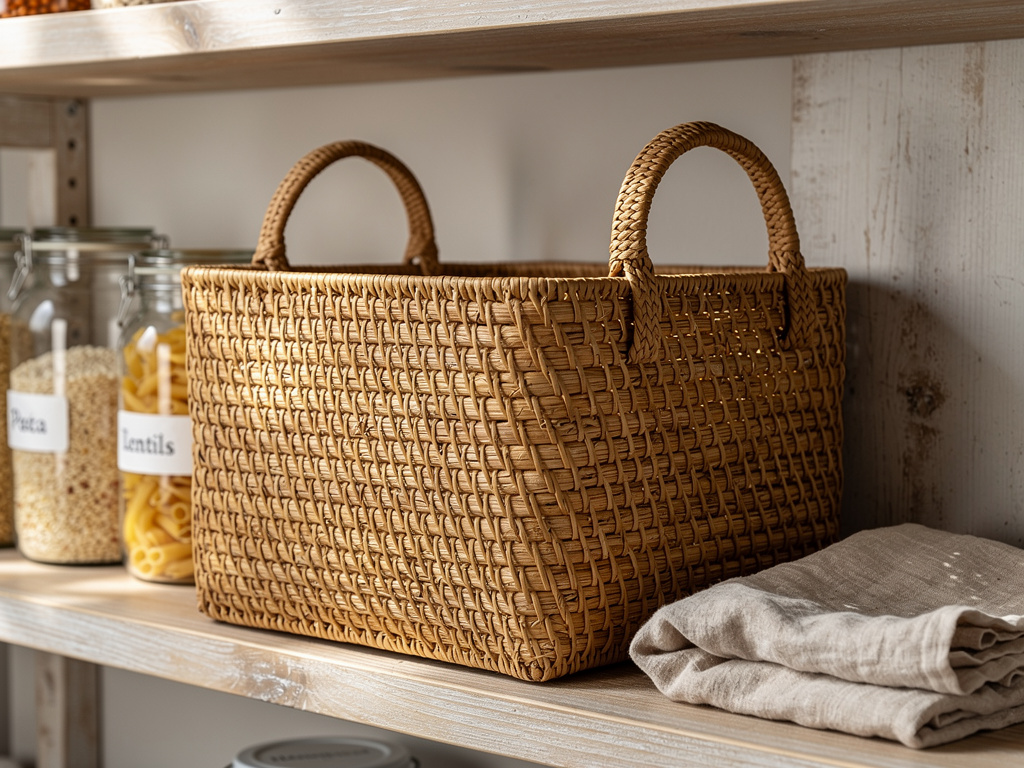
Rattan is a specific plant—the stem of climbing palms, flexible when steamed, durable when dried. It has a smooth, almost glossy finish and trends toward honey or golden tones. Handles daily use well. Dislikes moisture.
Wicker refers to the weaving technique. Wicker can be made from rattan, bamboo, reed, or paper. The word describes how something is made, not what it's made from.
Seagrass grows in coastal areas. More water-resistant than rattan. Rougher, more matte texture. Better near kitchen sinks or in pantries where humidity fluctuates.
For kitchens: use rattan for dry storage. Seagrass for anything that might get splashed. Avoid paper wicker entirely—it collapses within a season of real use. The durability difference becomes obvious after about six months of daily contact.
For more on how these materials compare in real kitchen conditions, explore our rattan vs wicker vs seagrass comparison guide.
Creating Functional Zones with Basket Storage
Smart cottagecore kitchen ideas with baskets use storage zones rather than decoration clusters. Here's how to build them without turning your kitchen into a showroom:
1. Identify your prep area — Place your largest basket (38cm+) here for produce storage. Ingredients within arm's reach while cooking. 2. Mark your coffee and tea station — A smaller basket (20cm) holds tea bags, sweeteners, and stirring spoons. The right-sized basket for the right task. 3. Set a table-adjacent zone — One basket near your dining table corrals cloth napkins, placemats, and serving utensils for fast table setting. 4. Assign one basket per category — Never mix produce with linens or pantry items. Cross-category baskets become clutter magnets within two weeks. 5. Test placement before committing — Live with the basket in a spot for three days before calling it permanent. Function reveals itself in daily use, not in planning.
The key is matching basket size to function. A 20cm basket works for tea supplies. A 38cm rectangular handwoven rattan basket handles a week's worth of mixed fruit. Measure your space first. Then shop.
See also our farmhouse kitchen organization guide for more zone-based storage strategies.
Maintenance That Actually Works
Forget elaborate tutorials suggesting monthly deep cleans with specialty brushes. That approach destroys natural fibers faster than daily use does. Here's what works:
1. Weekly: Shake out crumbs over the sink. Wipe the interior and exterior with a barely damp cloth. Done. 2. Monthly: Run a soft-bristle brush (an old toothbrush works) along the weave lines to dislodge stuck debris. Takes four minutes. 3. Quarterly: Mix a few drops of mild dish soap in water. Dampen a cloth—not wet, damp. Wipe down all surfaces. Follow immediately with a clean damp cloth to remove soap residue. 4. After each quarterly clean: Air dry in indirect light, away from heat sources. Never use a hair dryer. Never set near an oven or heating vent while wet. 5. For odor absorption: Place a small dish of baking soda inside the basket overnight. Remove in the morning. Repeat if needed.
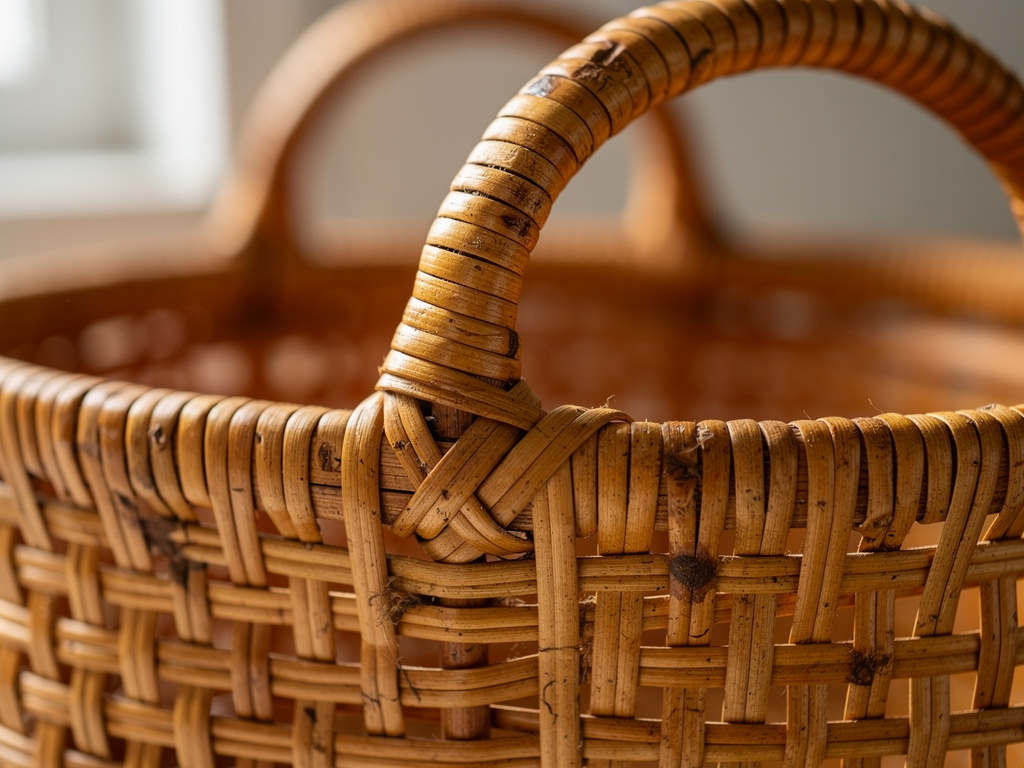
The darkening at the handles? The small scratches from daily contact? Normal. Expected. Those marks are evidence of actual use—the kind of character you can't replicate with a new basket.
For more detail on keeping your basket in shape, visit our rattan basket care guide.
FAQ: Cottagecore Kitchen Ideas with Baskets
What kind of baskets work best for a cottagecore kitchen aesthetic? Natural rattan, seagrass, or wicker baskets in honey, natural, or warm brown tones work best. Choose handwoven pieces over machine-made ones—the visible weave texture is the whole point. Rectangular shapes outperform round ones for counter storage because they sit flat against walls and appliances without wasted negative space. Is rattan safe for storing bread and fruit in the kitchen? Yes. Untreated natural rattan is food safe, and its open weave structure actively improves freshness by allowing airflow around produce. Research in postharvest science confirms that air circulation slows ethylene accumulation and moisture buildup—both primary drivers of spoilage. Avoid storing anything wet or sticky directly against the rattan fiber. How do I style a kitchen counter with baskets without it looking cluttered? One large basket (38cm) as your focal point. One smaller basket at a different height. Forty-five centimeters of clear counter between groupings, minimum. Odd numbers and varied heights create balance. The moment you exceed three basket groupings on one counter run, it stops reading as intentional and starts reading as overflow. What is the difference between rattan, wicker, and seagrass baskets? Rattan is a specific plant material from climbing palms—smooth finish, honey tone, flexible before drying, durable after. Wicker is a weaving technique, not a material; wicker baskets can be made from rattan, bamboo, reed, or paper. Seagrass is a separate coastal plant that's more water-resistant than rattan but rougher in texture. They are not interchangeable terms, despite how most retailers label them. Can I use a picnic-style basket as everyday kitchen counter storage? Absolutely—if it's the right size and construction. A rectangular handwoven rattan basket around 38cm wide with dual arched handles is near-ideal for counter use. The handles make it easy to relocate when prep space is needed. The rectangular footprint uses counter real estate efficiently. Just confirm it has no interior liner that would trap moisture against produce. How do I clean a rattan basket used for daily food storage? Weekly: shake out debris, wipe with a barely damp cloth. Monthly: soft brush along the weave lines. Quarterly: mild soap solution on a damp cloth, rinse pass with clean damp cloth, then air dry completely away from direct heat or sunlight. Never submerge rattan in water. Never use a dryer or heating vent to speed drying. Are handwoven rattan baskets worth the price compared to cheaper synthetic options? For regular daily use, yes. Handwoven rattan lasts 10+ years. Synthetic versions last 1–3 years under the same conditions. A $90 handwoven basket used daily for 10 years costs $9 per year. A $20 synthetic basket replaced every two years costs $10 per year—and never develops the patina or character of real material. Where can I find real rattan baskets that aren't from fast-fashion home stores? Artisan shops, specialty craft retailers, and direct-from-maker brands that publish information about their sourcing and artisan relationships. Price is a signal: genuine handwoven rattan requires 3–4 hours of skilled labor per piece. If the price seems impossible for handmade work, it almost certainly isn't handmade. Our Nordic Rattan Basket is priced at $89—fair for the craft, significantly below the $148+ that comparable quality commands elsewhere. What should I never store in a rattan basket? Anything wet, sticky, or strongly scented. Rattan absorbs odors into its fiber matrix—fish, garlic oil, and cleaning products all leave traces that don't wash out. Moisture trapped inside the weave creates mold before it's visible on the surface. Use a linen or parchment liner if you're storing anything with natural oils, and change the liner regularly. Does basket color matter for a cottagecore kitchen? Practically, no. Aesthetically, yes. Honey-tone and warm natural tones integrate with wood countertops, linen textiles, and terracotta ceramics that define the cottagecore palette. Bleached white or painted baskets fight against those warm undertones. A natural, unfinished rattan basket with its honey color intact will visually belong in a cottagecore kitchen without any styling effort.Making Cottagecore Kitchen Ideas with Baskets Work in Real Life
Cottagecore kitchen ideas with baskets work when they solve actual storage problems, not just create photographs. The aesthetic runs on natural materials, functional beauty, and pieces that improve with age rather than degrade. Real rattan earns its place over years of use.
Start with one piece. A rectangular handwoven rattan basket with dual arched handles and a honey-tone finish, approximately 38cm wide. No liner—the open weave does the work. Use it daily. Move it when you need the counter. Let it develop character.
Browse our Nordic Rattan Basket—handwoven, 38cm wide, dual arched handles, honey-tone natural rattan, priced at $89 instead of the $148+ comparable quality commands from specialty retailers.One good basket. That's where cottagecore kitchen ideas with baskets actually begin.


