
Unique Glass Cup with Dried Flowers: A Complete Guide
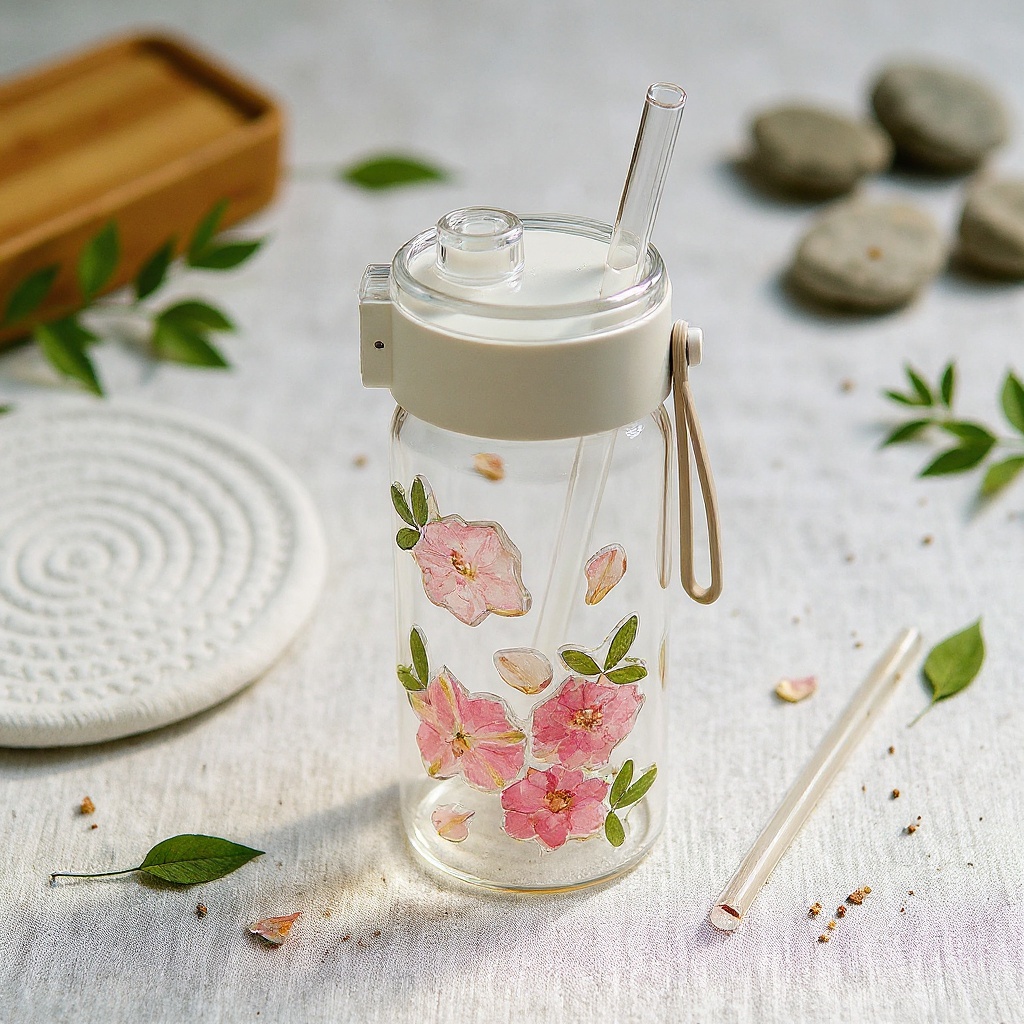
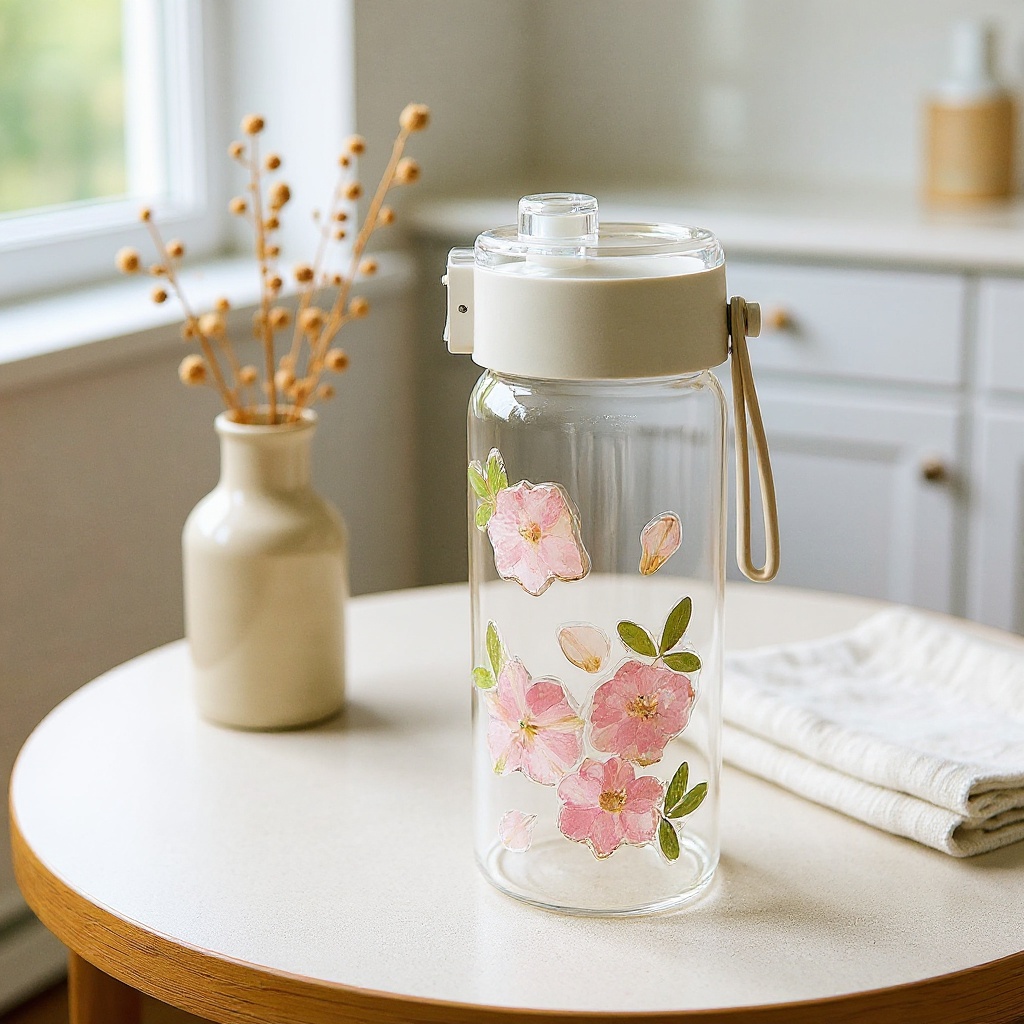
By Mei Lin Chen, botanical preservation specialist and founder of Solace & Straw · 9+ years designing and sourcing handcrafted botanical glassware · Background in material science with focus on plant-based adhesion techniques and borosilicate glassware productionA unique glass cup with dried flowers is a handcrafted piece where real preserved flower petals and green leaves are raised and textured across the outer glass surface, creating drinkware that functions as wearable botanical art. These cups are not printed. They are not painted. Each one carries actual botanicals — soft pink roses, yellow wildflowers, blue larkspur — dried, positioned by hand, and permanently secured to the glass exterior. A fitted frosted or clear dust-proof lid sits on top. A slender glass straw rests inside or alongside. Most quality versions use heat-resistant borosilicate glass and retail between $70–$120, a price point that reflects skilled handwork rather than factory output. Unlike mass-produced cups with screen-printed floral graphics, authentic dried flower glass cups showcase real petals in their natural colors and organic shapes, making every single piece genuinely different from the last.
What Makes a Unique Glass Cup with Dried Flowers Different From Regular Floral Drinkware
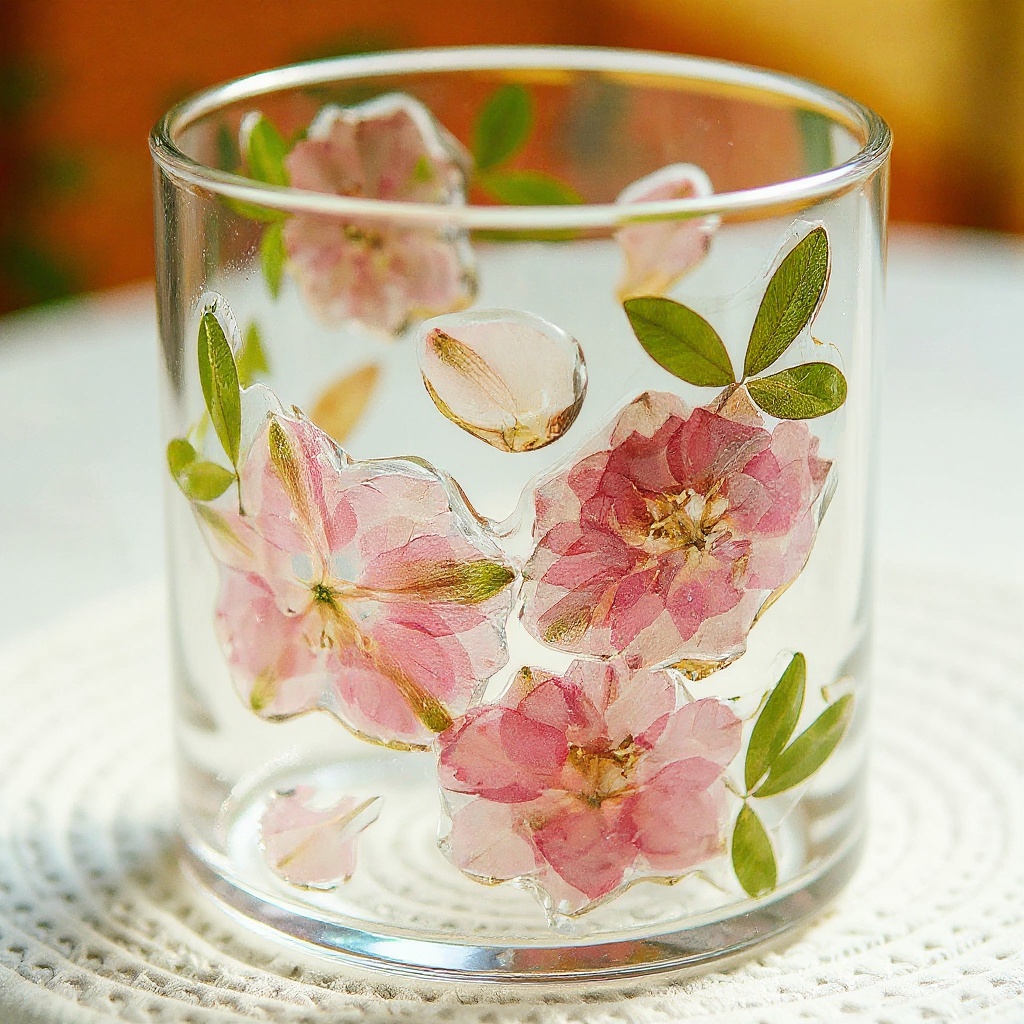
Most floral cups sold online use printed graphics or ceramic paint. A real dried flower glass cup takes a different approach entirely — one rooted in pressed flower craft traditions that date back centuries. The petals and leaves are first dried through a controlled process that pulls moisture below 10% while preserving structure and pigment. Then they are hand-positioned on the glass outer surface and secured using botanical adhesion techniques that create a raised, tactile relief you can feel with your fingertips.
The crafting process takes a minimum of 3 days for pieces that hold up. Day one involves botanical selection and arrangement planning. Day two covers the embedding sequence — flowers placed with intention, not scattered randomly. Day three handles finishing layers and protective coating cure time. This is not fast work. It cannot be automated.
Mass-produced printed cups from general marketplaces typically sell for $15–$35 using digital transfers or paint. Resin flower tumblers range $30–$60 but suspend synthetic or real materials inside plastic-adjacent resin rather than on glass. Authentic handcrafted versions like our Handcrafted Preserved Flower Glass Cup 400ml | Heat-Resistant | Gift-Ready sit at $88 — the artisan tier, comparable to verified top sellers across the handmade marketplace category.
The Science Behind Flower Preservation in Glassware
Flowers are mostly water. Fresh petals typically contain 80–90% water by mass (per botanical drying research published in the Journal of Horticultural Science & Biotechnology), and that moisture must be removed before any adhesion to glass is possible. Drying too fast destroys pigment. Drying too slow risks mold. The target window for most petal varieties sits at 100–110°F for 24–48 hours, with thicker botanicals and leaves requiring additional time due to higher cellulose density.
Once dried, the flowers must bond to a non-porous glass surface — a technical challenge that standard craft adhesives fail. Quality manufacturers use UV-resistant, food-safe silicone-based bonding agents rated for borosilicate glass expansion coefficients (borosilicate expands at roughly 3.3 × 10⁻⁶/°C compared to soda-lime glass at 9 × 10⁻⁶/°C, per materials science data from Schott AG). This matters because a cup that heats and cools daily will flex. The wrong adhesive yellows, clouds, or releases within months.
Glassblowing traditions inform the vessel design itself — the raised, textured outer surface isn't accidental. It provides mechanical grip points that help botanicals adhere and stay anchored through repeated handling and washing cycles.Real science. Real constraints. This is why shortcuts always show.
Design Variations and Color Options Available
Dried flower glass cups come in several distinct construction styles, each with practical trade-offs worth understanding before you buy.
| Style | Flower Placement | Thermal Rating | Durability | Price Range | Best For |
|---|---|---|---|---|---|
| Surface Raised/Embedded | Petals on textured outer glass | Up to 212°F | High (2–3 years regular use) | $70–$120 | Daily use, gifts |
| Between Double-Wall Glass | Flowers inside sealed glass layer | Up to 200°F | Highest (protected from wear) | $90–$150 | Display, special occasions |
| Resin Encased | Flowers in clear resin coating | Up to 140°F | Medium (resin yellows over time) | $30–$60 | Casual use |
| Hand-Painted Accent | Real flowers plus painted elements | Up to 180°F | Low-Medium | $40–$80 | Decorative display |
| Printed Floral | No real botanicals, graphic only | Standard glass rating | Low (paint chips) | $15–$35 | Budget, short-term |
Color palettes follow soft botanical themes. Pink and cream work for spring styling. Yellow and green suggest garden freshness suited for summer entertaining. Blue and purple tones photograph well under warm studio lighting against marble or linen surfaces — the pairing that makes these cups recognizable in editorial contexts.
The 400ml capacity is the functional sweet spot. Large enough for a full tea or iced coffee serving. Not so large it becomes visually heavy in photographs or awkward to hold.

Durability and Care Requirements You Need to Know
Here is something most articles skip: if you live in a subtropical or coastal humid climate where indoor humidity regularly exceeds 70%, the preserved flowers on surface-embedded cups can absorb ambient moisture over time, causing subtle structural changes and fading at the edges. It is a real limitation. Worth knowing before you spend $88.
For standard indoor environments, heat-resistant versions handle hot beverages up to 212°F without damage to either the borosilicate glass or the secured botanicals. Avoid abrupt thermal shock — pouring boiling water into a cold cup fresh from the refrigerator creates stress spikes that even quality glass prefers to avoid.
Cleaning protocol matters. Hand wash only. Lukewarm water, gentle dish soap, soft cloth or sponge. The raised textured surface can trap soap in botanical crevices, so thorough rinsing is required. No dishwashers — the combination of high heat, harsh detergent chemistry, and pressurized water spray degrades both adhesive bonds and petal integrity.
With proper care, preserved flowers on quality cups maintain their appearance for 2–3 years of regular use. One customer who purchased an earlier version of our 400ml cup reported the botanicals held their color through 3.5 years of daily morning tea use, stored away from a south-facing window. Factors that shorten lifespan:
1. Direct sunlight exposure (accelerates UV-driven pigment breakdown) 2. High washing frequency with warm-hot water 3. Repeated thermal cycling from cold storage to hot beverage use 4. Ambient humidity above 65–70% sustained over months 5. Physical impact to the raised botanical surface
Not fragile. But not indestructible.
Price Breakdown: Why a Quality Unique Glass Cup with Dried Flowers Costs More
The pricing of an authentic unique glass cup with dried flowers reflects material costs, skilled labor, and quality control — not marketing markup.
Material costs account for approximately 30% of retail price according to handmade goods pricing frameworks documented by the Craft Industry Alliance. Borosilicate glass blanks cost 3–4 times more than standard soda-lime glass at equivalent volume. Real preserved flowers add $8–$15 per cup depending on botanical variety and sourcing quality. UV-resistant, food-safe bonding agents contribute another $5–$10 per unit.
Labor is the largest cost component, representing 50–60% of the final retail price. The 3-day handcrafting minimum requires artisan time that cannot be compressed without sacrificing adhesion quality or composition integrity. Quality control inspection — checking each botanical for secure adhesion, color consistency, and rim finish — adds another layer of skilled review time.
This cost structure explains why authentic pieces like our preserved flower glass cup with heat-resistant properties and gift-ready packaging retail for $88 while printed alternatives sell under $35. The gap is not brand premium. It is labor math.
Best Uses and Styling Ideas for Maximum Visual Impact
Dried flower glass cups perform best in contexts that allow their botanical detail to be seen. A morning tea ritual becomes ceremonial with a cup that is itself an object worth looking at. The raised textured surface changes how the cup feels in your hands — there is a tactile dimension to these pieces that smooth glass simply cannot offer.
For entertaining and gifting, these cups excel in specific situations:
1. Afternoon tea service with floral-themed accompaniments 2. Garden party beverage presentations — fruit water, lemonade, cold brew 3. Brunch table settings where visual detail matters 4. Mother's Day, spring birthdays, or botanical-themed gift exchanges 5. Book club or gathering aesthetics with a cottage-core or artisan sensibility 6. Boutique retail display as functional decorative art 7. Lifestyle and product photography — the natural texture and color variation read well on camera
The included glass straw and dust-proof lid are not afterthoughts. The lid keeps the cup clean on a shelf or during transport. The straw allows cold drinks without disturbing the cup's visual presentation at the table. Together they make this a complete set, not just a decorative object.
The decorative arts tradition behind these pieces means they earn their place on open shelving between uses. They are working objects and display objects simultaneously. That dual function is rare in drinkware.
How to Choose a Unique Glass Cup with Dried Flowers That Actually Lasts
Start with the botanicals themselves. Real preserved flowers show natural color variation — a soft pink petal will have lighter edges, slight translucency, subtle tonal shifts. Synthetic flowers look uniform. Too perfect. If the colors look identical across every petal of the same variety, that is a warning sign.
Check adhesion quality at the botanical edges. Quality pieces have flowers that sit flat and secure with no lifted corners or loose edges. Run a fingertip across the surface — the raised texture should feel integrated, not applied like stickers over a smooth base.
Glass thickness signals durability. Hold the cup toward light. No thin spots. No wall irregularities. The rim should feel polished and smooth with no sharp points or rough edges from manufacturing shortcuts.
Inspect the complete set. A quality unique glass cup with dried flowers comes with a fitted frosted or clear dust-proof lid, a slender glass straw, and care documentation. Missing any of these elements from a piece priced above $70 is a flag worth noting.
Price is a reasonable quality proxy within categories. Handcrafted pieces from established artisan makers fall in the $70–$120 range based on Etsy market data for verified handmade botanical glassware (sourced from public listing analysis, 2023–2024). Below $50 with claims of real botanicals on glass — skepticism is warranted.
Ask questions. Good makers answer them.
Frequently Asked Questions
Are the flowers inside these cups real or fake?
Quality dried flower glass cups use real preserved flower petals and leaves — not artificial materials. The flowers are dried to below 10% moisture content and treated with UV-resistant coatings to maintain color. You can identify real botanicals by their natural tonal variation: a pink petal will have lighter edges and subtle translucency. Synthetic flowers look uniform across the entire surface. Always verify the product description confirms authentic botanicals, and check for natural color variation in product photos. Real flowers also feel slightly irregular under your fingertips — smooth uniformity is a sign of synthetic substitution.
Can you put hot drinks in a decorative flower glass cup?
Most quality dried flower glass cups use borosilicate glass rated for temperatures up to 212°F (100°C). Borosilicate's low thermal expansion coefficient of approximately 3.3 × 10⁻⁶/°C makes it significantly more resistant to thermal shock than standard soda-lime glass. However, avoid pouring boiling liquid directly into a cold cup — the sudden temperature differential creates stress peaks even high-quality glass prefers to avoid. Warm the cup first with lukewarm water, then add your hot beverage. Hot tea, pour-over coffee, and herbal infusions all work well in verified borosilicate versions.
How do you clean a glass cup with flowers on the outside without damaging them?
Hand wash only. Use lukewarm water and a gentle, fragrance-free dish soap. A soft cloth or non-abrasive sponge protects the botanical adhesion on the raised surface. The textured outer surface can trap soap residue in the spaces between petals, so thorough rinsing under running water matters more here than with smooth glassware. Never use abrasive scrubbers, steel wool, or rough sponges. Dishwashers are incompatible — the combination of water temperatures exceeding 140°F, harsh alkaline detergents, and high-pressure spray cycles degrades UV-resistant adhesives and accelerates petal breakdown. A gentle hand wash takes 90 seconds and extends the life of the piece by years.
Will the flowers fall off or fade over time?
With consistent proper care, preserved flowers on quality handcrafted cups maintain their structural integrity for 2–3 years of regular daily use. Gradual color softening is natural — it is not the same as flowers falling off. UV exposure from direct sunlight is the single largest driver of accelerated fading, reducing that 2–3 year range to 12–18 months when a cup sits in a south-facing window. Quality bonding agents — UV-resistant, silicone-based formulations compatible with borosilicate glass — should not release under normal handling. If botanical edges begin lifting before the 1-year mark, that indicates either inferior adhesive or an adhesive mismatched to the glass expansion rate. Reputable makers stand behind their adhesion quality.
Is a preserved flower glass cup safe to drink from?
Yes — when purchased from verified makers who specify food-safe materials. The botanical elements are on the exterior surface and make no contact with the interior drinking space. Quality manufacturers use food-safe, non-toxic adhesive formulations and protective coatings on the outer surface. The glass straw and dust-proof lid included with complete sets should also be confirmed food-safe. Avoid purchasing from unverified sources where material certifications are not documented, including unreviewed handmade listings where the adhesive and coating types are not disclosed. When in doubt, ask the seller directly for their material safety documentation.
What is the difference between a preserved flower glass cup and a resin flower tumbler?
The materials, aesthetics, and longevity profile differ in meaningful ways. Preserved flower glass cups embed real dried botanicals onto a borosilicate glass exterior using UV-resistant adhesives — the result is a transparent, lightweight vessel where the flowers remain visible on the surface with a raised, tactile texture. Resin tumblers suspend flowers (real or synthetic) inside a clear resin material, producing a heavier, more opaque-edged cup that tends to yellow as resin ages under UV exposure. Resin versions cost $30–$60 and are more impact-resistant. Glass versions with real botanicals cost $70–$120 but offer cleaner aesthetics, verified food-safe material profiles, and a lighter hand feel. They are different products with different trade-offs — not better and worse versions of the same thing.
Are dried flower glass cups dishwasher safe?
No. Never put a dried flower glass cup in a dishwasher. Dishwasher cycles combine three damaging factors simultaneously: water temperatures between 140–160°F that exceed safe adhesive thresholds, alkaline detergent chemistry that breaks down UV-resistant bonding agents, and high-pressure water spray that creates mechanical stress on raised botanical elements. A single dishwasher cycle can degrade adhesion that would otherwise last years under hand-washing conditions. The 90 seconds required for hand washing is the only safe cleaning method for these pieces. No exceptions.
How long do preserved flowers last on a glass cup?
Quality preserved flowers on well-made cups maintain their appearance for 2–3 years with regular daily use — longer for display-only pieces kept away from direct sunlight. One documented customer case showed botanicals holding color through 3.5 years of daily morning tea use in an indirect-light kitchen environment. The variables that most affect longevity: UV exposure (largest factor), ambient humidity above 65% sustained over months, washing frequency with warm water, and frequency of thermal cycling from cold to hot. Display-only cups stored in low-UV, climate-controlled environments have maintained botanical integrity beyond 5 years. Regular-use cups in humid climates should be expected to show fading in the 18–24 month range.
Honestly — who should NOT buy one of these?
Fair question. Skip this entirely if you live in a consistently humid coastal or tropical climate with indoor humidity regularly above 70% — moisture absorption will gradually affect petal structure and adhesion regardless of care quality. Also skip if you need dishwasher-safe drinkware — hand-wash-only is a hard requirement, not a preference. If you tend to leave cups in south-facing windowsills or on outdoor surfaces, the UV exposure will shorten the botanical lifespan noticeably. And if your goal is pure durability over aesthetics, a standard glass tumbler will outlast this piece without question. These cups are for people who want an everyday object that is also genuinely beautiful. That trade-off is worth being clear about.
Conclusion
A unique glass cup with dried flowers occupies a specific, honest category: handcrafted botanical drinkware that is more beautiful than a standard cup and more demanding to care for than a standard cup. The 3-day minimum crafting process, real preserved botanicals on a raised borosilicate glass exterior, fitted dust-proof lid, and included glass straw represent a deliberate design — not decoration added to commodity drinkware, but a functional object built around the botanical detail from the start.

The $88–$120 price range reflects material costs, skilled artisan labor, and the time that quality adhesion and finishing require. That is not a premium over a comparable product. There is no comparable product at $35.
If you want a piece that earns its place on a marble surface or linen shelf and works as a daily vessel for tea, coffee, or cold drinks, browse our Handcrafted Preserved Flower Glass Cup collection. Each 400ml cup includes a dust-proof lid, reusable glass straw, care documentation, and the certainty that real botanicals were positioned by hand by someone who cared how the finished piece looked.
Some things are worth doing slowly.