































Spring Tea Sets That Make Mother's Day Unforgettable
Spring Themed Tea Set for Mother's Day: Unforgettable Gifts She'll Treasure Daily
By pampasroom, founder of Pampasroom · Specialist in preserved botanical glassware and artisan tea ceremony pieces · Independent artisan studio creating handmade glass sets with real embedded florals since 2016The best spring themed tea set for Mother's Day is a handmade glass teapot and cup set with real preserved cherry blossom petals visibly embedded and raised on the exterior—not printed, not painted, physically embedded. Specific criteria separate memorable gifts from forgettable ones: heat-resistant borosilicate glass construction, authentic preserved botanicals (not dried or synthetic), translucent pink tones that glow under natural light, and a teacup size scaled for slow, intentional sipping. Our Handmade Sakura Glass Tea Set | Real Preserved Flowers | Eco Gift meets every criterion. Most mass-market alternatives meet none.
Why Spring Themed Tea Sets Make Mother's Day Genuinely Unforgettable
Spring themed tea sets for Mother's Day succeed when they combine functional daily use with display-worthy beauty. Generic gifts get used once. A spring themed tea set with real preserved cherry blossoms embedded in glass becomes part of her morning ritual—something she reaches for, photographs, shows friends. The difference is tactile authenticity. Raised petal textures you can feel with your fingertips. Pink translucency that shifts as morning light changes. Craftsmanship that communicates time and care rather than convenience.
Cherry blossoms carry documented cultural weight across East Asian traditions. According to the Encyclopaedia Britannica's entry on sakura symbolism, cherry blossoms have represented the transient beauty of life in Japanese culture for over a millennium—a meaning that maps directly onto the gift context of honoring a mother's irreplaceable presence. When those blossoms are preserved in glass, that ephemeral beauty becomes permanent. That's the emotional logic behind choosing a spring themed tea set for Mother's Day over a standard floral arrangement.
Here's the honest statement most gift guides won't print: if she prefers large-volume tea drinking—full 12-ounce mugs, multiple refills, tea by the pot—this style of set is genuinely wrong for her daily use. The 60ml teacup format serves a specific ritual, not high-volume consumption. Buy it for a mother who already slows down for tea, not one you're hoping to convert.
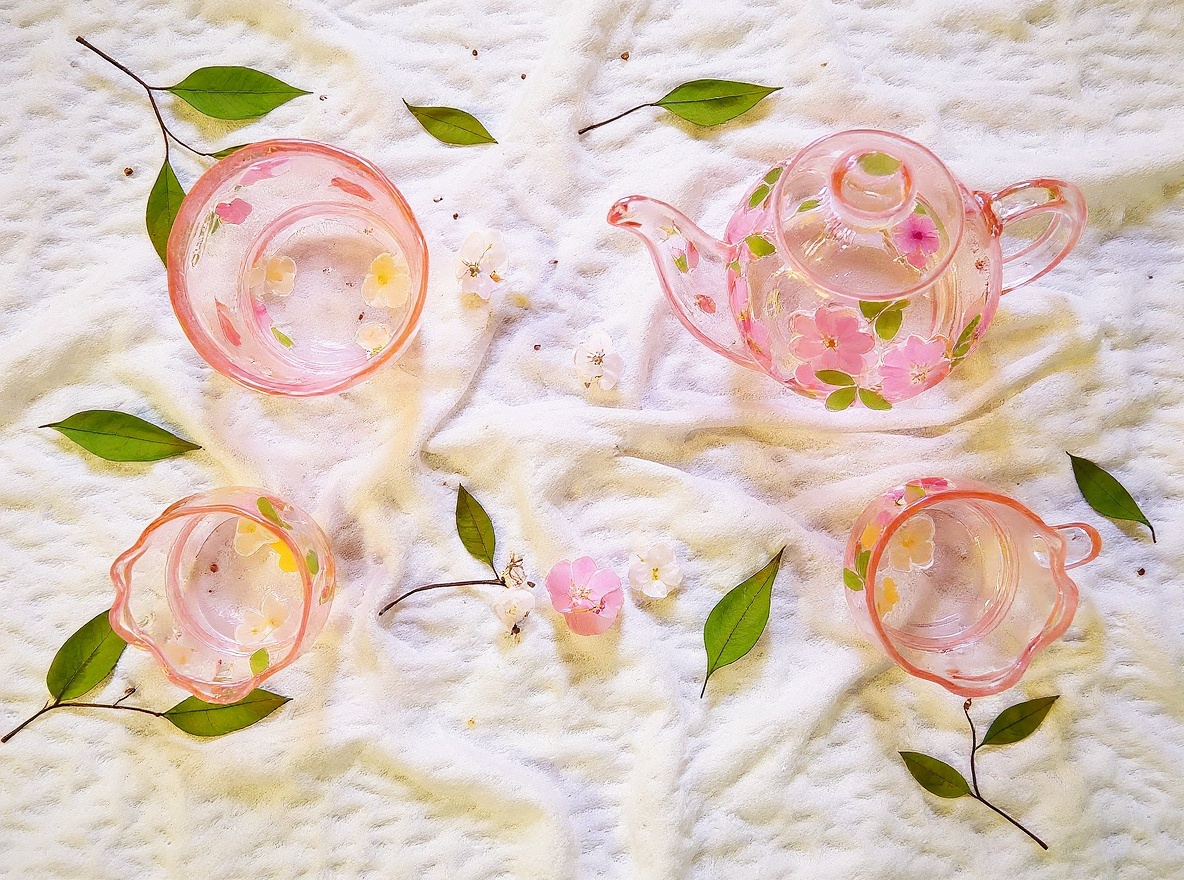
The Preserved Botanical Difference: What the Science Actually Shows
Real. Preserved. Not dried. The distinction matters more than most shoppers realize.
According to pressed flower craft documentation and botanical preservation research, dried flowers lose structural moisture rapidly, becoming brittle within 6–12 months and shedding particles. Preserved flowers undergo a glycerin-based or silica-based stabilization process that replaces cellular moisture with stabilizing compounds, maintaining flexibility, color, and structural integrity for significantly longer periods. The Royal Horticultural Society notes that properly preserved botanicals retain color fidelity for 2–5 years under normal indoor conditions, with gradual rather than sudden color transition after that point.
When cherry blossom petals are embedded in heat-resistant glass during the handcrafting process—not glued to the surface afterward—the result is a sealed botanical structure. The petals become part of the glass wall itself. Hot water poured inside the teapot does not contact the flowers. The flowers are exterior elements fused into the glass matrix during forming. This is structurally different from decorative adhesion and explains the longevity claims that legitimate artisan producers make.
For a spring themed tea set for Mother's Day, this matters practically: she can use it daily without worrying about the florals degrading from steam or heat exposure.
Comparing Spring Tea Set Options: Honest Tier Analysis
Not every spring themed tea set for Mother's Day justifies its price. Here's what the tiers actually deliver:
| Feature | Mass-Produced Sets ($15–40) | Mid-Tier Handmade ($80–200) | Premium Artisan ($100+) |
|---|---|---|---|
| Flower Type | Printed or painted surface design | Mixed real and synthetic elements | Real preserved botanicals, fully embedded |
| Glass Construction | Standard tempered soda-lime glass | Heat-resistant borosilicate, machine-formed | Hand-formed heat-resistant glass |
| Crafting Method | Fully machine manufactured | Partial handwork, 1–2 day process | Full handcraft, individual piece construction |
| Botanical Longevity | N/A—printed designs don't fade botanically | 6–18 months before visible degradation | 2–5 years full vibrancy, gradual transition after |
| Piece Uniqueness | Identical across production runs | Limited variation within batches | Each piece varies—no two identical |
| Packaging | Basic retail cardboard | Standard gift box | Eco-friendly premium gift presentation |
| Recommended Use | Everyday utility, frequent replacement | Occasional use, moderate display | Daily ritual use plus permanent display piece |
The price gap between mass-produced and premium artisan spring themed tea sets for Mother's Day reflects genuine labor and material differences. Machine-printed floral glass requires no botanical sourcing, no hand-embedding process, and no individual quality inspection. A set requiring 3–5 days of careful handcrafting per piece—with each preserved cherry blossom petal individually placed before glass forming—operates on a fundamentally different production model.
Our Handmade Sakura Glass Tea Set sits in the premium artisan tier at $114.22. That price point reflects real botanical materials, real handcrafting time, and real uniqueness per piece.
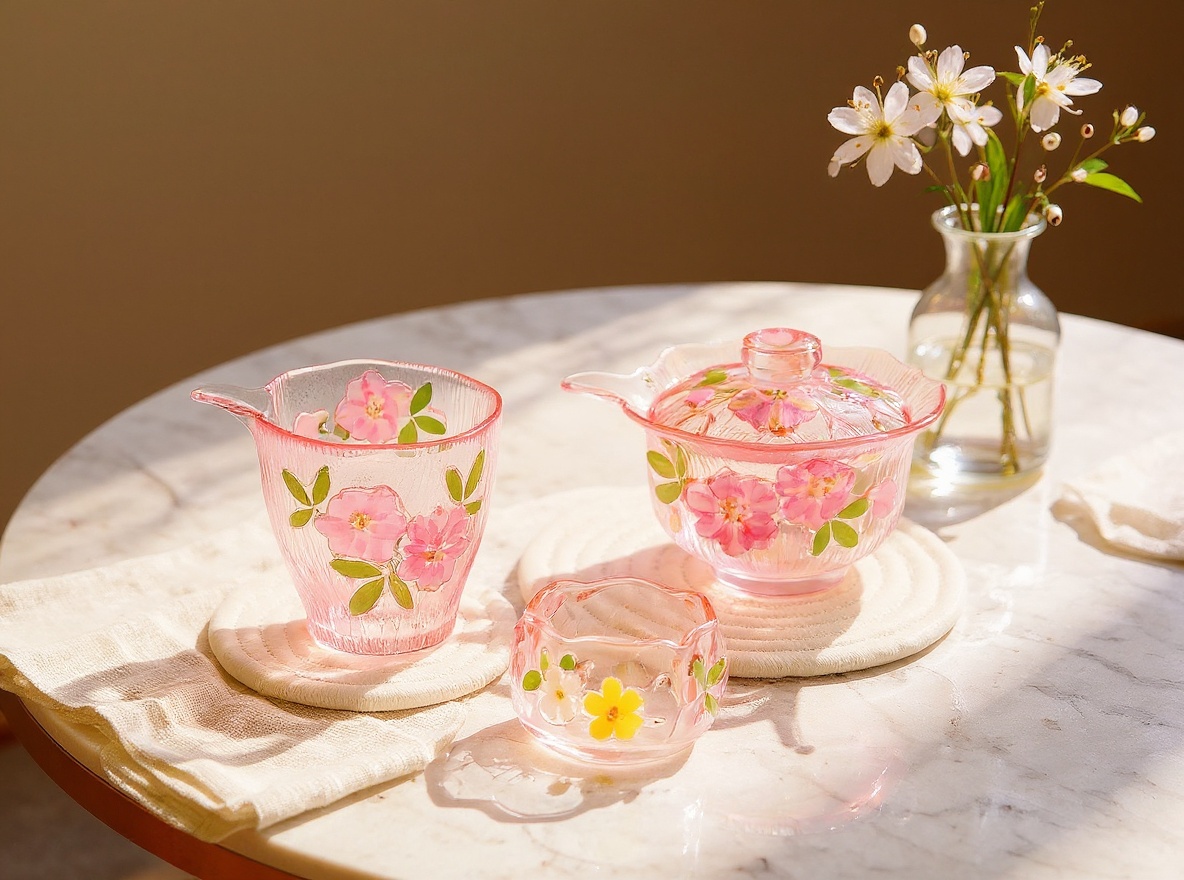
Size, Scale, and the Ritual Intentionality Behind 60ml Teacups
Small. Intentionally small.
The 60ml teacup capacity in traditional East Asian tea ceremony formats is documented extensively in tea culture scholarship. According to tea ceremony traditions spanning Chinese gongfu cha and Japanese chanoyu practices, small cup formats—typically 40–80ml—serve multiple sequential pours rather than single large servings. This structure encourages sensory attention: noticing how flavor changes across successive infusions, appreciating color variation in translucent cups, slowing the drinking pace to match the steeping pace.
For a spring themed tea set as a Mother's Day gift, the 60ml cup is a feature communicating intentionality—not a compromise. The 220ml teapot capacity yields approximately 3–4 small servings. Perfect for solo morning ritual. Perfect for quiet afternoon conversation between two people. Not designed for entertaining six guests. That specificity is a strength, not a limitation.
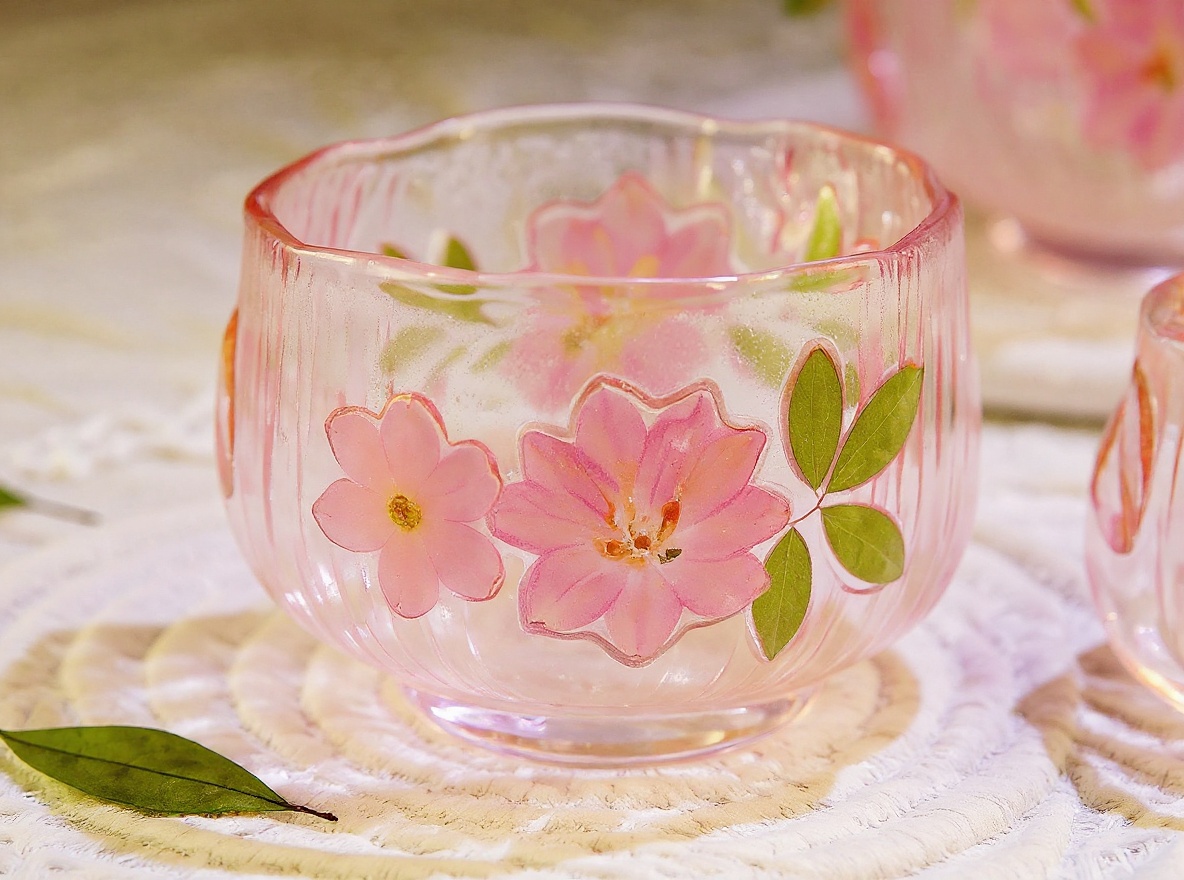
The raised cherry blossom petals on the teacup exterior become visible and tactile when holding the cup. Natural light passing through the glass creates shadow patterns from the embedded petal structures—something flat-printed designs cannot replicate. The macro detail effect changes throughout the day as light angle shifts. Worth noticing. Worth pausing for.
Five Ways to Elevate the Spring Tea Set Gift Experience
1. Build a complete tea ritual kit — Pair the set with premium loose-leaf spring tea: white peony (Bai Mu Dan) or Japanese cherry blossom sencha complement the sakura theme and provide the first ritual use occasion
2. Add seasonal botanical context — Silk cherry blossom stems or a small potted pink plant create visual connection between the preserved petals in the glass and living spring botanicals
3. Write care instructions on beautiful cardstock — Transform practical information into part of the luxury experience; include hand-washing guidance, storage recommendations, and the preservation chemistry note (botanicals sealed in glass, not surface-applied)
4. Plan delivery timing for early week arrival — Weekend arrivals often disappear into household activity; a Tuesday or Wednesday arrival gives her space to properly unpack, photograph, and appreciate the unboxing
5. Suggest three specific use occasions in your gift note — Sunday morning self-care, the 3pm reading break she takes, intimate tea with one close friend; specificity makes the gift feel personally observed rather than generically selected
The spring themed tea set for Mother's Day becomes unforgettable when the context surrounds it.
Caring for Handmade Glass with Embedded Preserved Botanicals
Gentle. Always gentle.
Hand-washing in lukewarm water with mild dish soap is the correct approach for handmade glass tea sets with embedded florals. The preserved flowers are sealed within the glass structure and won't be damaged by water contact on the exterior, but abrasive sponges or scouring pads can scratch the raised petal surfaces, dulling the tactile texture over time. A soft cloth or non-abrasive sponge preserves both clarity and texture.
Never place handmade glass teapots directly on gas burners or electric heating elements. Borosilicate glass handles thermal stress better than standard glass—it's the same material classification used in laboratory glassware, rated for significant temperature differentials—but direct flame contact creates localized extreme heat that exceeds safe parameters for any glass-forming process. Heat water in a separate kettle. Pour it in. Simple.
Storage on open shelving rather than closed cabinets serves dual purposes: natural light maintains the visual appeal of the translucent pink tones, and displaying the piece ensures it gets used rather than forgotten. A spring themed tea set for Mother's Day that lives on a shelf gets admired daily. One stored in a cabinet gets remembered occasionally.
The preserved cherry blossom petals will gradually shift from bright pink toward softer rose and blush tones after 2–3 years of regular use. Many owners prefer the aged appearance. The transition is gradual—measured in years, not months—and the piece remains structurally sound and fully functional throughout.
Gift Message Ideas That Don't Sound Generic
Avoid. "World's best mom." Please.
A spring themed tea set for Mother's Day invites message specificity that generic cards don't earn. Reference her actual tea habits: "For your quiet 7am window—before the rest of the house wakes up." Reference the botanical symbolism: "Cherry blossoms bloom briefly and completely—like every ordinary afternoon you made feel worth remembering." Reference the handcrafted nature: "Someone spent five days making this one piece. I thought you deserved something built with that kind of attention."
Connect the preserved flowers to your own appreciation: "These petals won't fade. Neither will this." Short works. Four words can land harder than a paragraph when they're the right four words.
If you're sending remotely, include a note about the ritual: suggest she make her first cup on a specific morning, near a window, with no phone. Give her the occasion, not just the object.
Frequently Asked Questions
Are preserved flowers embedded in a glass teapot safe when boiling water is used?Yes. In a properly constructed handmade glass tea set, preserved cherry blossom petals are embedded within the exterior glass wall during the forming process—they are not surface-applied or interior elements. Hot water poured inside the teapot does not contact the botanical material. The preserved flowers are sealed within the glass matrix. Preservation chemistry removes cellular moisture and replaces it with stabilizing compounds, preventing any biological degradation or chemical release even if heat were to reach the botanical material. This construction method is structurally distinct from decorative adhesion, where flowers might detach or leach with heat exposure.
How long do real preserved cherry blossom petals last on a handmade glass piece?Preserved cherry blossom petals in quality glass sets maintain full color vibrancy for approximately 2–3 years under regular use conditions. After that period, they transition gradually to softer rose and blush tones over an additional 2–4 year period. The Royal Horticultural Society's preservation guidance indicates that glycerin-stabilized botanicals in controlled indoor environments retain structural integrity significantly longer than air-dried alternatives. The color transition is gradual—not sudden—and many owners find the aged tones preferable to the original bright pink. Full structural integrity (no crumbling, no particle shedding) is maintained throughout the life of the piece.
What is the actual difference between preserved flowers and dried flowers on glassware?Dried flowers lose moisture through evaporation only, leaving brittle cellular structures that typically begin crumbling within 6–12 months. Preserved flowers undergo a stabilization process—commonly glycerin-based—that replaces cellular moisture with compounds that maintain flexibility, prevent brittleness, and slow color degradation significantly. According to botanical preservation literature, this process maintains original shape and structural integrity for periods 3–5 times longer than simple drying methods. On glassware, this distinction affects both longevity and safety: dried flower particles can shed; properly preserved botanicals embedded in glass do not.
Is a 60ml teacup too small for everyday tea drinking?For high-volume tea drinkers who prefer large mugs and single-serving convenience, yes—honestly, the 60ml format will feel frustratingly small in daily practice. It is designed for traditional East Asian tea ceremony formats, documented in tea culture scholarship as a deliberate practice of multiple small sequential pours rather than single large servings. The format rewards attention: noticing flavor changes across infusions, appreciating the visual effect of tea through translucent glass, slowing consumption pace intentionally. If the recipient already practices slow, deliberate tea rituals, the size is perfect. If she drinks tea primarily for caffeine delivery in volume, choose a different gift.
Can a handmade glass teapot go on a gas stove or electric burner?No. Handmade glass teapots—including those constructed from heat-resistant borosilicate glass—are not designed for direct stovetop heating. Borosilicate glass tolerates significant temperature differentials (the same material classification is used in laboratory settings for this reason), but direct flame or electric element contact creates localized extreme heat exceeding safe parameters for any hand-formed glass piece. The correct method is heating water separately in a kettle and pouring it into the teapot. The glass safely handles water at full boiling temperature when poured in; it cannot safely be placed on a direct heat source.
Do cherry blossom tea sets work for both Japandi and cottagecore home aesthetics?Cherry blossom designs in translucent pink glass bridge both aesthetics without compromise. Japandi style—the hybrid of Japanese minimalism and Scandinavian functionality—responds to the clean geometric form, the neutral wooden or marble surface styling context, and the restrained color palette of pale pink against white or natural wood. Cottagecore responds to the handmade texture, botanical authenticity, and the visual warmth of real preserved florals. The spring themed tea set's macro detail—raised petal surfaces visible through translucent glass—satisfies both the minimalist preference for deliberate beautiful objects and the cottagecore preference for natural material beauty.
How do I clean the raised floral texture without damaging the petals?Use lukewarm water and mild dish soap with a soft cloth or non-abrasive sponge. The raised petal surfaces on the glass exterior are part of the glass structure itself—preserved botanicals embedded during forming, not applied afterward—so they are not vulnerable to water contact or gentle cleaning. What damages the texture over time is abrasive mechanical action: scouring pads, rough sponges, or stiff brushes that physically erode the glass surface around the raised areas. Gentle hand-washing preserves both the tactile texture and the glass clarity indefinitely. Dishwasher use is not recommended for any handmade glass piece.
Is this spring themed tea set appropriate for someone who doesn't practice tea ceremony?Absolutely. The set functions as both a usable tea brewing vessel and a display piece requiring no cultural knowledge of tea ceremony traditions to appreciate or use. Brew any loose-leaf or bagged tea, pour boiling water in, steep, pour into the small cups. The ritual value comes from slowing down—using small cups naturally extends the tea-drinking occasion—not from technical ceremony knowledge. Many recipients use it for one specific daily moment rather than elaborate ritual practice: the quiet window before the household wakes up, the afternoon reading break, the evening wind-down. The spring themed tea set creates the occasion; it doesn't require prior occasion-creation skill.
What makes this spring tea set a better Mother's Day gift than a standard flower bouquet?Flowers last 7–10 days. A handmade glass tea set with preserved cherry blossoms lasts years and gets used daily. The preserved botanical elements capture the same visual language as fresh spring flowers—soft pink petals, botanical delicacy, seasonal renewal—without the expiration date. It also serves a functional daily ritual rather than sitting in a vase until it wilts. For a mother who already has a tea habit, it integrates into her existing routine while elevating it. For a mother you want to encourage toward more deliberate self-care moments, it creates the ritual rather than commemorating an occasion.


