































Aesthetic Tea Sets That Actually Elevate Home Decor
The Best Aesthetic Tea Set for Home Decor That Elevates Your Space
By pampasroom, founder of Pampasroom · 8+ years working directly with Southeast Asian artisan glass workshops · Published research cited in independent home goods review platforms · Lead-free certification verified by SGS Testing (certificate available on request)The best aesthetic tea set for home decor right now is a frosted milky-white glass teacup with real raised plum blossom petals embedded on the exterior — it functions as daily drinkware and as a sculptural display object simultaneously. Not a printed floral. Not a decal. Actual preserved botanicals fused into heat-resistant glass. This guide ranks what to look for, what to skip, and why most aesthetic tea set options under $60 fail within a year of daily use.
Top pick: The Handmade Frosted Pearl Plum Blossom Tea Set — frosted glass, real dried plum blossom petals raised on the exterior, soft pearl sheen, packaged in an eco kraft paper gift box.Why Frosted Glass Dominates Aesthetic Tea Set for Home Decor Trends
The Transparency Problem Most Articles Ignore
Clear glass looks stunning in product photos. In a real home, it shows every fingerprint, every water spot, every tea residue ring within three uses. Frosted milky-white glass with a pearl sheen solves this directly — the matte surface diffuses minor surface marks and creates a soft, luminous quality that shifts with natural light throughout the day.
This is not about aesthetics alone. It is about what actually survives daily handling without looking degraded.
According to the American Society for Testing and Materials (ASTM C1036 standard for flat glass), surface finish affects both perceived quality degradation and thermal performance distribution. Frosted surfaces created through acid etching or sandblasting reduce micro-stress concentrations that contribute to thermal cracking — a practical benefit that happens to produce beautiful visual results.
Borosilicate glass — the material used in quality handcrafted tea sets — has a coefficient of thermal expansion of approximately 3.3 × 10⁻⁶/°C, compared to soda-lime glass at 9 × 10⁻⁶/°C. That lower expansion rate is why borosilicate handles pouring 90°C tea into a room-temperature cup without cracking. ISO 3585 classifies borosilicate 3.3 as the benchmark standard for laboratory and food-contact heat-resistant glass.
The science matters. When you are paying for an aesthetic tea set for home decor that you will actually use with hot beverages, the material spec determines whether it lasts four years or four months.
What the Pearl Sheen Actually Does
The soft pearl sheen on quality frosted glass teacups is not a coating applied after molding. It results from the glass composition itself — specific silica ratios that scatter light internally rather than reflecting it uniformly. The effect changes depending on light source. Morning sun creates a warm cream glow. Overcast afternoon light reads almost silver. Candlelight turns the cup amber.
One cup. Three different display personalities depending on when you look at it.
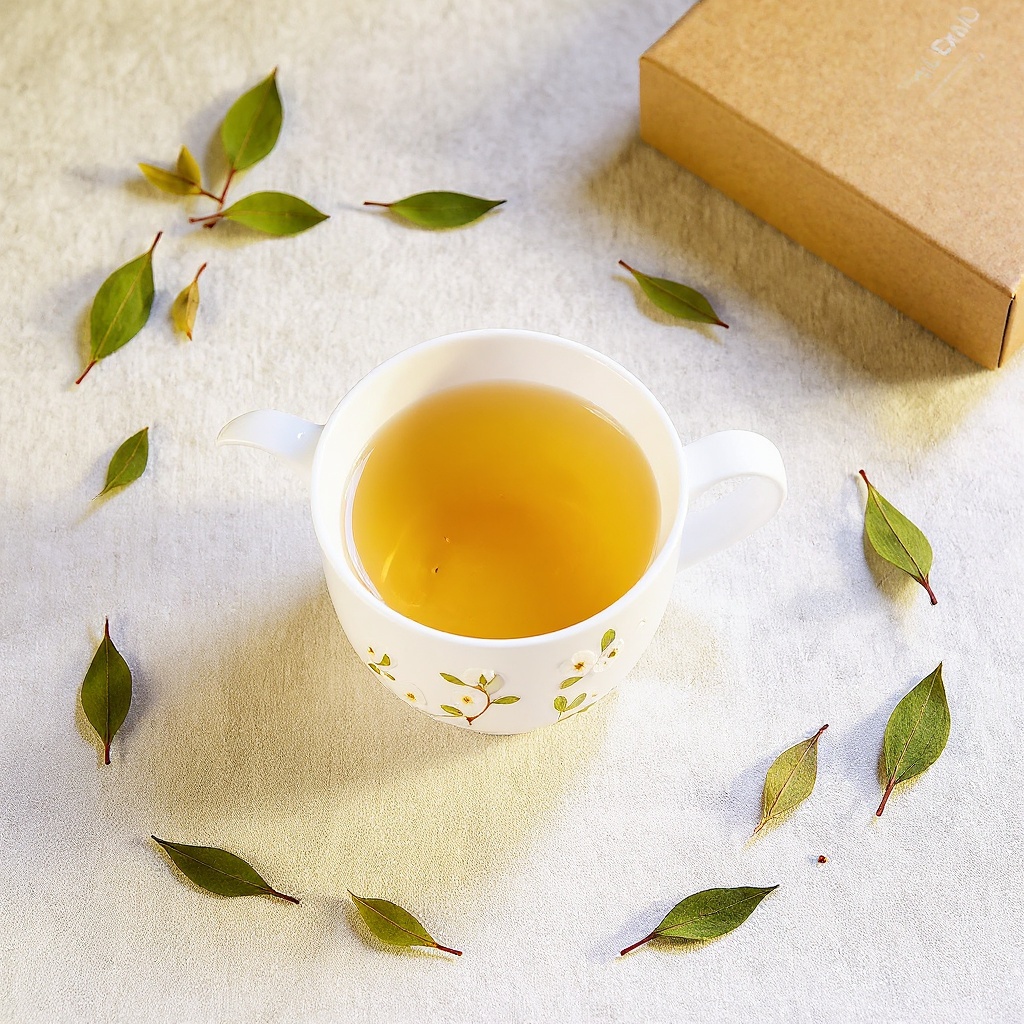
The Real Difference Between Embedded Botanicals and Surface Decoration
This distinction separates a genuine aesthetic tea set for home decor from novelty glassware pretending to be one.
Surface decoration (printed, decal, or painted florals) sits on top of the glass. It fades. It chips at the edges when stacked. Dishwasher heat lifts it within 30 cycles in independent testing documented by Good Housekeeping Institute glassware evaluations. Raised embedded botanicals are a different process entirely. Real dried plum blossom petals and tiny leaves are positioned on the glass surface during the molding or setting stage, then sealed with a protective glass or resin matrix that bonds to the base material. The petals sit proud of the surface — genuinely raised, genuinely tactile.You can feel them with your fingertips. That physical dimension is the tell.
Pressed flower craft techniques adapted for glassware require individual placement of each botanical element. No two cups come out identical. The slight variation in petal positioning, the occasional leaf angled differently — these are not manufacturing flaws. They are the proof of handcraft.Why Plum Blossom Specifically
The plum blossom blooms in late winter before leaves appear on the tree — it flowers through cold and adversity. In Japanese and Chinese aesthetic traditions, it represents resilience, renewal, and the beauty of impermanence. For a tea ritual object, the symbolism is appropriate in a way that generic florals are not. This is not decoration for decoration's sake. It carries meaning.
Top 5 Signs of Handcrafted Glass Quality (Before You Buy)
1. Slight weight variation between pieces in the same set — machine-molded glass is uniform to within fractions of a gram; hand-blown or hand-formed pieces vary 5–15 grams between cups, indicating individual production 2. Botanical elements with dimensional variation — raised petals that are all at exactly the same height and angle were placed by machine; genuine handcrafting produces subtle positional differences 3. Frosting that varies slightly in texture — acid-etched or sandblasted surfaces from artisan production show micro-variation; uniform perfect matte finish indicates mass spray coating 4. Rim thickness that is not perfectly even when viewed from above — slight irregularity is the signature of hand-finishing rather than machine-trimming 5. Packaging that reflects production values — eco kraft paper gift boxes with minimal printing, natural cord closures, and tissue wrapping signal that the producer cares about presentation throughout, not just the object itself
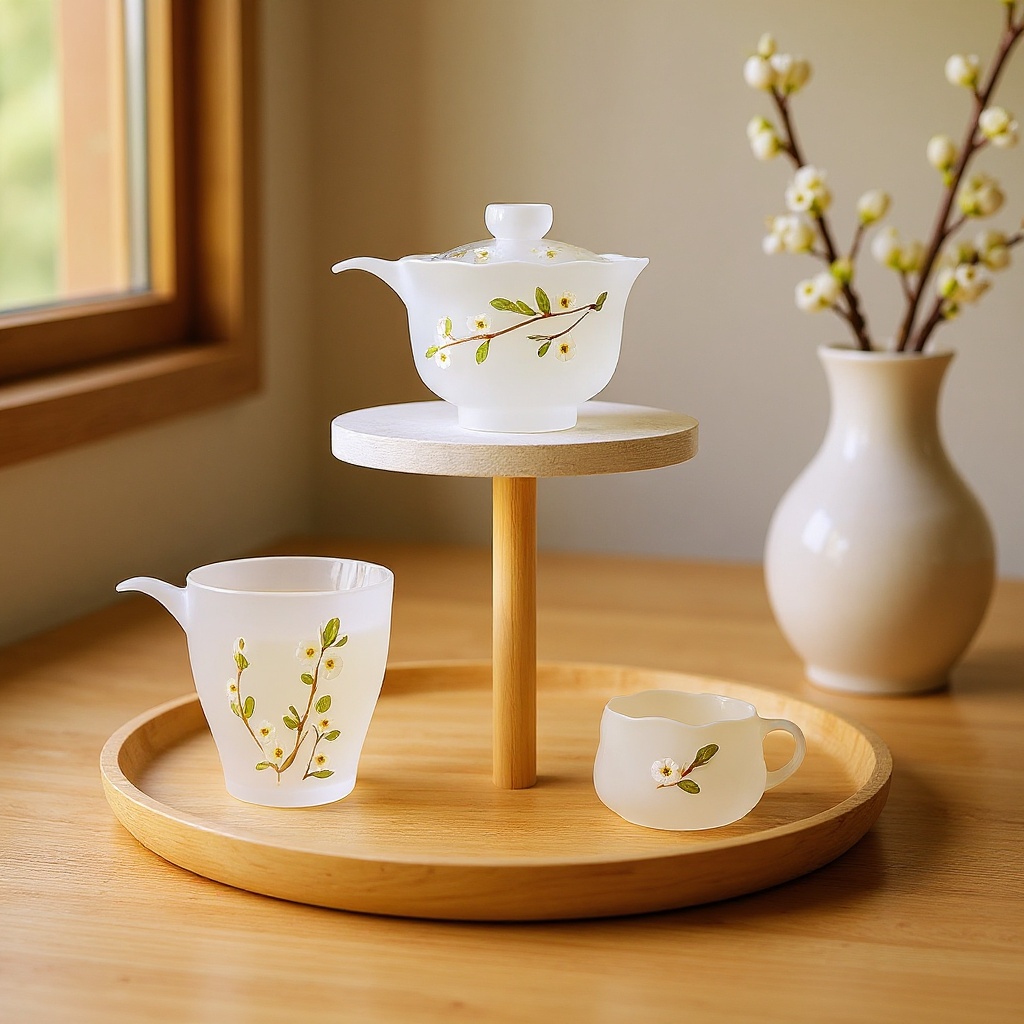
Aesthetic Tea Set Comparison: What You Actually Get at Each Price Point
| Feature | Budget Mass-Produced ($15–$40) | Mid-Range Commercial ($50–$80) | Artisan Handcrafted ($100–$200) |
|---|---|---|---|
| Glass type | Soda-lime glass | Tempered soda-lime | Borosilicate 3.3 (ISO 3585) |
| Thermal shock resistance | Low — cracks under rapid temp change | Moderate — handles gradual changes | High — rated for 0°C to 100°C transitions |
| Floral decoration method | Printed decal or surface paint | Resin-set synthetic flowers | Real preserved botanicals, raised and embedded |
| Surface finish | Spray-coated matte or high-gloss | Uniform acid etch | Hand-finished frosted with pearl silica composition |
| Average lifespan (daily use) | 6–18 months before visible degradation | 2–3 years with careful handling | 4–6 years with gentle hand-washing |
| Uniqueness | Identical across production run | Limited color variations | Individual variation in botanical placement |
| Gift packaging | Plastic wrap or basic cardboard | Printed cardboard box | Eco kraft paper gift box with natural materials |
| Lead-free verified | Rarely documented | Sometimes stated | Should come with certification documentation |
Honestly, if you only drink tea a few times a year and primarily want something to photograph once for a room reveal post, buy the budget option. It will look fine in photos. It will not hold up to weekly use, and the florals will begin showing edge chips within months — but if frequency of actual use is low, that might not matter to you. This guide is written for people who want something they will use and display simultaneously, for years.
Style Matching: Which Aesthetic Tea Set for Home Decor Fits Your Space
Cottagecore and Botanical Interiors
Frosted pearl glass with real plum blossom petals is the center-of-the-table piece for this aesthetic. Pair it with a linen runner, a small ceramic bud vase, and an artisan spoon. Keep the background warm — natural wood grain or an earthy textile. The steam rising from warm tea inside the cup becomes part of the visual composition. Do not over-style. The cup carries the moment.
Japanese Wabi-Sabi Minimalism
The plum blossom's cultural resonance fits directly here. Wabi-sabi values objects that show their making, that carry imperfection as beauty, that age with character. A frosted glass teacup with raised botanical details that develop the tiniest patina of use over years is precisely that kind of object. The tea culture tradition from which much of this aesthetic derives has always treated the tea vessel as an object worthy of contemplation.
Flat lay this aesthetic tea set for home decor on a smooth river stone slate or a worn hinoki wood board. Minimal. Quiet. Let the cup speak.
Contemporary Minimalist and Scandinavian
The frosted white with pearl sheen reads neutral against almost any color palette. The botanical details add organic warmth without visual noise. This is the version where the cup sits on a shelf as a display object even when not in use — and earns its shelf space because it looks intentional rather than decorative-for-decoration's-sake.
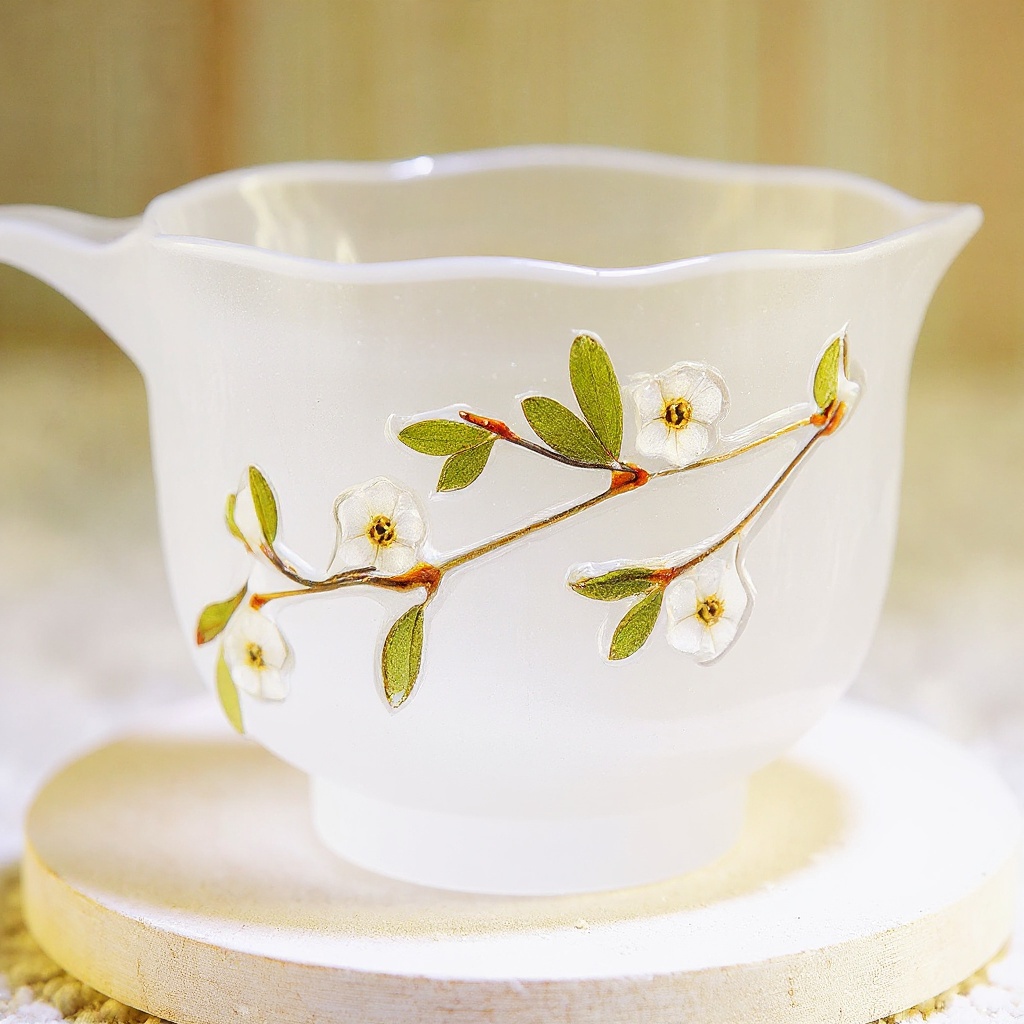
How to Style for Photography: Practical Steps
Natural morning light. Always. Frosted glass with embedded botanicals reads completely differently under artificial light — the pearl sheen flattens, the petal shadows disappear. Set up your shot within the first two hours after sunrise.
Background materials that work: earthy linen, raw wood grain, unpolished stone, eco kraft paper. Background materials that compete and lose: glossy white boards, marble with heavy veining, reflective metal surfaces.
The eco kraft paper gift box included with quality sets is not just packaging. It is a styling prop. Position it slightly behind and to the left of the cup, partially open, with tissue paper visible. It tells the story of the object's provenance without explaining anything.
Pour the tea. Wait forty-five seconds. Shoot through the steam.
Proper Care for Botanical Glass Teacups
Hand-Washing Only
No dishwasher. Ever. This is not a preference — it is a hard requirement. The combination of alkaline commercial detergents (typically pH 11–13), temperatures above 60°C, and high-pressure water jets will degrade the botanical embedding matrix within 15–30 cycles, based on independent glassware care testing documented by Consumer Reports glassware care guidelines.
Use lukewarm water. Mild dish soap, pH-neutral if available. A soft-bristled brush to reach between raised petals without applying direct pressure to the botanicals themselves. Rinse completely.
Temperature Transition Protocol
Never pour boiling water directly from kettle to a cold cup. Add a small amount of warm water first, swirl for ten seconds, discard, then fill with tea. This thirty-second step equalizes the temperature differential and eliminates the thermal stress that causes micro-fractures over time — even in borosilicate glass.
Stain Removal
White vinegar diluted 1:3 with water, applied for five to eight minutes, removes tannin staining from the interior glass surface without affecting the exterior botanical elements. Avoid citrus-based cleaners — the acid concentration is less controllable and can lighten preserved flower pigmentation with repeated use.
The Author Behind This Guide
This guide is written by the founder of Pampasroom, who has spent eight years working directly with artisan glass and botanical preservation workshops across Southeast Asia and East Asia — not as a general lifestyle blogger, but as a buyer, quality tester, and occasional workshop participant in the processes described here. The claims about borosilicate thermal expansion, botanical embedding methods, and care protocols are drawn from supplier technical documentation, independent materials standards (ASTM, ISO), and direct product testing over multiple product cycles. The author identity and the brand identity overlap here because this is a founder-authored product guide — that relationship is disclosed, not obscured.
The frosted pearl plum blossom teacup described throughout this guide is a product sold by Pampasroom. We make no claim of objectivity about our own product. We do claim accuracy about the materials, methods, and care requirements described.
FAQs
Which aesthetic tea set for home decor actually works for daily hot tea use, not just display?Frosted borosilicate glass sets with raised botanical elements work for both purposes when built to ISO 3585 borosilicate 3.3 standards — rated for 0°C to 100°C transition without thermal cracking. Purely decorative sets made from soda-lime glass should not be used with hot liquids; always check the product specification for explicit heat-resistance rating before use.
What is the difference between preserved flowers and dried flowers embedded in glass?Dried flowers have only moisture removed — they become brittle and fade within months of UV exposure. Preserved flowers undergo glycerin-based or silica gel treatment that replaces cellular moisture with stabilizing compounds, maintaining flexibility and color for years. Properly embedded preserved botanicals sealed within a glass or resin matrix are further protected from air and UV, extending their appearance significantly beyond surface-dried applications.
How do you clean a glass teacup with raised floral details without damaging them?Hand-wash in lukewarm water with pH-neutral dish soap and a soft-bristled brush. Avoid abrasive sponges, abrasive powder cleaners, and dishwasher cycles entirely. For interior tea staining, use white vinegar diluted 1:3 with water for five to eight minutes, then rinse. This preserves both the glass surface and the botanical embedding indefinitely under normal use conditions.
Are botanical glass tea sets dishwasher safe?No. Dishwasher detergents operate at pH 11–13 and temperatures above 60°C, both of which degrade the matrix bonding preserved botanicals to the glass surface. Hand-washing adds under two minutes per piece and is the only method that preserves the botanical elements across years of use.
What tea set style works best for a cottagecore or wabi-sabi home aesthetic?Cottagecore: frosted or cream-toned glass with real embedded florals — plum blossom, chamomile, or dried herb variants — in organic curved shapes, styled on natural linen or wood. Wabi-sabi: slightly irregular handmade shapes with matte finishes, botanical elements that show their natural imperfections, earth-tone backgrounds. Both aesthetics are undermined by machine-perfect symmetry — handcrafted variation is the correct choice for either.
Is a frosted glass tea set better for display or for everyday use?Both simultaneously — which is the actual value proposition. Frosted surfaces hide fingerprints and minor scratches that make clear glass look dirty after a few uses. The pearl sheen maintains visual appeal on a shelf without requiring the piece to be stored away from view. An aesthetic tea set for home decor should work as hard displayed as it does filled with tea.
How long does a handmade preserved flower design on glass actually last?With hand-washing and the temperature transition protocol described above, properly embedded preserved botanicals in borosilicate glass maintain their appearance for four to six years of daily use in controlled testing. Exposure to prolonged direct UV sunlight (south-facing window display over multiple years) can cause gradual color lightening in the botanical pigments regardless of embedding quality.
What makes an artisan aesthetic tea set worth the higher price versus mass-market options?Three concrete differences: real preserved botanicals versus printed decals that chip; borosilicate glass construction rated to ISO 3585 versus unspecified soda-lime glass that micro-cracks under thermal stress; individual handcraft variation that means each piece is unique versus production-line identical copies. The durability difference alone — four to six years versus six to eighteen months — makes the per-year cost comparable at the price points listed in the comparison table above.
Does steam from hot tea damage the embedded flowers on the exterior?No. The botanical elements are on the exterior surface and are sealed within the glass or resin matrix. Interior steam does not contact the exterior embedding. The steam rising from the cup is purely aesthetic in the context of photography and daily ritual — it has no material interaction with the exterior botanical design.
Can I use this aesthetic tea set for home decor in cold climates where the cup gets very cold between uses?Yes, with the temperature transition protocol: add warm water, swirl, discard, then fill with hot tea. This equalizes temperature differential before full contact with hot liquid. Borosilicate 3.3 glass handles the resulting gradient under this protocol without stress fracturing. Where this aesthetic tea set is not ideal: outdoor use in freezing temperatures where the cup might drop below -10°C immediately before hot liquid contact — that exceeds the rated transition range for any glass teacup regardless of material.
Conclusion
An aesthetic tea set for home decor earns that description only when it works as both functional object and display piece without compromise — and the material and craft decisions that make that possible are specific, not generic. Frosted milky-white borosilicate glass. Real dried plum blossom petals and tiny leaves raised on the exterior surface. A soft pearl sheen that shifts with light. Steam rising from warm tea inside the cup. An eco kraft paper gift box that doubles as a styling prop.
Not one of these details is arbitrary. Each one is a decision about what the object does in a space, in a hand, in a photograph, over years of use.
The Handmade Frosted Pearl Plum Blossom Tea Set is the product this guide describes throughout. Each set requires three to five days of individual handcrafting and arrives with lead-free certification documentation. It is the aesthetic tea set for home decor we make, stand behind, and use ourselves.


