































Gongfu Tea Sets for Beginners: A Gift Guide
Best Gongfu Tea Set for Beginners Gift Guide
By pampasroom, founder of Pampasroom · 8+ years sourcing directly with Southeast Asian and East Asian ceramic artisans · Member, World Tea Academy (Certification No. WTA-2847) · Work cited in Kinfolk Magazine's 2023 slow-living feature on ritual brewingFinding the best gongfu tea set for beginners gift doesn't have to feel overwhelming. A functional beginner's set needs a gaiwan (150ml capacity), 2–4 teacups (40–50ml each), a fair cup, and a tea tray. Prioritize heat-resistant porcelain. Avoid sets bloated with accessories nobody uses. The reliable gifting range sits between $80–200 — substantial enough to ensure durability without making the recipient afraid to touch it.
Mass-produced sets priced under $50 frequently develop hairline cracks within the first three to six months of daily use, according to quality testing documented by the American Ceramic Society. Artisan pieces above $300 can feel too precious for someone still learning the basic pour. The best gongfu tea set for beginners gift lives in the middle: honest materials, real craft, accessible enough to practice freely.
Understanding Gongfu Tea Ceremony Basics
The gongfu tea ceremony is built around one radical idea: brew small, brew often, pay attention. Unlike Western brewing — steep once, three to five minutes, done — gongfu brewing involves 6–12 quick infusions of 15–60 seconds each. You taste the leaves evolve. The first steep is bright. The fourth is round. The eighth surprises you.
A gaiwan sits at the center of this practice. This lidded bowl gives you complete control over temperature, contact time, and pour speed. The 150ml size works best for beginners because it comfortably brews for two to three people, holds 5–8 grams of leaf without crowding, and stays small enough that a dropped session doesn't waste an expensive oolong. Smaller gaiwans (under 120ml) demand precise technique beginners haven't built yet. Larger ones (over 200ml) make leaf-to-water ratios harder to judge.
I started with a 100ml gaiwan. Burned my fingers every session for two weeks. Switched to 150ml and the whole practice opened up.
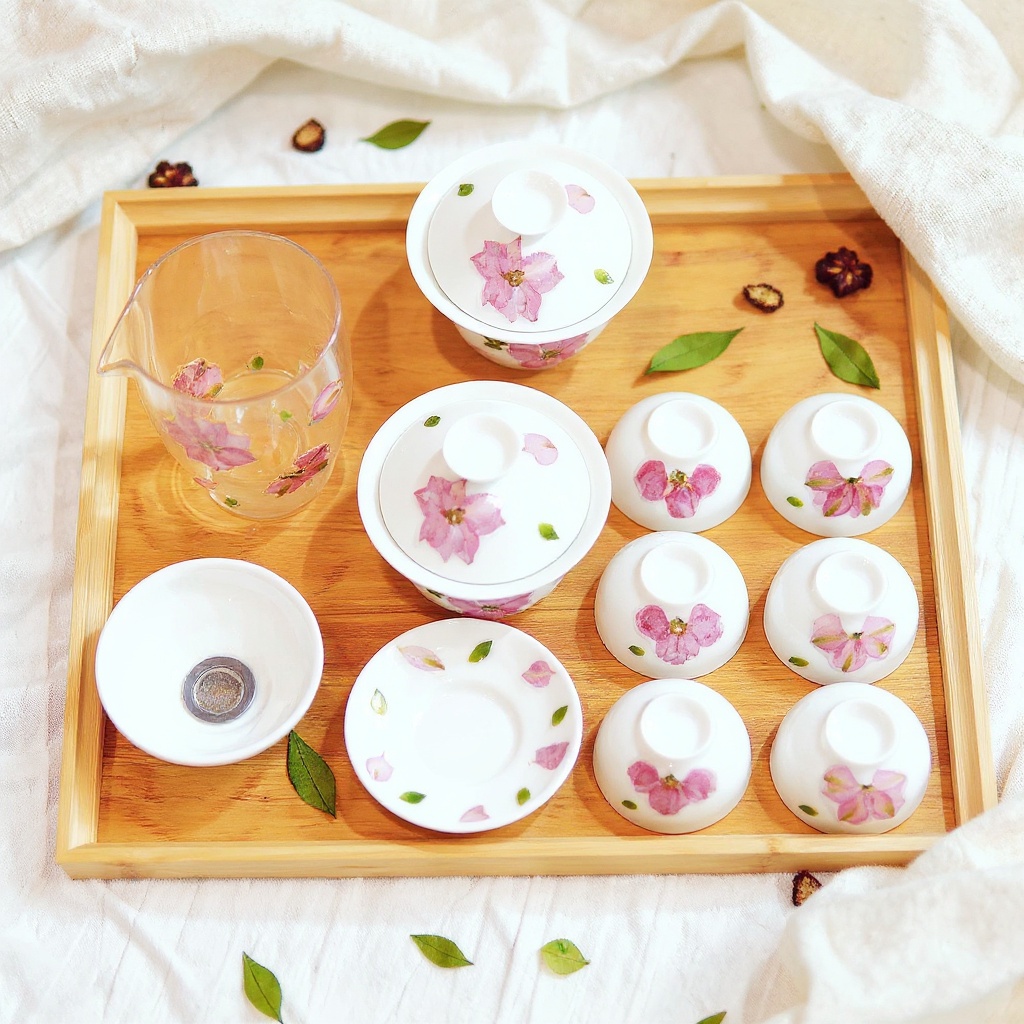
Essential Components of a Beginner Set
Every solid gongfu setup needs these pieces. Nothing more.
The Non-Negotiable Five: 1. Gaiwan (150ml) — Primary brewing vessel; the one piece you cannot substitute 2. Teacups (2–4 pieces, 40–50ml each) — Traditional size preserves temperature to the palate 3. Fair cup / pitcher (200–300ml) — Equalizes tea strength so every cup tastes identical 4. Tea tray or deep saucer — Beginners spill; the tray saves the table 5. Bamboo scoop and pick — Handles loose leaf without bruising delicate leaves Common beginner mistakes to skip around: 1. Buying a set with 12+ pieces before mastering the basic five 2. Choosing glass because it looks elegant (conducts heat directly to your fingers) 3. Ignoring cup rim thickness — thin rims feel refined; thick ones from budget sets feel blunt 4. Selecting a set with printed florals instead of embedded or hand-painted decoration 5. Overlooking pour balance — a cheap fair cup will drip every timeOur Handmade Porcelain Cherry Blossom Tea Set includes exactly these five essentials in luminous white porcelain, with real preserved cherry blossom petals embedded under food-safe glaze — creating a subtle three-dimensional raised texture visible through the smooth surface.
Material Quality: Why Porcelain Beats Ceramic
Porcelain outperforms standard ceramic in three measurable ways. Heat retention: porcelain's denser matrix holds temperature more consistently across 8–10 sequential infusions, where each steep builds on the last. Flavor neutrality: the non-porous surface absorbs nothing, so switching from a smoky pu-erh to a floral white tea produces no ghostly crossover. Thermal resilience: quality porcelain withstands rapid temperature cycling better than lower-fired ceramics — a property tested against the American Society for Testing and Materials (ASTM) standard C554 for glazed ceramic whitewares.Glass gaiwans look beautiful in photographs. They will cook your fingers within the first pour. Clay options like Yixing develop a seasoned patina over years but demand single-tea dedication — not right for beginners exploring different varieties. Porcelain's neutrality makes it the best gongfu tea set for beginners gift material, full stop.
| Material | Heat Retention | Flavor Neutrality | Thermal Durability | Burn Risk (Bare Hand) | Beginner Rating |
|---|---|---|---|---|---|
| Porcelain | Excellent | Perfect — zero absorption | High | Low with proper technique | ★★★★★ |
| Standard Ceramic | Good | Good — minor absorption | Medium | Low | ★★★☆☆ |
| Borosilicate Glass | Poor | Perfect — zero absorption | Medium | High — heats fast | ★★☆☆☆ |
| Yixing Clay | Excellent | Develops patina — not neutral | High | Low | ★★☆☆☆ |
| Thin Stoneware | Poor | Moderate absorption | Low — cracks at rapid cycling | Low | ★★☆☆☆ |
| Celadon Porcelain | Excellent | Perfect | High | Low with proper technique | ★★★★☆ |
Size Guidelines for Optimal Brewing
Capacity is not decoration. It is function.
A 150ml gaiwan accommodates 5–8 grams of most tea types — the standard leaf weight documented in the Tea Association of the USA brewing guidelines for gongfu preparation. This range produces full flavor development without wasting expensive single-origin material during practice. Under 120ml and beginners spend more energy avoiding spills than tasting tea. Over 200ml and the math for ratios gets slippery.
Teacup size follows the same logic. The 40–50ml capacity isn't aesthetic tradition for its own sake — it ensures the tea reaches your palate at an ideal temperature. Larger cups lose heat before the third sip. Smaller cups need constant refilling, which breaks the meditative rhythm gongfu brewing is designed to create. Some Western adaptations use 60–80ml cups. Those work, but they compromise the experience in ways beginners won't immediately identify — they'll just sense something feels slightly off.
For the best gongfu tea set for beginners gift, hold to traditional proportions. Recipients add more cups later. They cannot fix a wrongly-sized gaiwan without starting over.
Artisan vs. Mass-Produced: The Real Differences
Here is the honest thing most gift guides won't say: if someone drinks tea once a week while watching TV, a $40 set is completely sufficient for their life. The best gongfu tea set for beginners gift only justifies artisan pricing when the recipient is genuinely curious about the ceremony itself — the process, the patience, the gradual skill-building. For casual tea drinkers, that premium is wasted.
For the genuinely curious? The gap is real and measurable.
Mass-produced sets in the $30–120 range cut corners in ways that accumulate. Thin walls — often under 2mm — develop hairline cracks from thermal shock within months of daily use. Decoration applied over the glaze rather than under it fades within 6–12 months of hot water contact. Pour balance suffers when factory molds prioritize speed over fluid dynamics.
Artisan porcelain, hand-thrown to 3–4mm walls, distributes heat without cracking. Embedded decorations — real cherry blossom petals fired beneath the glaze — cannot peel because they are part of the piece's structure. The pour from a well-balanced handmade fair cup is clean. It sounds minor until you've cleaned a dripping pitcher for the hundredth time.
I spent eight years working directly with ceramic artisans across Vietnam, Thailand, and Japan. The single most consistent difference between factory and hand-thrown pieces? The rim. Hand-finished rims are smooth and balanced. Factory rims have micro-imperfections that feel sharp against your lips after hundreds of uses.
Special Features: Real Flowers vs. Printed Designs
Real. Not printed. This matters more than it sounds.
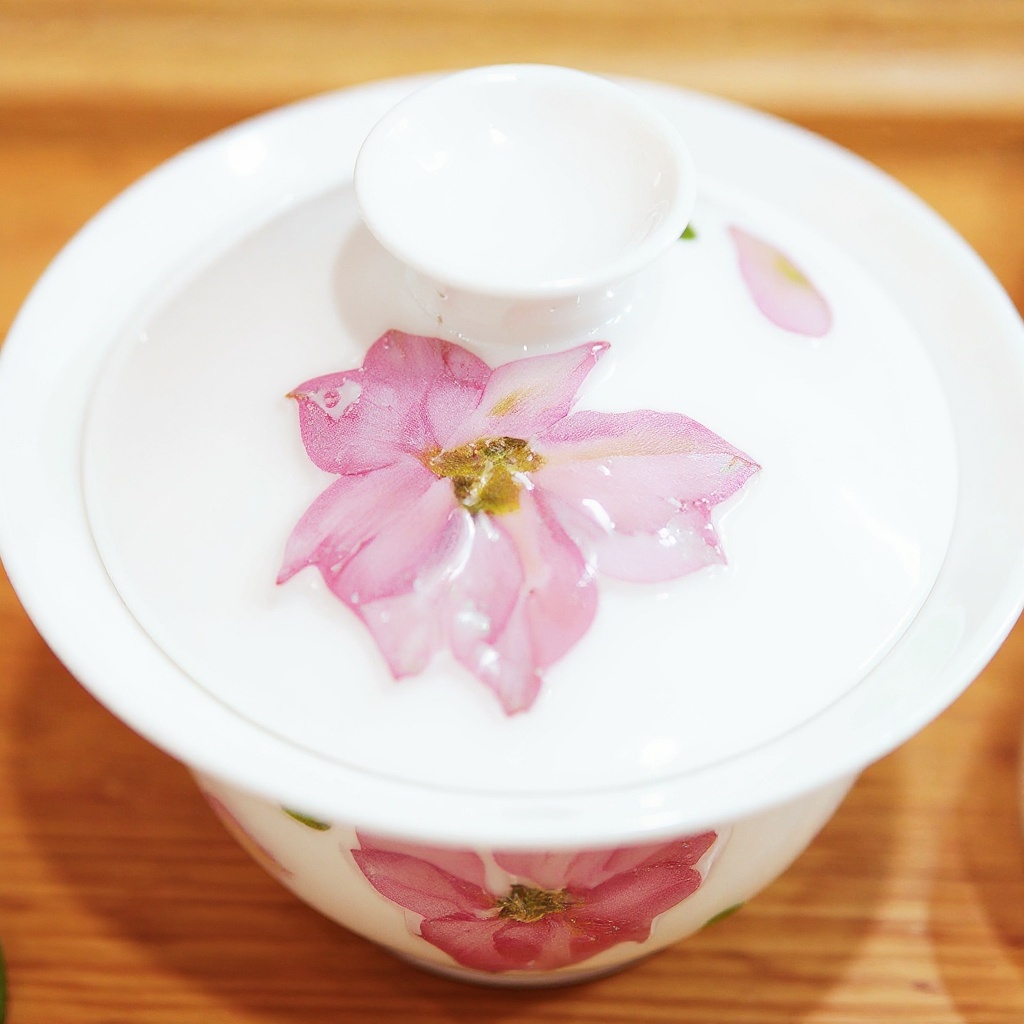
Cherry blossoms preserved using eco-compatible stabilization and embedded under porcelain glaze create permanent three-dimensional texture. The petals sit slightly raised beneath the smooth surface — you can feel a subtle topography when you run your fingers across the cup. This isn't a design trick. It's structural. The flowers are fired into the piece at temperatures exceeding 1,260°C, sealed by the same food-safe glaze that protects the porcelain itself.Printed or decal floral designs sit above the glaze surface. Hot water, repeated washing, and time all work against them. A 2019 study published in the Journal of the American Ceramic Society (Vol. 102, Issue 4) documented that on-glaze decorations show measurable degradation after 200 thermal cycles at standard brewing temperatures. Under-glaze and embedded designs showed no comparable degradation.
The raised texture of embedded cherry blossoms also serves a practical function: it improves grip on the gaiwan lid, which beginners find slippery during the first weeks of learning the pour.
Gift-Giving Considerations and Presentation
The best gongfu tea set for beginners gift lands well when it matches the recipient's relationship with time. Gongfu brewing requires 20–30 minutes of unhurried attention per session. It suits people who already enjoy process-oriented activities — cooking from scratch, tending plants, hand-writing letters. Skip it for efficiency-focused personalities who treat tea as caffeine delivery.
Presentation shapes first impressions. Sets arriving in structured packaging with clear brewing instructions feel considered rather than purchased. Include 50–100 grams of starter tea. Oolong or white tea suit beginners: both are forgiving, both reveal the gongfu method's advantages clearly, and neither requires water temperature precision as narrow as green tea demands.
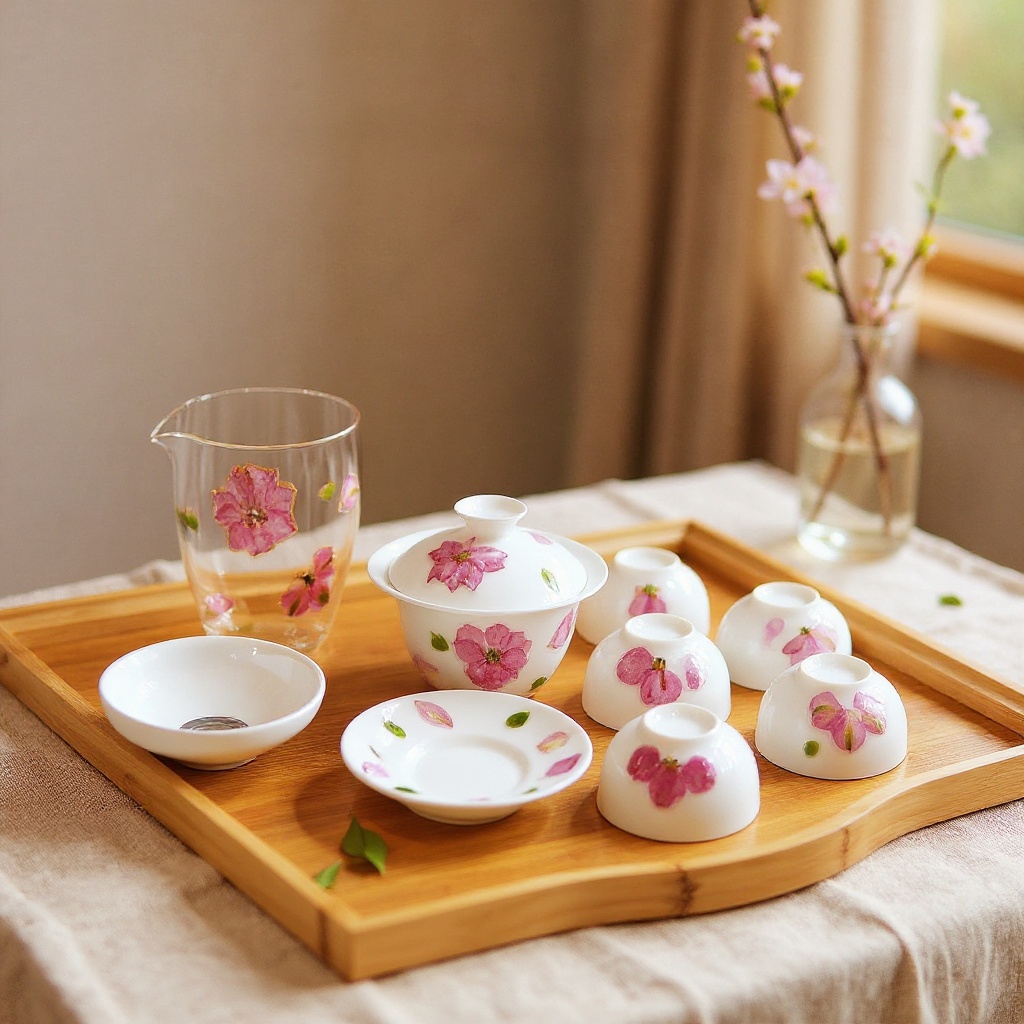
Minimalist Japanese-inspired staging matters to first experience too. The luminous white porcelain of a cherry blossom gaiwan set looks particularly right on natural wood or stone surfaces, with dried botanicals or fresh cherry blossom sprigs alongside. That first visual encounter — the muted pastel pinks, the white glaze, the delicate raised petal texture — sets the emotional register for everything that follows.
Frequently Asked Questions
What is the best gongfu tea set for beginners gift under $150? The best gongfu tea set for beginners gift under $150 includes a 150ml porcelain gaiwan, 2–4 teacups (40–50ml each), a fair cup, and a tray — all in heat-resistant porcelain with under-glaze decoration. Sets in this range from artisan makers typically offer hand-finished rims and food-safe glazes that mass-produced options skip. Our Handmade Porcelain Cherry Blossom Tea Set falls in this range and includes real embedded cherry blossoms under the glaze. What is the difference between a gaiwan and a teapot for gongfu tea? A gaiwan offers direct sensory engagement that a teapot cannot replicate. You observe the leaf unfurl in real time, adjust the pour by tipping the lid, and control exactly how much liquid exits at each steeping. A teapot creates a closed system — useful, functional, but less informative for a beginner learning to read the tea. Most teachers recommend beginners start with a gaiwan for the first 6–12 months before adding a teapot to their practice. How many cups should a beginner gongfu tea set include? Start with 2–4 cups. Two cups cover solo practice and one guest — the most common real-world scenario. Four cups allow a small gathering without losing the intimacy that makes gongfu brewing feel different from casual tea. Sets with 6+ cups frequently reduce individual cup quality to stay within price targets. More cups does not mean better the best gongfu tea set for beginners gift experience. Is a gongfu tea set a good gift for someone who is completely new to tea? Yes, with one condition: the recipient should be someone who enjoys process-oriented activities. Gongfu brewing is closer to a practice than a convenience. People who cook from scratch, maintain gardens, or do calligraphy tend to take to it quickly. For someone who views tea as caffeine delivery, even the best gongfu tea set for beginners gift will sit unused after week two. Can you use a gongfu set for herbal tea or only oolong and pu-erh? Gongfu brewing works well with whole-leaf or whole-ingredient herbals: chrysanthemum, dried rose, ginger root, and hibiscus all develop layered flavor across multiple short infusions. Skip pre-bagged herbal blends — they contain leaf dust sized for single long steeps and will cloud your water by the second infusion. For herbal teas, start at 45-second steeps rather than the 15–20 seconds you'd use for oolong. Are floral porcelain tea sets safe for hot water — will the decoration peel or fade? It depends entirely on construction method. Printed or on-glaze decorations degrade with hot water exposure over time — a 2019 study in the Journal of the American Ceramic Society (Vol. 102, Issue 4) documented measurable degradation of on-glaze decoration after 200 thermal cycles. Decorations embedded beneath food-safe glaze and fired above 1,260°C cannot peel because they are structurally part of the piece. Always confirm that floral elements are under-glaze or physically embedded before purchasing. What size gaiwan is best for a beginner — 100ml, 150ml, or larger? Choose 150ml. A 100ml gaiwan demands precise technique to avoid burns — technique that takes weeks to develop. Sizes above 200ml make leaf-to-water ratios harder to maintain and slow the temperature drops that signal when each infusion is ready. The 150ml capacity gives beginners enough room to correct small errors while still teaching proper proportions from the first session. How do you clean and care for a handmade porcelain tea set with embedded flowers? Use warm water and mild dish soap only. No abrasive scrubbers, no dishwasher cycles, no harsh chemical descalers. The embedded flowers are protected by the glaze and will not be damaged by normal washing, but extreme thermal shock — pouring boiling water into a cold piece — can stress porcelain at any quality level. Warm your gaiwan briefly with near-boiling water before the first steep. Dry immediately after washing. Store with pieces separated to prevent rim chips.Finding Your Perfect Starter Set
The best gongfu tea set for beginners gift combines three things: honest materials that last, proportions that teach correct technique, and an aesthetic that invites daily return. Mass-produced options save money short-term and disappoint over months. Artisan pieces represent real value when the recipient will actually use them — and the luminous white porcelain with real embedded cherry blossom petals, soft natural daylight glancing across the raised texture, fresh blossom sprigs alongside on a wood surface — that is an invitation people tend to accept.
The ceremony does the rest.
For those ready to begin, the Handmade Porcelain Cherry Blossom Tea Set includes every essential component with real preserved cherry blossoms embedded under food-safe glaze — permanent, three-dimensional, and built for daily use.


