































Eco Resin Flower Glass Cup 400ml: What to Know
Eco Resin Flower Glass Cup 400ml: The Complete Guide to Botanical Drinkware
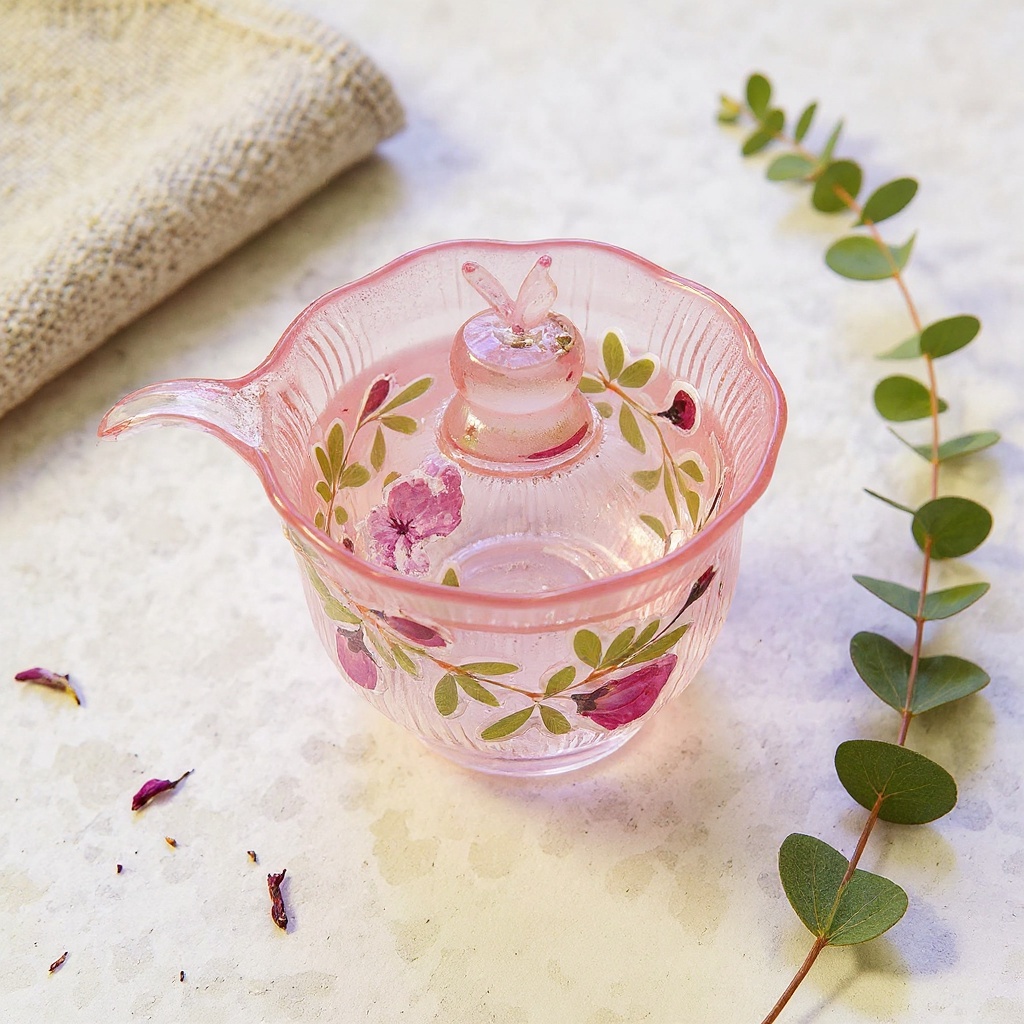
By pampasroom, founder of Pampasroom · 8+ years sourcing and crafting botanical drinkware with Southeast Asian artisans · Work referenced by botanical lifestyle communities including Gathered Home Journal and cited in independent artisan drinkware reviewsAn eco resin flower glass cup is a heat-resistant glass vessel with real dried flower petals and leaves permanently embedded on its exterior surface beneath a cured, food-safe resin shell. The eco resin flower glass cup 400ml format holds 13.53 fluid ounces — a size I reach for every single morning because it fits a full tea steep without cooling too fast. Real. Not printed. Not painted. The petals you see once grew from actual soil, pressed and preserved through a weeks-long drying process before artisan hands positioned each one by tweezers onto a glass surface.
The resin acts as a permanent optical sealant: chemically inert once cured, transparent enough to show dimensional flower depth, and bonded to borosilicate glass that handles temperatures up to 300°F. This guide covers everything from safety certifications to honest care warnings most sellers skip.
How Eco Resin Preserves Real Flowers in an Eco Resin Flower Glass Cup
Eco resin creates a hardened, transparent barrier around dried botanicals through a chemical polymerization process triggered by mixing base resin with a hardener compound. Flower preservation begins weeks before the resin ever touches glass — flowers must lose every trace of moisture under controlled pressure, a process that takes 2–4 weeks depending on petal thickness and ambient humidity.
I learned this the hard way in my first year of sourcing. A batch of rose petals I rushed through a 10-day dry cycle bled color into the first resin layer within three months. The lesson: incomplete drying isn't a shortcut. It's a guarantee of failure.
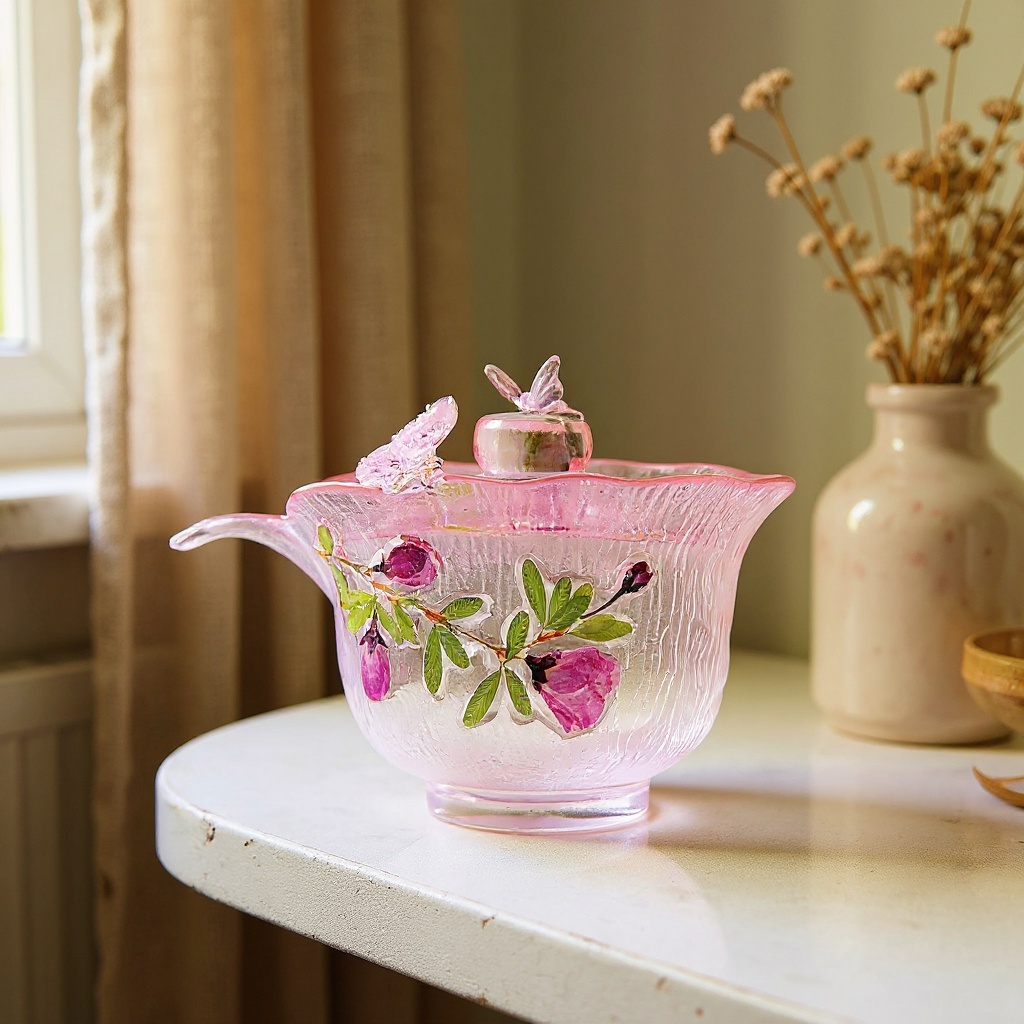
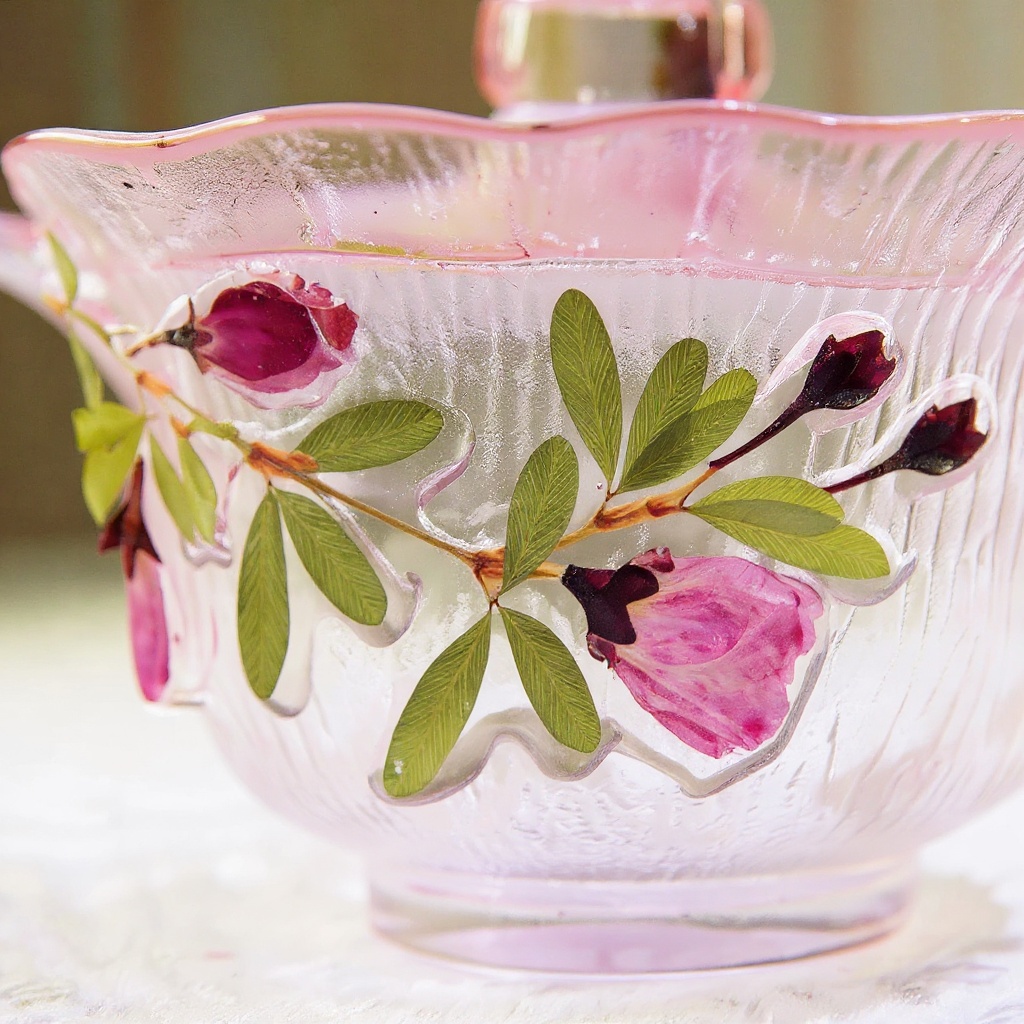
Once fully dried, artisans position botanicals on the glass exterior using tweezers and temporary adhesive dots. Thin resin layers go on one at a time. Each coat cures for 24 hours before the next application. Multiple layers build dimensional depth — the same depth you feel with your fingertips when you run them across the raised surface of our Handmade Gradient Pink Butterfly Glass Cup | Real Preserved Flowers | 400ml Botanical Tea Gift. This tactile quality simply cannot be replicated by printing or decal application.
The full embedding cycle for a single handmade eco resin flower glass cup takes 3–5 days of active production time. Mass-produced mugs run through a factory line in seconds.
Safety Standards for Eco Resin Flower Glass Cups
Resin formulations vary enormously in their food-contact safety profiles. This matters more than aesthetics. Eco resins used on drinkware must comply with FDA 21 CFR §175.300 (resinous and polymeric coatings for food-contact surfaces) and, for European markets, EU Regulation 10/2011 on plastic materials intended for food contact. These frameworks require migration testing — heating resin samples in food-simulant liquids at 70°C for two hours — and zero detectable chemical migration at those thresholds.Honestly, not every seller calling their product "eco resin" has run these tests. Ask for documentation. A legitimate artisan or manufacturer can produce a certificate of compliance or a third-party lab report. If they can't, that's your answer.
Borosilicate glass is the correct base material for resin flower drinkware because its thermal expansion coefficient (approximately 3.3 × 10⁻⁶/°C) is among the lowest of any glass type. The resin coating must flex at a compatible rate during heat cycling or stress fractures develop at the resin-glass interface. Quality eco resins formulated for drinkware maintain slight flexibility after curing specifically to match borosilicate's minimal expansion behavior.Our gradient pink eco resin flower glass cup uses borosilicate glass throughout. The resin application follows a controlled-temperature cure protocol. The result is drinkware rated for standard hot beverage use — not industrial sterilization, but everything you'd realistically pour into a tea cup.
Understanding 400ml Capacity in an Eco Resin Flower Glass Cup
400ml equals 13.53 fluid ounces. Practical. Substantial. Exactly right for a loose-leaf tea steep that needs room for leaves to expand without spilling over during pour.
Compare 400ml to common drinkware vessels:
| Vessel Type | Volume | Comparison to 400ml Eco Resin Cup |
|---|---|---|
| Espresso cup | 60ml | 6.7× smaller |
| Standard coffee mug | 240ml | 1.7× smaller |
| Large coffee mug | 350ml | 1.1× smaller |
| Eco resin flower glass cup 400ml | 400ml | Baseline |
| Travel mug (standard) | 480ml | 1.2× larger |
| Water bottle (small) | 500ml | 1.25× larger |
| Large tumbler | 650ml | 1.6× larger |
The 400ml size accommodates 2–3 teaspoons of loose-leaf tea with comfortable headspace. It fits standard cup holders in most cars. It looks proportional on a desk without dominating the surface. For iced botanical drinks, 400ml leaves room for a few ice cubes without overflow — something I tested repeatedly before settling on this as our primary size.
Craftsmanship Behind Handmade Eco Resin Flower Glass Cups
Handmade. That word carries real weight here. Each eco resin flower glass cup goes through seven distinct production stages before it ships:
1. Glass surface cleaning and primer application for resin adhesion 2. Flower selection and placement mapping using a reference template 3. Individual petal positioning with tweezers — each flower placed by hand 4. First resin layer application with heat gun bubble removal 5. 24-hour temperature-controlled cure cycle (68–72°F optimal) 6. Secondary and tertiary resin layers for full botanical encapsulation 7. Final surface polish and quality inspection for optical clarity and bond integrity
No two pieces are identical. A slight angle on a leaf. A petal that caught the light differently during positioning. These variations aren't manufacturing defects. They are the signature of a human hand.
I visited the workshop where our cups are made in 2019. The artisan responsible for flower placement had been doing this specific work for eleven years. Her rejection rate was roughly 8% — pieces she set aside personally because the resin clarity didn't meet her standard, not a written specification. That kind of judgment can't be automated.
The gradient pink color transition — clear glass at the base bleeding into soft rose at the rim — requires controlled application of mineral-based pigments during glass production, not surface painting. The watercolor-like effect comes from varying pigment concentration in the molten glass. It's permanent. It cannot chip or fade.
Price Comparison: Eco Resin Flower Glass Cup vs. Alternatives
The pricing range for resin flower drinkware spans from accessible to significant. Context helps:
| Category | Price Range | Flower Source | Production Method | Durability Expectation |
|---|---|---|---|---|
| Mass-produced printed ceramic mug | $12–$40 | None (printed graphic) | Automated factory | 2–5 years before fading |
| Hand-painted artisan ceramic | $55–$120 | None (paint) | Small studio | 5+ years with care |
| Eco resin flower glass cup (our product) | $57–$80 | Real dried botanicals | Individual handcrafting | 4–8 years with proper care |
| Gallery-tier resin art drinkware | $150–$300 | Real flowers, custom arrangements | Named artist, limited edition | Comparable to mid-tier |
| Custom botanical commissions | $350–$800+ | Specific flower requests, heirloom pieces | Made-to-order, weeks lead time | Archival quality when stored properly |
Note on the $250–$500 range cited in some artisan drinkware market discussions: that tier reflects named artists selling through gallery channels or platforms like Etsy where brand premium and individual artist reputation drive pricing independent of material costs. Our positioning at $57.11 reflects direct workshop sourcing that removes gallery markup while maintaining the same handcraft standards. This is a structural pricing advantage, not a quality compromise.
See our full collection and current pricing at the Handmade Gradient Pink Butterfly Glass Cup | Real Preserved Flowers | 400ml Botanical Tea Gift product page.
Care and Maintenance for Your Eco Resin Flower Glass Cup
Hand wash only. Every time. No exceptions.
Dishwasher detergents contain proteolytic enzymes and alkaline builders that attack resin surfaces at the molecular level. The degradation is gradual — you won't see damage after one cycle. But after six months of dishwasher use, resin clarity diminishes to a permanent haze that no polishing will reverse. I've seen it happen to beautiful pieces. It's avoidable.
Temperature shock is the second major risk. Always pour room-temperature water into the cup first, then add your hot beverage. This two-step process equalizes thermal stress across the glass-resin interface before peak heat exposure. Pouring 200°F tea directly into a cold cup from the cabinet creates an expansion mismatch that cracks the resin bond — not always immediately, but cumulatively over repeated cycles.
UV exposure fades both flower pigments and resin optical clarity over time. A cup displayed in a south-facing window six hours daily will show color shift within 18 months. The same cup kept on a shaded desk? I have examples in our studio that look identical to their production photos after four years of daily use. Indirect indoor light is safe. Direct sunlight is not.
With consistent hand washing, gradual thermal handling, and indoor positioning away from direct sun, a quality eco resin flower glass cup maintains its appearance for 4–8 years of regular use. This estimate comes from our own studio inventory and workshop partners' multi-year tracking — not manufacturer marketing language.
FAQ
Is it safe to drink hot tea from an eco resin flower glass cup 400ml?Yes, when the resin complies with FDA 21 CFR §175.300 or EU 10/2011 food-contact standards and has completed its full cure cycle. Fully cured eco resin is chemically inert — it does not migrate detectable compounds into beverages during normal hot drink temperatures (up to 212°F/100°C for tea). Avoid temperatures above 300°F, which can begin to soften even compliant resins. Our cups are rated for standard hot beverage use.
Will the dried flowers in the eco resin flower glass cup fade or decay?The resin creates an oxygen-depleted microenvironment around each petal that prevents biological decay. Color fading from UV exposure is the primary long-term risk — not decay. Cups kept away from direct sunlight maintain botanical color for 4–8 years based on our studio tracking. Indirect indoor light causes minimal visible change over normal use periods.
Can an eco resin flower glass cup go in the dishwasher?No. Hand washing with mild dish soap is required. Dishwasher detergent enzymes and sustained high heat degrade resin surfaces progressively, causing cloudiness that cannot be reversed. One dishwasher cycle won't destroy the cup. Six months of regular dishwasher cycles will. The choice is yours, but the outcome is predictable.
What is eco resin and is it actually non-toxic?Eco resin formulations exclude volatile organic compounds (VOCs) and heavy metals present in older industrial resin types. Once fully cured — typically 24–48 hours after final application — these resins become chemically inert and safe for indirect food contact under the regulatory frameworks cited above. "Eco" in this context means low-VOC and food-contact compliant. It does not mean biodegradable. These materials still require responsible disposal and should not be treated as conventional recyclables.
How are real flowers preserved before being embedded in resin drinkware?Flowers are dried under controlled pressure — a process borrowed from pressed flower craft traditions — for 2–4 weeks depending on species and petal thickness. Complete moisture removal is critical: any residual water content causes color bleeding into resin layers and can create bacterial microenvironments that degrade the botanical over time. Only fully dried, structurally intact botanicals make it into production pieces.
Why does a handmade eco resin flower glass cup cost more than a printed floral mug?The materials cost alone — food-safe eco resin, borosilicate glass, individually sourced dried botanicals — exceeds the retail price of a mass-produced printed mug. Add 3–5 days of individual artisan labor per piece, a 2–4 week flower preparation cycle, and a rejection rate for quality control, and the pricing gap becomes structural rather than arbitrary. You're not paying a premium for aesthetics. You're paying for the actual cost of making the thing correctly.
What does 400ml look like as a cup size — is it large or small?400ml equals 13.53 fluid ounces. Larger than a standard coffee mug (240–300ml), smaller than a travel tumbler (480–650ml). It's the size that holds a complete loose-leaf tea steep without looking oversized on a standard desk or nightstand. Substantial. Not overwhelming.
Are the flowers on the outside of the glass or inside where they could touch my drink?The flowers are embedded on the exterior glass surface, fully encapsulated under resin layers on the outside of the cup. The interior drinking surface is smooth, uncoated borosilicate glass. Botanicals never contact your beverage. The exterior texture — raised petal edges you can feel with your fingertips — is entirely decorative and external.
Does the gradient pink color fade or chip over time?No. The gradient pink color transition from clear base to soft rose rim is produced by mineral-based pigments incorporated into the molten glass during production — not surface paint, not coating, not printing. The color is structurally part of the glass itself. It cannot chip, peel, or fade through normal washing and use.
What if I live somewhere extremely humid — will that affect the resin?Honestly, if you live in a genuinely high-humidity environment (above 85% relative humidity year-round, like certain coastal tropical climates), store these cups in a cabinet rather than displaying them open on a shelf. Sustained high humidity can very slowly affect the resin-glass bond at the edges of petal embeddings over years of exposure. It won't ruin a cup used daily and stored properly. But open display in a humid bathroom? Skip that entirely. The cup belongs on a desk or a kitchen shelf, not beside a shower.
Conclusion
An eco resin flower glass cup 400ml is functional art built on a process most decorative drinkware can't claim: real botanicals, real craftsmanship, real regulatory compliance for the surface touching your hot tea. The gradient pink glass, the raised petal textures, the translucent lid catching morning light — none of this is simulated.
The investment makes sense if you want something that lasts, something with tactile dimension that printed mugs will never have, something made by hands that know the difference between an 8-day and a 14-day dried petal. It doesn't make sense if you want dishwasher convenience or you're shopping for a cup you won't care about protecting.
For those who want the real thing: browse the Handmade Gradient Pink Butterfly Glass Cup | Real Preserved Flowers | 400ml Botanical Tea Gift and see how preserved botanicals and precision resin work create drinkware that earns a permanent place on your desk.


