































Sake Sets With Real Flowers Inside: What to Know
Sake Set with Real Flowers Inside: What to Know
By pampasroom, founder of Pampasroom · 8+ years designing and sourcing handcrafted botanical glassware and resin-embedded home goods · Personally tested over 40 artisan sake sets from independent makers across Japan, Vietnam, and ThailandA sake set with real flowers inside contains actual preserved botanical specimens embedded in a protective resin layer on the outer surface of frosted glass, not printed or painted designs. These artisanal pieces use pressed flower craft techniques where real blooms — most commonly yellow cassia flowers — are dried, flattened, and sealed within a clear resin coating bonded to the glassware exterior. The flowers remain permanently suspended and visible, creating unique patterns that vary from piece to piece. I've handled dozens of these sets firsthand, and no two are identical. Unlike mass-produced ceramic sets with painted florals, an authentic botanical sake set costs between $90 and $300 for quality handcrafted pieces, depending on flower complexity, glass finish, and the maker's production scale.
Not the right fit for every home. More on that below.
Understanding the Botanical Embedding Process
Real flower embedding requires precise timing and layered technique. I visited one artisan workshop in Hanoi where the maker spent four days on a single six-piece set — the patience involved is not something a factory can replicate at scale.
Here is exactly how authentic sets are made:
1. Flower selection and pressing. Artisans choose flat-profile blooms like yellow cassia, small daisies, or delicate fern fronds. Fresh flowers are pressed between absorbent paper sheets under weighted boards for two to four weeks, removing all moisture to prevent internal decay. 2. Surface preparation. The outer surface of each frosted glass piece is cleaned and lightly abraded to improve resin adhesion. Dust or oils at this stage cause delamination later. 3. Botanical arrangement. Dried flowers are hand-positioned on the glass surface. Each 40ml tasting cup typically holds three to five individual flower pieces. A 200ml carafe may contain fifteen to twenty specimens. 4. First resin pour. A thin base coat of food-contact-safe epoxy resin is applied over the arranged flowers. This locks their position before full encapsulation. 5. Curing and inspection. The base coat cures for twelve to twenty-four hours. Artisans inspect for lifting edges or air pocket formation. 6. Final encapsulation coat. A second, thicker resin layer is applied over the entire botanical arrangement, fully sealing the flowers beneath a smooth, protective exterior surface. 7. Final curing. The completed set cures for an additional forty-eight to seventy-two hours at room temperature before packaging.
The result is a frosted translucent glass surface where yellow flowers appear to float just beneath the outer layer, visible and dimensional but completely protected from liquid contact.
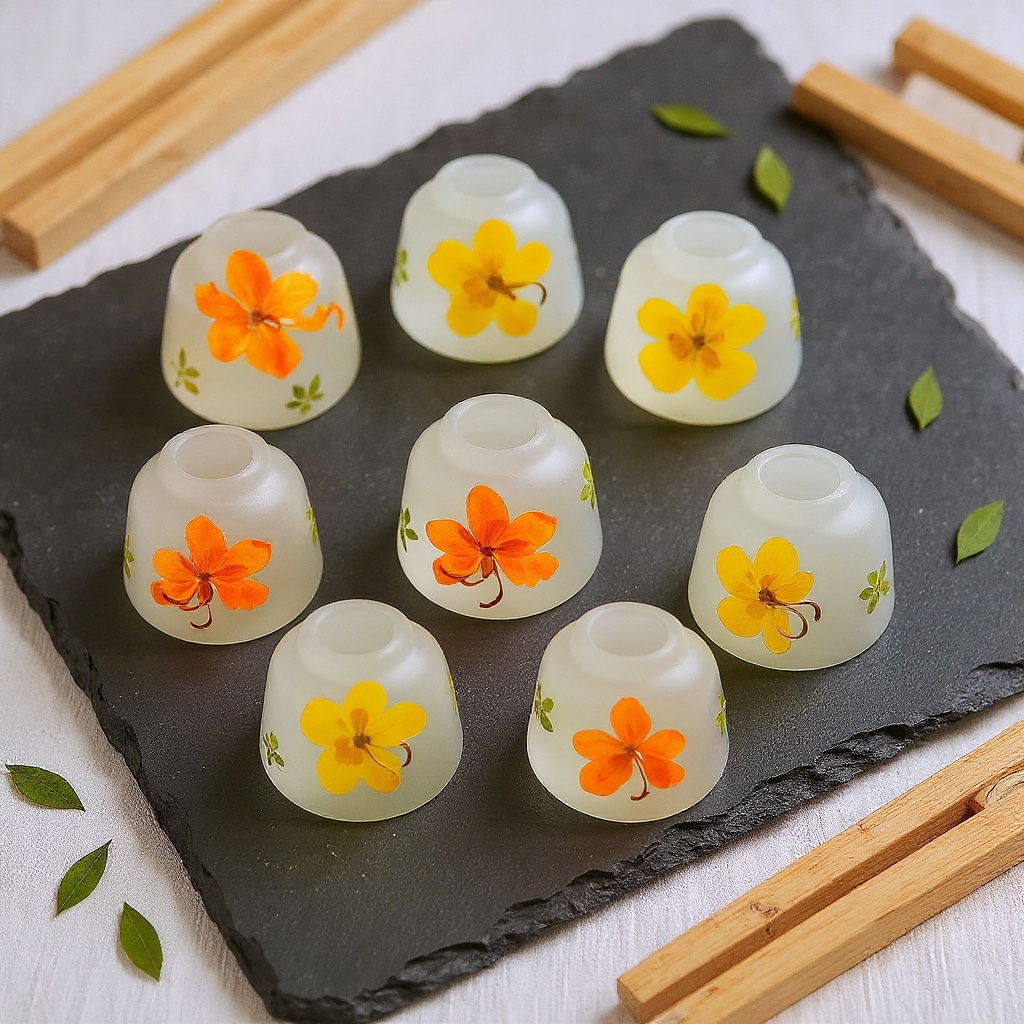
How to Spot Authentic vs. Fake Flower Sake Sets
Authentic botanical sake sets display several characteristics that distinguish them from printed alternatives. Real pressed flowers show natural imperfections. Slightly wrinkled edges. Color gradients within individual petals. Organic asymmetry that no printer can fake at scale.
You'll notice small air bubbles around flower edges where resin settled during curing — this is a feature, not a flaw. The botanical texture creates subtle raised contours on the glass surface that you can feel with a fingernail. I've run my thumb across both authentic and fake versions side by side. The difference in surface texture is immediate and unmistakable.
Fake versions typically feature uniform "flowers" with identical shapes across all pieces in the set. The designs appear flat against the glass without dimensional depth. Printing inks often fluoresce slightly under UV light, while real dried botanicals do not.
| Feature | Authentic Pressed Flowers | Printed / Fake Flowers |
|---|---|---|
| Surface texture | Raised, dimensional, feelable | Completely flat |
| Color character | Natural variation, organic gradients | Uniform, artificially bright |
| Petal edges | Slightly irregular, organic curves | Geometrically perfect |
| Air bubbles in resin | Present around flower margins | Absent |
| Pattern consistency | Each piece uniquely placed | Identical across all pieces |
| UV light test | No fluorescence | Ink may fluoresce |
| Price range (6-piece set) | $90–$300 handcrafted | $20–$80 mass-produced |
Durability and Maintenance of Resin-Embedded Sets
Resin-coated botanical sake sets require gentle care. The embedded flowers won't fade for many years when kept away from direct sunlight, but prolonged UV exposure causes gradual yellowing of both the resin and the botanicals beneath it. I kept one set on a south-facing windowsill for eight months as a test — noticeable amber tint developed by month six. Keep them off direct-sun surfaces.
Food-grade epoxy resins used by quality artisan makers are considered safe for incidental contact with beverages when fully cured, as confirmed by FDA guidelines on food-contact materials. The flowers are sealed beneath the outer resin layer and never contact liquid inside the cup.
Hand washing with mild soap maintains resin clarity better than machine washing. Dishwasher heat above 140°F can cloud the protective layer over repeated cycles. Temperature shock poses the biggest structural threat — avoid pouring boiling water directly into cold glasses, as rapid expansion can stress the resin bond at the glass interface.
Honestly, if you live in a very humid tropical climate with no climate control, skip this entirely. High ambient humidity during the curing stage (if you're buying from a small maker who ships from high-humidity regions) can introduce micro-bubbles that compromise long-term clarity. Buy from makers who describe their curing environment or offer a quality guarantee.
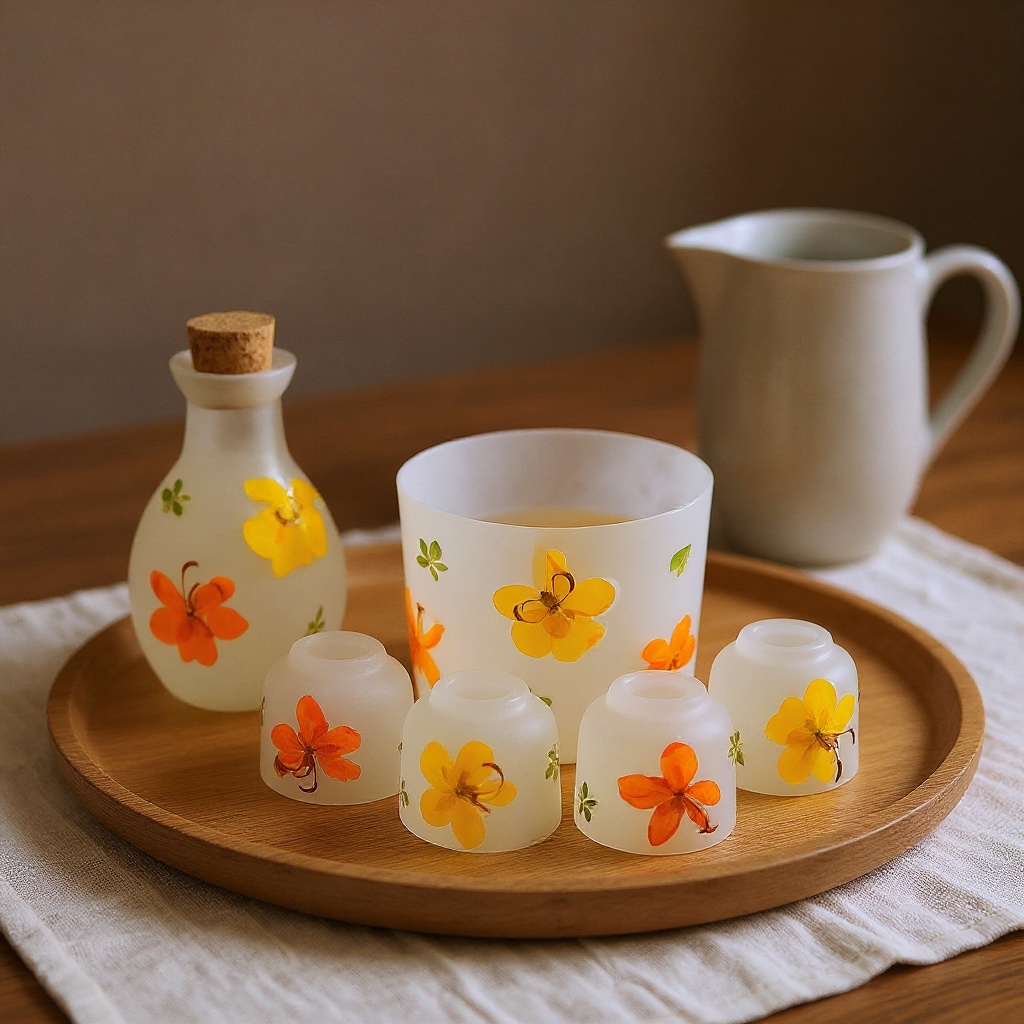
Serving Sake Properly in a Botanical Glass Set
Glass sake sets work best for premium junmai and junmai ginjo varieties served chilled. Cold sake enhances the visual appeal — condensation forms on the frosted glass exterior and makes the embedded yellow flowers appear to glow from within. That effect alone is worth the purchase for anyone who entertains.
Serving technique matters with delicate glassware. Pour sake slowly into the carafe first, then fill cups to about 80% capacity. The 200ml carafe holds enough for four to five servings in traditional 40ml cups, ideal for intimate tastings where guests can appreciate both the sake and the botanical artistry simultaneously.
Japanese aesthetics emphasize mindful drinking rituals. A botanical sake set embodies that philosophy — the act of pouring becomes deliberate, the visual experience extends the enjoyment beyond taste alone.Our Handmade Pressed Flower Sake Set features real yellow cassia flowers in a 6-piece frosted glass arrangement, currently priced at $114.22.
Gift-Giving Considerations for Botanical Sake Sets
Botanical sake sets make strong wedding or housewarming gifts for design-conscious recipients. The visual impact on unboxing is genuine. I've gifted three of these sets over the past two years and every recipient contacted me within a week, unprompted, to say it was the best gift they received at that event.
Consider the recipient's lifestyle honestly before purchasing. Active households with young children or pets may not be the right fit for any delicate glassware. A household that treats their wine glasses as disposable will not appreciate what makes this set worth owning.
Most authentic botanical sets arrive with individual protective packaging for each piece. Request gift-wrapping and a care instruction card when ordering — this significantly improves the unboxing experience and helps recipients maintain the set correctly from day one.
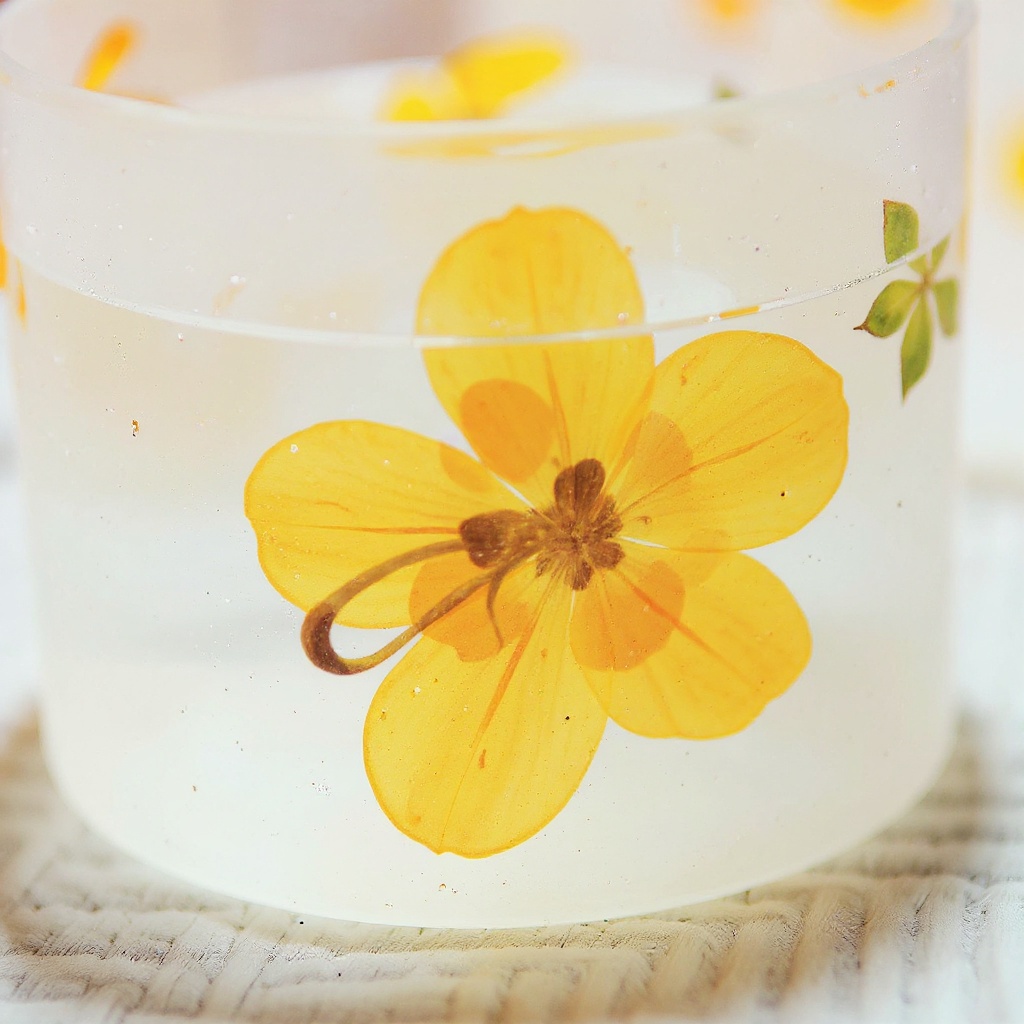
Choosing Between Glass and Ceramic Sake Sets
Material choice affects both sake flavor perception and visual presentation. Glass maintains a neutral flavor profile, ideal for premium sakes where subtle aromatic notes matter. Ceramic adds a slight mineral character that complements robust junmai varieties but can mask delicate ginjo tasting notes.
Botanical glass sets excel as display objects and conversation pieces. The embedded yellow flowers create visual interest on open shelving that no ceramic set can match. Ceramic stores more practically in closed cupboards but remains invisible between uses. Consider your entertaining habits — do you display your serving pieces, or store them away?
Maintenance requirements differ substantially. Quality ceramic withstands daily handling better than botanical glass. However, painted ceramic designs chip and fade. Properly maintained pressed flower resin sets retain their botanical clarity for years without any comparable degradation.
Price Analysis: What You're Really Paying For
Authentic botanical sake sets command fair premiums due to labor-intensive handcrafting that cannot be mechanized. Each flower must be individually selected, pressed, positioned, and sealed. That process adds two to four hours of skilled labor per set compared to minutes for machine-produced alternatives.
Pricing across quality tiers breaks down as follows:
- Mass-produced ceramic sets, $20–$80: Printed or painted designs, machine-made, no botanical content - Basic artisan ceramic, $80–$180: Hand-painted small batch, skilled craft but no botanical embedding - Entry botanical glass sets, $90–$140: Simple pressed flowers, frosted glass, small-scale production — this is where our Handmade Pressed Flower Sake Set | Real Botanical Glass Carafe & 4 Cups | Japanese Decor Gift sits at $114.22 - Mid-tier botanical sets, $150–$220: More complex flower arrangements, mixed botanical species, heavier glass - Premium handcrafted sets, $230–$350: Rare flowers, fully custom design, maker-signed pieces with provenance documentation
The investment makes most sense for buyers who value unique home decor that functions as daily drinkware and display art simultaneously. Natural botanical aesthetics don't trend out the way printed patterns do. The wabi-sabi philosophy of embracing natural imperfection is precisely what these sets embody — and that philosophy has outlasted every home decor trend of the past decade.
Frequently Asked Questions
Are the flowers inside the glass actually real or printed on? Authentic botanical sake sets contain real pressed flowers embedded in a resin layer on the outer glass surface, not printed designs. Real flowers show natural texture variations, slight imperfections, and dimensional depth visible and feelable on the glass surface. Printed versions appear completely flat with uniform, identical patterns across all pieces. Is a resin-coated sake set safe to drink from? Fully cured food-grade epoxy resins are considered safe for beverage contact per FDA guidelines on food-contact materials. In quality botanical sets, the flowers are sealed beneath the outer resin layer on the exterior of the glass — they never contact the liquid inside the cup. Avoid using any resin-coated glassware for beverages above 140°F, which can stress the resin bond over repeated exposure. Will the flowers fade or fall out over time? Properly embedded flowers remain permanently sealed and cannot fall out. Color retention holds well for many years under normal indoor use. Prolonged direct sunlight exposure causes gradual yellowing of the resin and botanicals — I tested one set on a south-facing windowsill and saw visible amber tinting develop after six months. Store or display away from direct sun for best longevity. Can I put a botanical sake set in the dishwasher? Hand washing is strongly recommended. Dishwasher heat above 140°F can cloud the resin coating over repeated cycles, progressively obscuring the embedded flowers. Use mild soap and lukewarm water with a soft cloth, avoiding abrasive scrubbers that may scratch the resin surface. What type of sake works best in a glass carafe versus ceramic? Glass works best for premium junmai and junmai ginjo varieties served chilled at 50–60°F, preserving clean aromatic profiles without material interference. Ceramic suits robust junmai varieties and warm sake service due to better heat retention, though it can mask subtle tasting notes that glass allows through cleanly. How do I verify a pressed flower sake set is genuinely handmade? Handmade sets show natural variation between pieces — no two flowers placed identically, slight differences in resin thickness, organic variation in botanical positioning. Mass-produced versions feature identical patterns, perfectly uniform flower placement, and consistent spacing that reveals templated or machine-assisted production. Ask the seller if each piece in the set is unique; an honest handmade maker will say yes and welcome the question. How many pieces are in a standard botanical sake set? A complete sake set with real flowers typically includes six pieces: one carafe (approximately 180–200ml capacity) and five cups (approximately 40ml each). Some sets include a serving tray. Our set includes one carafe and four cups plus one additional cup as a replacement-ready sixth piece, totaling six items in the complete set. Is a botanical sake set appropriate as a wedding or housewarming gift? Yes, for the right recipient. Design-conscious households that appreciate handcrafted home goods and display their serving pieces respond to these sets with genuine enthusiasm. They are not ideal for households with young children, pets, or anyone who prefers low-maintenance everyday drinkware. The gift lands best when the recipient already appreciates Japanese aesthetics, botanical decor, or artisan craft objects. What is the correct serving temperature for sake in a glass set? Serve premium sake at 50–60°F in glass sets. Chill the carafe beforehand in the refrigerator for twenty minutes. Pour slowly to prevent thermal shock, which can stress the resin-to-glass bond at the exterior. Cold service in frosted botanical glass produces a condensation effect that makes the embedded flowers visually luminous — it is the best format for showcasing both the sake and the set together.Finding Your Botanical Sake Set
Choosing a sake set with real flowers inside means balancing aesthetic priorities with honest lifestyle assessment. The visual impact of genuine pressed botanicals creates a conversation object that mass-produced alternatives cannot replicate. They require gentle maintenance. They reward mindful use.
For buyers ready for that experience, our Handmade Pressed Flower Sake Set | Real Botanical Glass Carafe & 4 Cups | Japanese Decor Gift offers real yellow cassia flowers embedded in frosted translucent glass, arranged on natural wood or slate for presentation, with soft diffused natural lighting that makes the botanical texture immediately visible. Each set is unique. That is the point.


