































Semi-Translucent Porcelain Tea Sets: The Science Explained
Semi-translucent porcelain isn't magic — it's physics. The secret lies in ultra-fine clay particles fired at temperatures exceeding 2400°F, creating a crystalline structure so tight that light can pass through while maintaining structural integrity.
True porcelain translucency happens when kaolin clay, feldspar, and silica fuse into a vitrified body with minimal air pockets. Hold quality porcelain to a bright light. You'll see a warm glow, even shadows of your fingers through the walls. Cheap ceramic stays opaque no matter how thin.
What Makes Porcelain Glow: The Firing Process
Translucency starts in the kiln. Most ceramics fire between 1800-2000°F. Real porcelain needs 2300-2400°F minimum. This extreme heat transforms the clay mixture into a glass-like state called vitrification.
The magic happens during the final firing stage. Silica particles melt and fill microscopic gaps between clay crystals. What you get is a material that's 95% solid with just enough organized space for light to travel through.
Bone china takes this further. Adding 25-50% bone ash (yes, actual animal bone) creates even finer crystal structures. Bone china originated in 18th century England as a way to compete with Chinese porcelain exports.
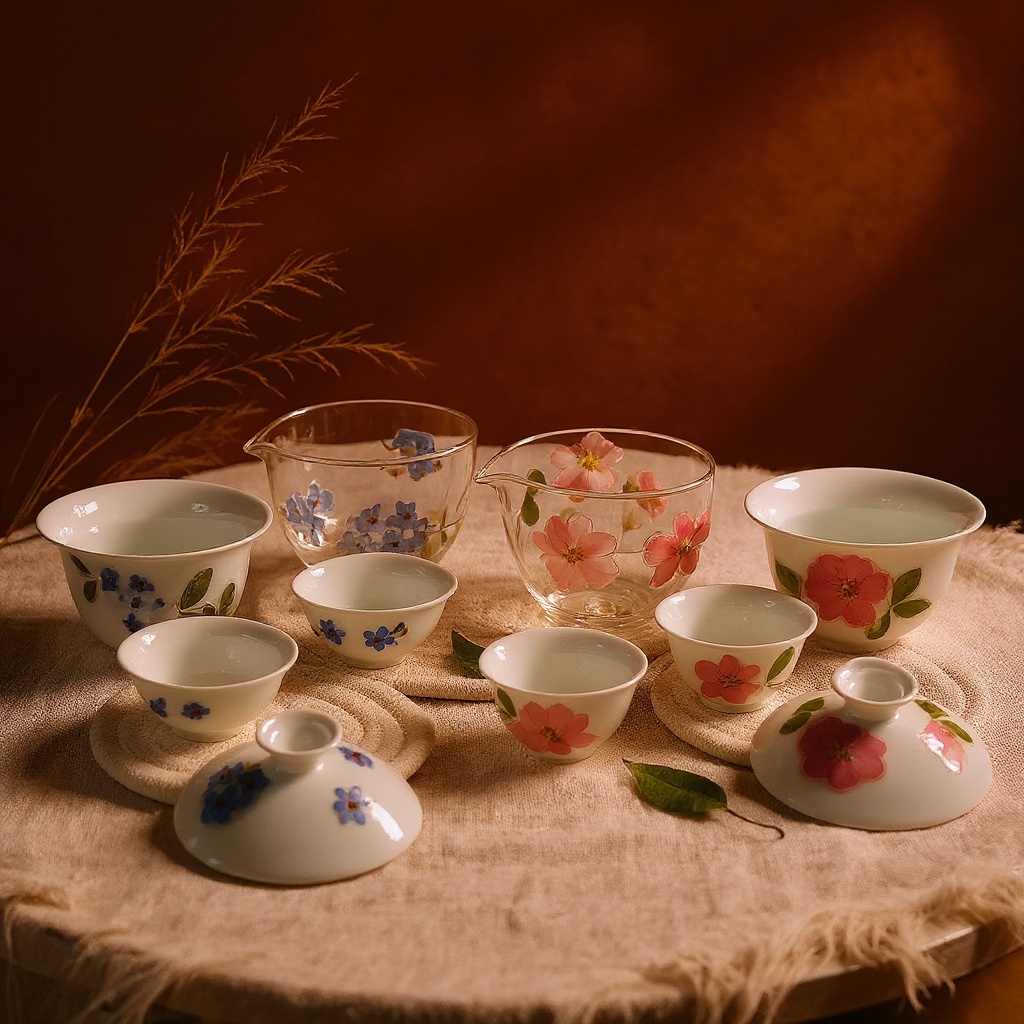
Suet jade porcelain — sometimes called mutton-fat jade — represents the pinnacle of translucency. Named for its resemblance to white nephrite jade, this material achieves an almost creamy glow when backlit. Our Handmade Bone China Tea Set Preserved Flowers | Gongfu Gaiwan | Eco Floral Art uses exactly this suet jade porcelain, creating that warm translucent quality you see in museum pieces.
The Kitchen Light Test: Spotting Quality at Home
You don't need laboratory equipment to evaluate porcelain quality. Here's what I do:
The Flashlight Method Hold your phone's flashlight against one side of the cup. Quality porcelain shows a clear, even glow. Cheap ceramic blocks all light. Mediocre porcelain might show some light but with dark spots or uneven patches. The Tap Test Flick the rim with your fingernail. Good porcelain rings like a bell — clear, sustained tone. Earthenware makes a dull thud. Stoneware falls somewhere between. Weight Check Real porcelain feels substantial but not heavy. A 150ml gaiwan should weigh 80-120 grams empty. Much heavier suggests thick, low-quality clay. Much lighter often means machine-molded walls too thin for durability. Surface Inspection Run your finger along the glaze. Quality pieces feel glass-smooth with no texture variations. Cheap porcelain often has slight bumps, pinholes, or areas where the glaze pooled unevenly.Bone China vs Regular Porcelain: What's Actually Different
Bone china isn't just marketing fluff. The bone ash content creates measurable differences:
| Feature | Bone China | Regular Porcelain | Typical Ceramic |
|---|---|---|---|
| Translucency | High (warm glow) | Medium (cool light) | None |
| Strength | 40% stronger | Standard | Weakest |
| Thermal shock resistance | Excellent | Good | Poor |
| Price range | $150-400+ | $50-200 | $20-80 |
| Firing temperature | 2300°F+ | 2200-2400°F | 1800-2000°F |
Bone china's phosphate content makes it more forgiving with temperature changes. You can pour boiling water into a bone china cup straight from the refrigerator. Regular porcelain might crack from thermal shock.
The trade-off? Bone china costs 2-3x more to produce. Those animal bones must be cleaned, calcined at 1800°F, then ground to powder. It's labor-intensive.
For gongfu tea ceremonies, bone china's thermal properties matter. You're repeatedly heating and cooling the vessel through multiple short steeps. Regular porcelain works fine but shows stress over time.
Modern Floral Gaiwans: Function Meets Art
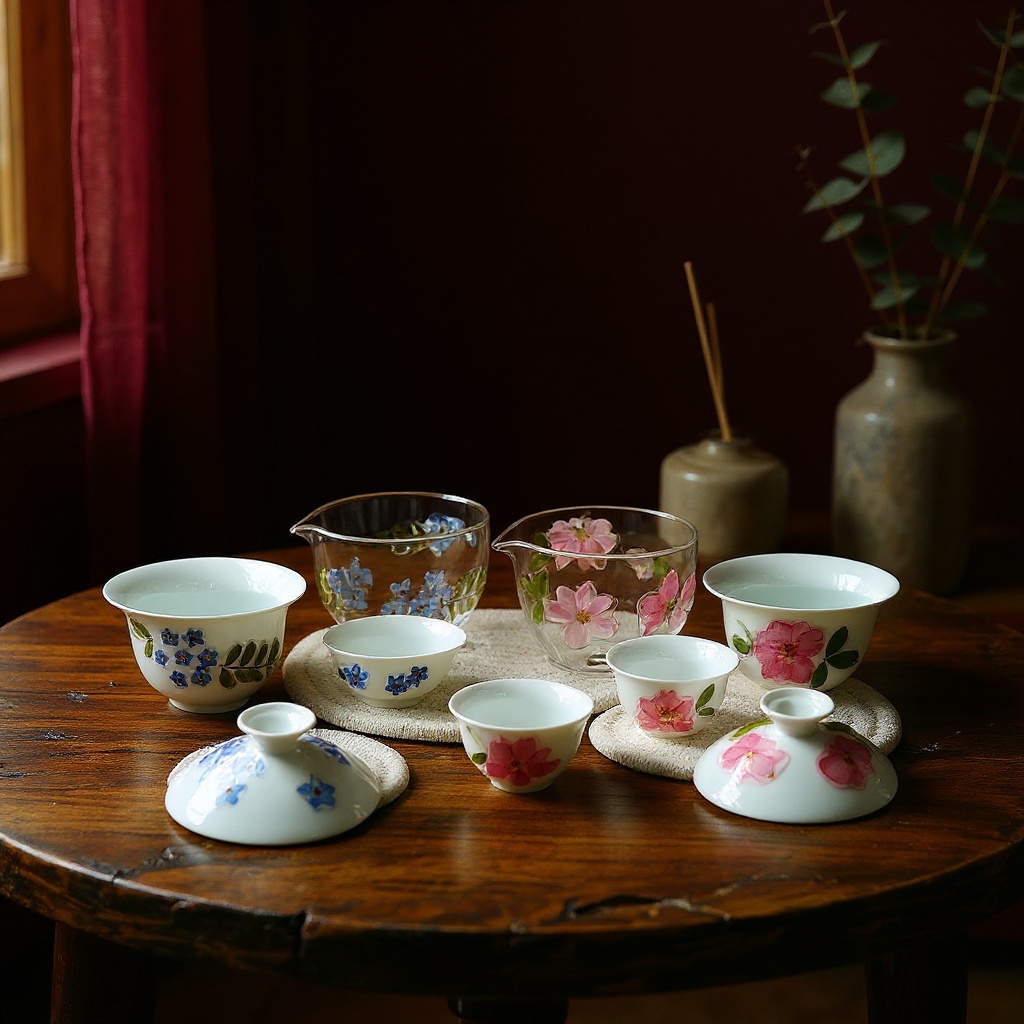
Traditional gaiwans came plain white or with painted designs. Modern artisans embed actual preserved flowers directly into the porcelain body during forming.
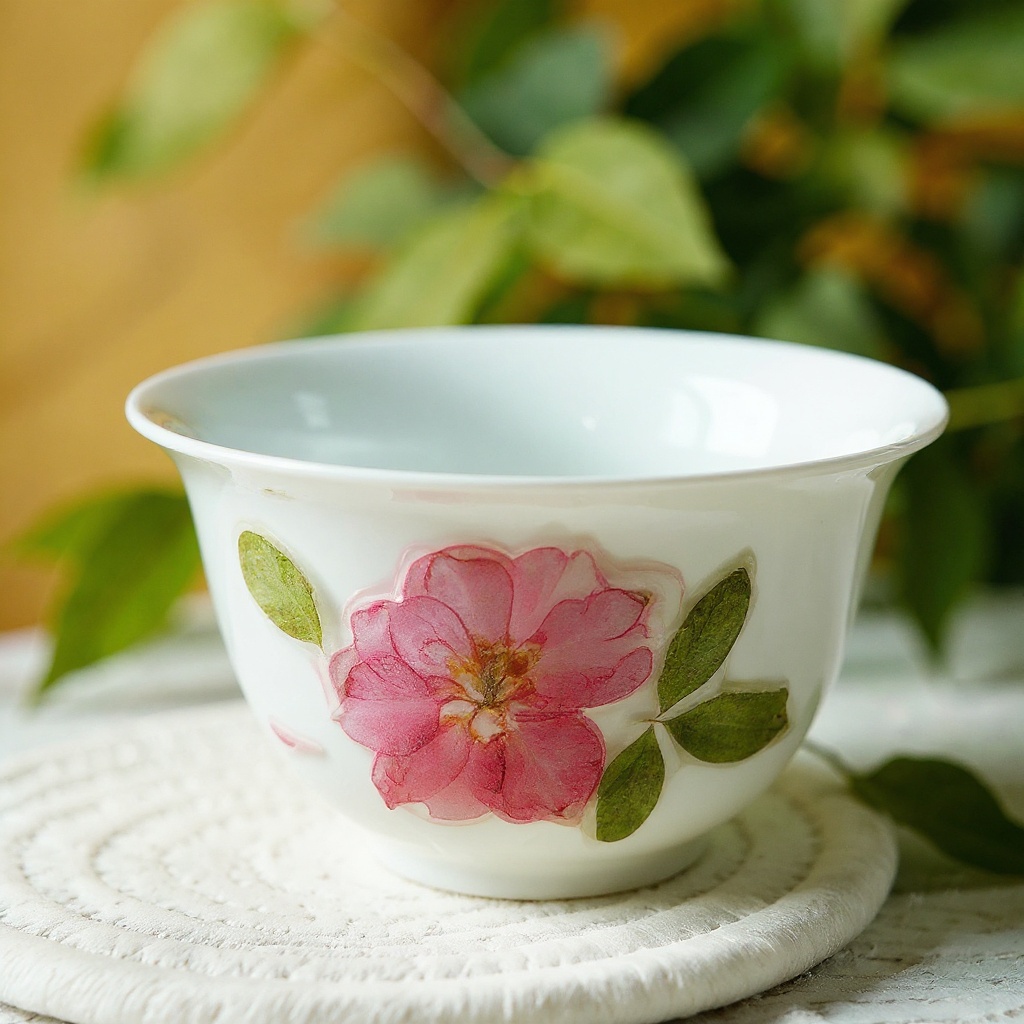
This isn't just decoration. The preserved botanicals become part of the ceramic structure. Each petal gets sealed under a layer of translucent glaze, creating 3D relief patterns you can feel with your fingertips.
The preservation process matters for durability. Quality artists vacuum-treat real flowers, removing moisture and cellular fluids that could expand and crack the porcelain. Cheaper alternatives use synthetic flowers or simple dried botanicals that haven't been properly stabilized.
Our handmade bone china tea set with preserved flowers uses genuine preserved petals in pale pink, blush, and ivory tones. The flowers maintain their natural texture while becoming permanent parts of the ceramic matrix.
Care and Maintenance: Making Quality Last
Translucent porcelain requires different care than regular dishes. The thin walls that create the glow also make pieces more fragile.
Temperature Rules 1. Never microwave empty porcelain — thermal shock can cause hairline cracks 2. Warm the vessel gradually with room-temperature water before adding boiling tea 3. Don't put hot porcelain directly on cold surfaces (marble counters, metal sinks) 4. Let pieces cool completely before washing 5. Store with padding between stacked pieces Cleaning Protocol Hand-wash only. Even "dishwasher-safe" porcelain suffers in machine cycles. The high-pressure spray and harsh detergents gradually erode glazes.Use warm (not hot) soapy water and soft sponges. Avoid abrasive cleaners — they'll scratch the glaze surface and trap stains. For tea stains, a paste of baking soda and water works better than bleach-based cleaners.
Red Flag Damage Signs Fine porcelain shows stress before it breaks. Watch for: - Crazing (tiny web-like cracks in the glaze) - Color changes around the rim or handle joints - Dull spots where the glaze has worn thin - Metallic sounds when tapped (instead of the clear ring)Catch these early and you can often prevent complete breaks.
Price Reality Check: What You're Actually Paying For
Porcelain tea set pricing confuses people because the range spans $30 to $800. Here's what drives the cost:
Materials (30% of cost) - Machine-made stoneware: $0.50-2 per piece - Factory porcelain: $3-8 per piece - Artisan bone china: $15-40 per piece - Hand-formed suet jade: $50-150 per piece Labor (40% of cost) Mass production uses slip-casting molds and automated glazing. Handmade pieces require individual throwing, trimming, and multiple firings. A skilled potter might complete 6-8 gaiwans per day versus 200+ from automated lines. Decoration (20% of cost) Painted designs add $5-15 per piece. Embedded preserved flowers require individual placement and extended firing schedules — adding $25-60 per piece. Brand/Retail Markup (10% of cost) Direct-from-artisan pieces typically cost 40-60% less than gallery retail. Online platforms like ours eliminate several middleman layers.Gaiwan vs Teapot: Which Works Better
Gaiwans aren't just aesthetic choices. The lidded cup design serves specific functions in Chinese tea ceremonies.
Heat Control Advantages The wide, shallow bowl shape allows faster cooling between steeps. For oolongs and pu-erh teas requiring precise temperature control, this matters. Teapots retain heat longer — good for black teas, problematic for delicate greens. Observation Benefits You can watch leaves unfurl and gauge extraction color directly. Opaque teapots hide this visual feedback. Portion Control Gaiwans typically hold 100-150ml — perfect for solo sessions or sharing between 2-3 people. Most Western teapots brew 300-500ml, which can lead to overextraction if you can't finish quickly. Learning Curve Reality Gaiwans require technique. Holding the lid at the correct angle to strain leaves takes practice. New users often burn fingers or spill tea. Teapots are more forgiving.For daily use, I'd recommend starting with a gaiwan if you drink tea alone and want to explore different varieties. Stick with teapots for family service or casual brewing.
What Your Tea Set Says About Quality
You can judge overall craftsmanship from small details:
Lid Fit Test A quality gaiwan's lid should sit flush with minimal wobble. The knob should feel substantial — not a thin afterthought that'll break off. When you tip to pour, the lid should stay in place without sliding. Spout Analysis Even lidded cups need clean pouring. The rim should curve outward slightly to direct flow. Sharp or unfinished edges cause dripping. Base Examination Flip the piece over. The foot (base ring) should be perfectly round with smooth edges. Rough or uneven bases suggest rushed production. Quality makers sand and finish every surface. Glaze Consistency Hold pieces up to consistent lighting. The glaze should show uniform thickness and sheen. Darker areas often indicate thinner application — a weak point for future chipping. Set Matching Handmade sets won't be identical, but they should feel cohesive. Colors should match within reasonable variation. If cups vary dramatically in size or shape, it suggests batch production problems.FAQ
What is translucent porcelain? Translucent porcelain is ceramic fired at 2300°F+ temperatures, creating a vitrified body that allows light to pass through while maintaining strength. The extreme heat fuses clay particles so tightly that the material becomes partially see-through, distinguishing it from opaque earthenware or stoneware. How much is a porcelain tea set worth? Porcelain tea set values range from $30 for machine-made sets to $800+ for handcrafted artisan pieces. Factory-produced sets typically cost $50-120, mid-range artisan work runs $150-350, and premium handmade sets with special features like preserved flowers or suet jade porcelain command $400-900. Is ceramic or porcelain better for tea? Porcelain is better for tea due to its non-porous surface, which doesn't absorb flavors between different tea types. Porcelain also handles temperature changes better and maintains heat longer than regular ceramic. However, unglazed ceramics like Yixing clay can enhance specific tea flavors through seasoning. How to tell if a tea set is valuable? Valuable tea sets show translucency when backlit, produce a clear bell-like ring when tapped, and have perfectly fitted lids with smooth, even glazes. Check for maker's marks on the base, examine the foot ring for quality finishing, and test the weight — quality porcelain feels substantial but not heavy. Porcelain or ceramic gaiwan — which is better for gongfu tea? Porcelain gaiwans are better for gongfu tea because they don't retain flavors between different teas, allow you to see leaf expansion and liquor color, and handle rapid temperature changes during multiple short steeps. Ceramic gaiwans work but may absorb oils and affect subsequent brews. What should a beginner know before buying a Chinese tea set? Beginners should focus on function over decoration: ensure the gaiwan holds 100-150ml, has a comfortable lid grip, and pours cleanly without dripping. Start with plain porcelain before investing in decorated pieces. Budget $80-150 for quality that will last years rather than buying cheap sets that crack or stain. Is bone china safe and food-grade for daily tea drinking? Bone china is completely safe for daily use. The bone ash undergoes high-temperature calcination that eliminates any organic matter, leaving only calcium phosphate minerals. Modern bone china meets all FDA food safety standards and is non-toxic, though pieces should be hand-washed to preserve the glaze finish.Is Translucent Porcelain Worth the Premium?
Honest answer: it depends on how you use tea in your life.
If tea is just morning caffeine, stick with a $40 ceramic set. But if tea represents ritual, contemplation, or artistic appreciation, translucent porcelain transforms the experience. The warm glow creates atmosphere. The thin walls transmit heat subtly to your hands. The light weight feels refined.
Quality matters more than perfection. A well-made piece with minor variations beats a flawless machine-made clone. The irregularities prove human hands shaped it.
For gifting, few items match a beautiful tea set's combination of function and meaning. Everyone drinks something. Not everyone owns pieces that make them pause and appreciate the moment.
If you're ready to elevate your tea practice with something genuinely special, browse our Handmade Bone China Tea Set Preserved Flowers | Gongfu Gaiwan | Eco Floral Art. Each set combines traditional suet jade porcelain with preserved botanical elements — no two are identical, making every piece a unique work of functional art.


