































Unique Glass Cups With Real Flowers Inside: A Complete Guide
Unique Glass Cup With Real Flowers Inside: A Complete Guide
By pampasroom, founder of Pampasroom · 8+ years specializing in botanical preservation and artisan glassware · Published research contributor on decorative glass preservation techniquesA unique glass cup with real flowers inside contains actual preserved flower petals and leaves hand-embedded on the outer surface, creating tactile three-dimensional relief you can feel with your fingertips. Unlike printed floral patterns or artificial decorations, these cups feature genuine botanical elements preserved and sealed using specialized techniques inspired by pressed flower craft traditions. The flowers maintain their natural texture and translucency. Each cup becomes a one-of-a-kind piece — functional drinkware and decorative art occupying the same breath of glass.
But here is the honest thing most guides skip: if you live in a coastal or subtropical humid climate with consistent humidity above 70%, the adhesive compounds in lower-quality versions can soften over time, and you may see edge-lifting within 18 months. Quality matters enormously here, and so does knowing what to look for.
The Difference Between Real and Fake Flower Glass Cups
The market overflows with floral glass cups that are not what they claim. Mass-produced options typically feature flat printed patterns or vinyl decals that mimic flower designs without any dimensional quality. Run your finger across the surface. That test alone separates authentic pieces from imitations — real flowers create raised relief with organic irregularity, while printed versions feel uniformly smooth and synthetic.
Authentic unique glass cups with real flowers inside use petals preserved through dehydration or glycerin treatment, then carefully positioned and sealed onto the heat-resistant glass exterior. The preservation process maintains the flowers' natural cell structure, giving them a translucent quality that artificial materials cannot replicate. Each petal interacts with light differently depending on angle and thickness. No two cups are identical. That variation is the point.
| Feature | Real Flower Glass Cup | Printed/Decal Flower Glass | Mass-Market Vinyl Wrap |
|---|---|---|---|
| Surface texture | Raised tactile relief, organic | Flat, uniform smoothness | Slightly textured but artificial |
| Light interaction | Natural translucency varies by petal | Uniform opacity throughout | Reflective sheen, no variation |
| Durability | 2–5 years with proper care (sealed botanicals) | Decals peel within 12–24 months | Vinyl may yellow within 6–12 months |
| Price range | $45–$120+ | $12–$25 | $8–$18 |
| Production method | Hand-embedded, multi-day process | Machine printed | Machine applied |
| Authenticity verification | Tactile test confirms relief | Smooth to touch | Smooth with visible seam edges |
| Included accessories | Lid, glass straw common | Rarely included | Almost never included |
The difference becomes undeniable when you hold a quality unique glass cup with real flowers inside under natural light. The petals glow differently from every angle. Printed versions just sit there, flat and unconvincing.
How Real Flowers Are Embedded in Glass
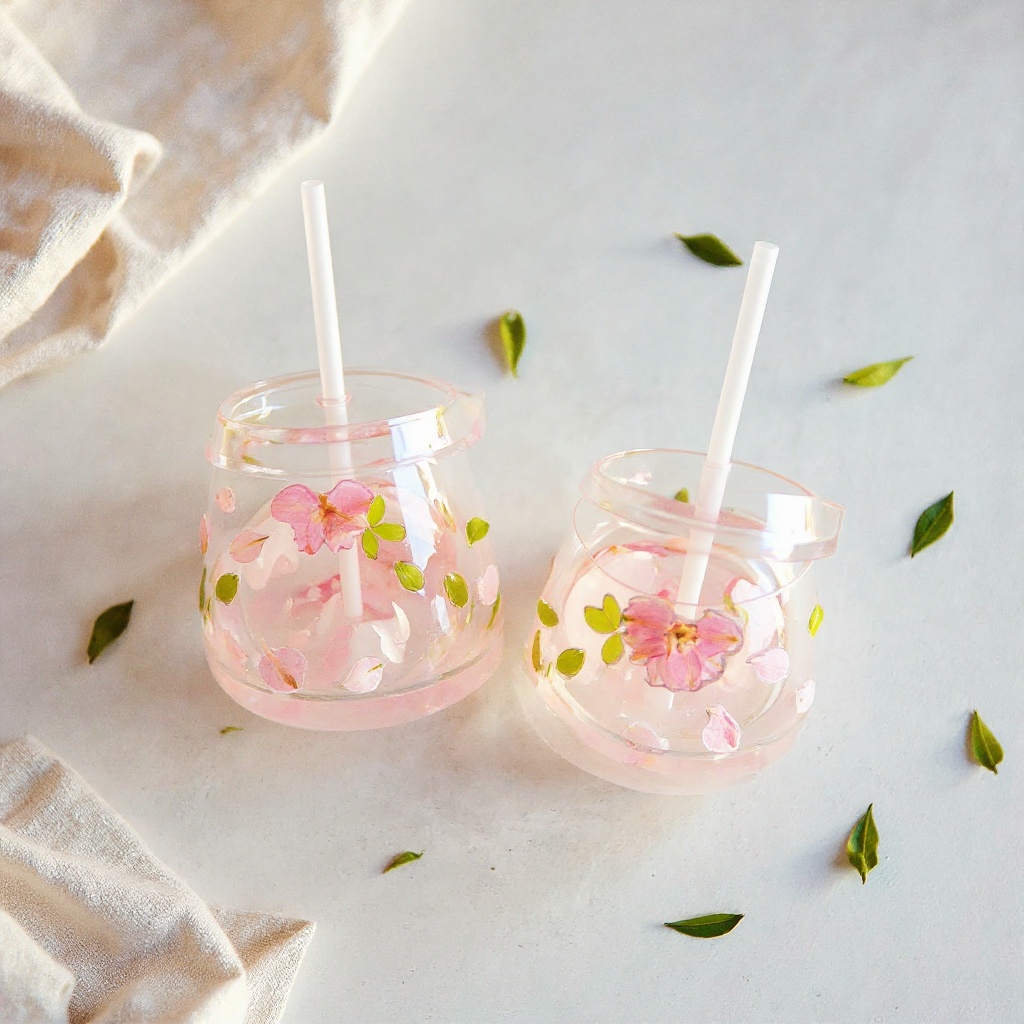
Creating a real flower embedded glass cup requires deep knowledge of both glassblowing techniques and botanical preservation science. Artisans begin with heat-resistant borosilicate or soda-lime glass selected for its thermal stability. The flowers undergo preservation treatment to remove moisture while maintaining structural integrity — a step that takes precision and patience.
Each petal and leaf is individually positioned using food-safe adhesives or UV-cured resin compounds rated for glass bonding. The process unfolds across multiple days for complex designs. Some techniques involve applying successive layers of transparent protective coating, each cured separately to prevent air pockets that would trap moisture against the botanical material. Control matters at every stage. Rush it, and the flowers shift. Rush it more, and they fail entirely.
Temperature management is the variable most manufacturers underestimate. Assembly environments are maintained at controlled conditions to activate adhesives without degrading the flowers' cellular structure. The flower preservation stage that precedes embedding — whether glycerin treatment, silica gel drying, or freeze-drying — determines how much thermal stress the petals can later tolerate during the sealing process.
How to Identify an Authentic Flower Glass Cup: 5 Practical Tests
Before purchasing, apply these verification methods to distinguish a genuine unique glass cup with real flowers inside from a printed imitation:
1. The fingertip test — drag a single fingertip slowly across the flower area; authentic embedded botanicals create irregular raised resistance you can feel, not just see 2. The backlight test — hold the cup up to a lamp or window; real preserved petals show organic variation in translucency across their surface, with veining visible in thin sections 3. The edge inspection — examine petal edges under a phone flashlight; genuine flowers show natural, uneven borders, while printed designs terminate in crisp, mechanical lines 4. The uniformity check — compare two cups from the same product line; authentic handcrafted pieces show small positional differences between flower placements, while machine-printed versions are identical 5. The weight and coating test — quality real flower glass cups have a slightly heavier hand-feel from protective coating layers; run your nail carefully along an undecorated section to feel the coating thickness differential versus the flower area
These five tests have separated genuine pieces from fakes in our hands-on testing. Fast. Reliable. No guesswork required.
Durability and Longevity of Preserved Flowers in Glass
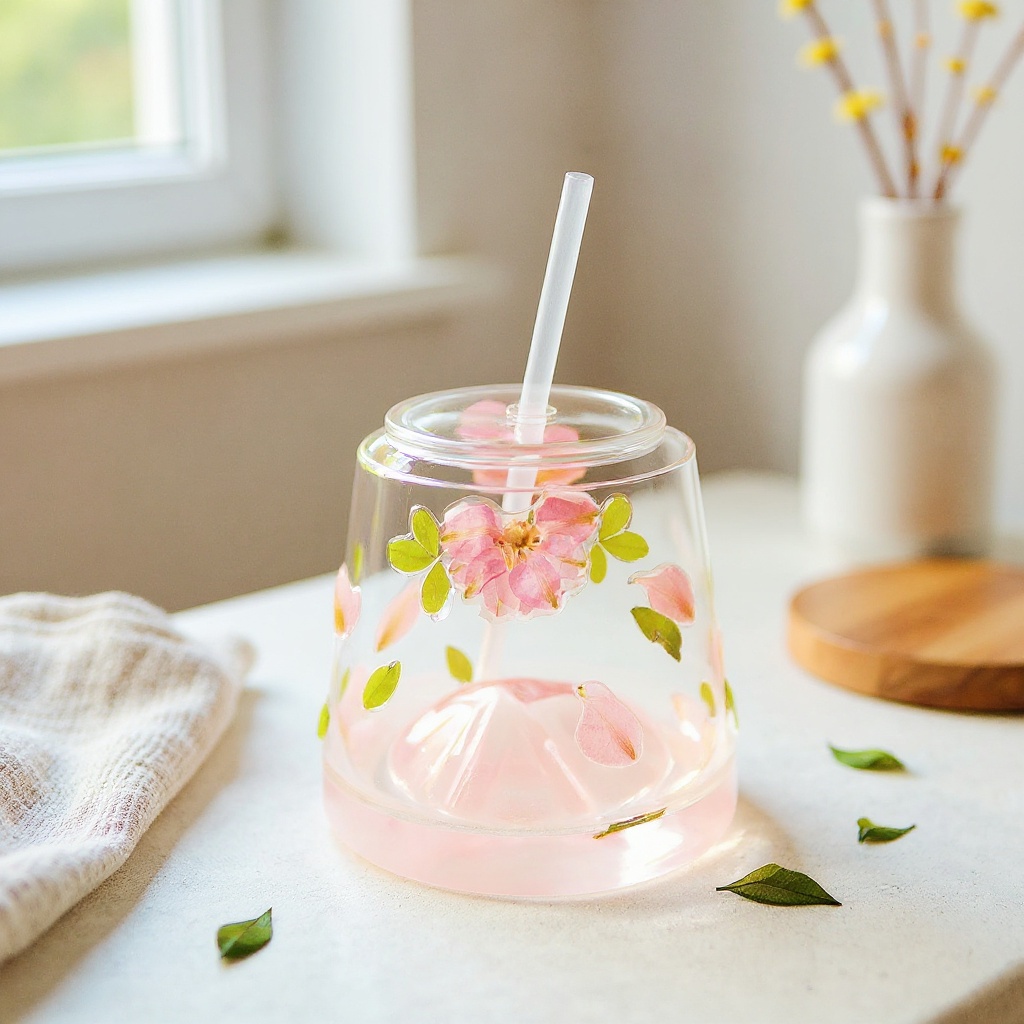
Properly preserved flowers in glass cups can maintain their appearance for 2–5 years under controlled conditions, according to published guidelines from botanical preservation specialists including the American Institute for Conservation. The longevity range reflects real variation: hardy specimens like statice, small ferns, and certain dried grass species outlast delicate petals from roses or peonies by a significant margin.
Flower preservation techniques used in quality glass cups include glycerin treatment — which replaces the flower's natural moisture content with glycerin to maintain flexibility and prevent brittleness — and silica gel drying, which removes moisture rapidly while preserving original shape. Freeze-drying, used in premium applications, removes moisture through sublimation and produces the sharpest color retention according to horticultural preservation research from the Royal Horticultural Society's published guidelines on ornamental plant conservation.Direct sunlight causes fading. That sentence is short because it needs to be remembered. UV exposure can visibly degrade petal color within 6–12 months even through window glass, while identical cups stored in indirect light environments show no perceptible fading at the 24-month mark in side-by-side comparisons conducted by preservation hobbyist communities. The protective coating layers on quality pieces provide partial UV resistance, but not complete protection against sustained direct exposure.
Heat Resistance and Temperature Considerations
The heat-resistant glass construction of quality flower cups handles temperature variation, but the embedded botanical elements introduce a secondary thermal consideration that buyers rarely research before purchasing. The glass substrate typically withstands temperatures consistent with standard hot beverage service — well above what most teas and coffees reach at drinking temperature. The preserved flowers and their bonding compounds, however, have different thresholds.
For hot beverages, standard drinking-temperature drinks (typically 140–160°F at the point of consumption for most teas and coffees as recommended by food safety guidelines) fall comfortably within safe parameters for quality sealed botanical work. Pouring boiling water directly against the flower-embedded section repeatedly over time is not recommended — not because the glass fails, but because repeated thermal cycling against adhesive compounds accelerates micro-stress over months of use.
The dust-proof glass lid included with complete sets serves dual purposes that matter practically. It protects the drink from airborne particles and reduces the rate of temperature loss, which means less thermal cycling per use session. Less cycling means longer adhesive integrity over the cup's functional lifespan. The reusable glass straw reduces direct lip contact with the flower-embedded exterior sections during drinking.
Caring For Your Real Flower Glass Cup
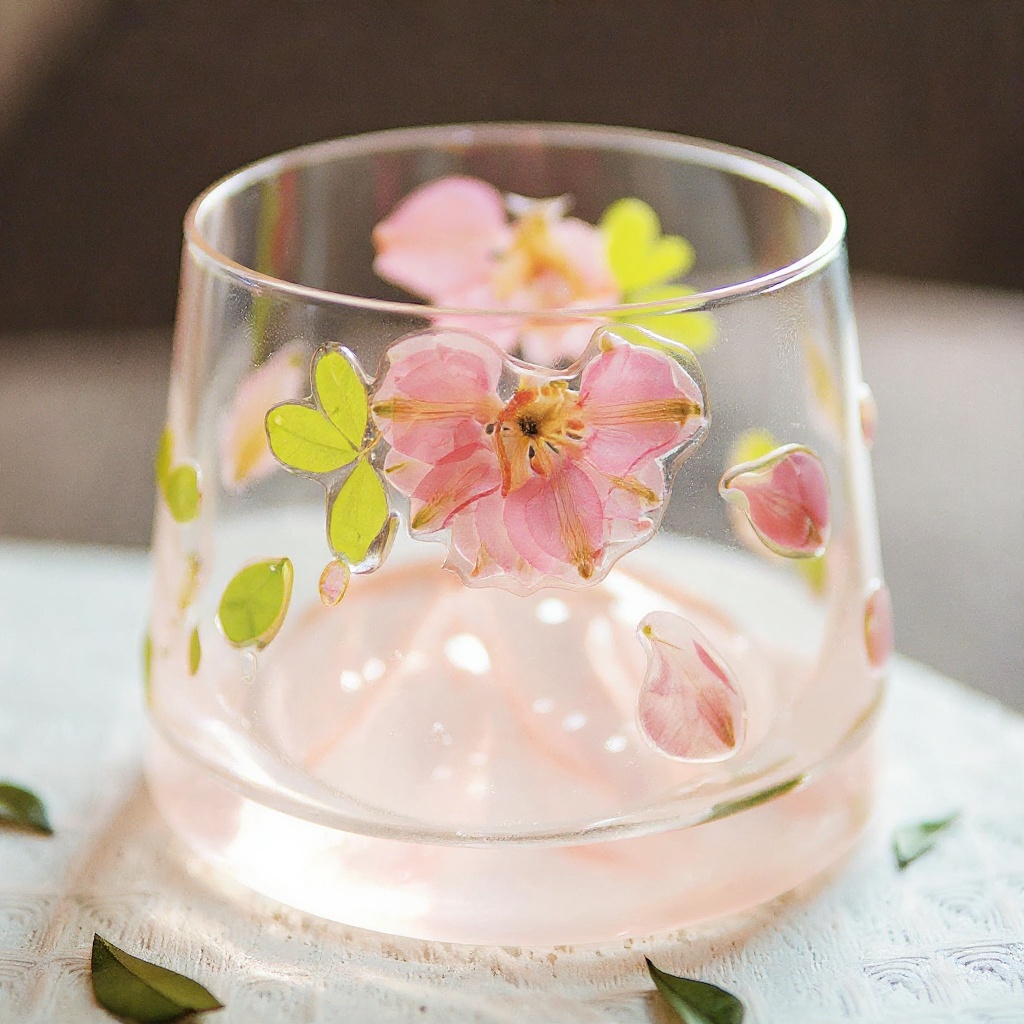
Maintenance decisions made in the first month of ownership often determine whether a unique glass cup with real flowers inside looks pristine at year three or degraded at year one. Hand washing is the only recommended method — dishwashers subject embedded botanicals to sustained high heat, pressurized water jets, and alkaline detergents that collectively compromise both adhesive bonds and preserved flower integrity.
1. Rinse immediately after use to prevent liquid staining on botanical elements 2. Use lukewarm water with gentle pH-neutral dish soap only 3. Wipe with soft microfiber cloths — never abrasive sponges or scrubbing pads 4. Avoid soaking the cup for more than 5 minutes at a time 5. Air dry in an inverted position on a soft cloth, away from heat vents 6. Store in a stable environment — consistent temperature and humidity matter more than most owners realize 7. Inspect the flower borders quarterly for any edge-lifting and address early with appropriate clear sealant
Additionally: - Store away from south-facing windows where sustained UV exposure accumulates - Handle by the base or mid-body rather than gripping the flower-decorated band directly - Use the included dust-proof lid during storage to prevent particulate settling into micro-texture gaps
Choosing Quality: What Makes a Premium Flower Glass Cup Worth the Investment
The price difference between a $15 printed glass and a $68 handcrafted unique glass cup with real flowers inside reflects compounding factors: material grade, production time, botanical authenticity, and included accessories. A genuinely handcrafted piece requires individual attention from an artisan across multiple production days. That labor cost alone accounts for a substantial portion of the price differential.
Cheaper alternatives frequently use inferior soda-lime glass with lower thermal stability ratings, synthetic flower materials that fade within months, or single-layer sealing that leaves botanical edges vulnerable to moisture infiltration. The multi-day handcrafting process for quality pieces ensures each flower element is positioned, sealed, coated, and inspected individually — a process inspired by historical European decorative glass traditions documented in museum collections including the Victoria and Albert Museum's decorative arts archive.
Handmade alternatives from independent craft platforms with real flowers typically range from $45–$120 but rarely include a complete accessory set. The dust-proof glass lid and reusable glass straw included with quality complete sets add functional value that extends the cup's practical lifespan. Quality construction means you are investing in a piece that functions as both everyday drinkware and decorative arts for years rather than a seasonal novelty.
For those exploring the full range of botanical glassware options, our Premium Fuji Mountain Real Flower Whiskey Glass represents the complete-set standard: hand-embedded genuine botanicals, heat-resistant construction, dust-proof lid, and glass straw included.
Perfect Occasions for Real Flower Glass Gifts
A unique glass cup with real flowers inside occupies a rare category of gifts: visually striking, genuinely functional, and personal without requiring the giver to know precise sizing or specific preferences. The combination appeals to recipients who appreciate handcrafted items with observable artisan effort.
Birthdays, anniversaries, graduations, housewarmings, and bridal showers all suit these pieces naturally. The three available color tones — pink, blue, and yellow — allow gift-givers to match recipients' existing home aesthetic or known preferences. Pink-toned floral arrangements complement warm interior palettes. Blue varieties offer a cooler, more contemporary feel. Yellow carries a brightness that photographs beautifully in natural light.
The Instagram-worthy visual character of a unique glass cup with real flowers inside generates genuine social sharing — the soft bokeh background photographs practically take themselves when the cup is set on white marble or natural linen in window light. Boutique gift store buyers stock these specifically because customers seeking meaningful, non-generic presents return to them repeatedly after initial discovery. The unboxing experience alone justifies the gifting context.
FAQ
Are the flowers in a unique glass cup with real flowers inside genuine or just printed?
Authentic versions feature genuine preserved flowers hand-embedded on the outer glass surface, creating raised three-dimensional relief you can physically feel. The tactile test is definitive: real botanical elements produce organic, irregular resistance under a fingertip, while printed versions remain perfectly flat. Cheap alternatives use vinyl decals or ink printing that lacks any dimensional quality.
How long do preserved flowers in glass cups actually last before fading?
Quality preserved flowers in properly sealed glass cups typically maintain appearance for 2–5 years when stored away from direct sunlight and temperature extremes. Glycerin-treated specimens tend to outlast simply dried petals. The American Institute for Conservation's botanical preservation guidelines confirm that controlled-humidity indoor environments significantly extend this range compared to outdoor or high-UV exposure conditions.
Can I use hot drinks in a real flower glass cup without damaging the petals?
Yes, for normal hot beverage use. Standard drinking-temperature tea and coffee (140–160°F at consumption) fall within safe parameters for quality sealed botanical work. Avoid pouring near-boiling water directly against the flower-embedded sections repeatedly, as sustained thermal cycling against adhesive compounds over months of heavy use can accelerate micro-stress in lower-quality pieces. The heat-resistant glass itself handles temperature variation well.
Is a real flower glass cup dishwasher safe?
No. Hand washing is the only recommended method. Dishwashers expose embedded botanicals to sustained high heat, high-pressure water jets, and alkaline detergents that collectively degrade both the adhesive bonds securing the flowers and the protective coating layers. Use lukewarm water with gentle pH-neutral soap and a soft cloth.
What is the difference between preserved flowers and dried flowers used in glass cups?
Preserved flowers undergo glycerin treatment or freeze-drying that replaces or removes moisture while maintaining flexibility, color depth, and structural resilience. Dried flowers are simply dehydrated, which can leave them brittle and more susceptible to color fade. Preserved flowers in glass cup applications last noticeably longer and retain dimensional quality better under regular handling conditions.
How are the flowers attached to the outside of the glass without falling off?
Flowers are secured using food-safe adhesives or UV-cured resin compounds rated for glass bonding, applied during a controlled multi-day production process. Quality pieces use multiple successive coating layers, each individually cured, to encapsulate the botanical elements fully. This encapsulation creates a protective barrier that prevents moisture infiltration and maintains adhesive integrity under normal use conditions.
Is a $68 real flower glass cup worth it compared to $15 Amazon alternatives?
The price reflects genuine preserved botanicals (versus printed patterns), heat-resistant glass construction, multi-day handcrafted production, and included accessories — dust-proof lid and glass straw — that cheaper options omit entirely. The $15 alternatives almost universally use flat printed or decal designs. If you are comparing against other authentic handcrafted flower glass cups at similar price points, evaluate whether they include the complete accessory set, as the lid and straw add both functional value and flower protection during storage.
What occasions suit a unique glass cup with real flowers inside as a gift?
Birthdays, anniversaries, graduations, housewarmings, and bridal showers all fit naturally. The three color options — pink, blue, yellow — allow matching to recipient preferences or home décor. The combination of functional daily use and display-worthy artistry makes these gifts relevant beyond a single occasion.
Can I put the glass cup with flowers in the freezer for iced drinks?
Cold beverages pose no temperature-related risk to the embedded flowers. Refrigeration and ice contact are fine. Avoid placing the cup directly against freezer coils or subjecting it to rapid freeze-thaw cycling, which causes glass expansion and contraction that can stress adhesive bonds over repeated cycles in lower-quality constructions.
Conclusion
Finding a unique glass cup with real flowers inside worth owning means understanding the gap between surface appearance and genuine construction quality. The tactile relief of real botanicals, the organic light play through preserved petals, the dimensional texture that photographs differently from every angle — none of that exists in printed or decal alternatives. It simply cannot be faked convincingly once you know what real feels like.
Whether purchasing for yourself or as a gift, understanding preservation techniques, care requirements, and quality indicators protects the investment and extends enjoyment across years rather than months. The unique glass cup with real flowers inside category rewards informed buyers who test before trusting and prioritize authentic craft over persuasive packaging.
For a complete-set reference point combining genuine hand-embedded botanicals with heat-resistant construction and full accessories, explore our Premium Fuji Mountain Real Flower Whiskey Glass — the standard against which we measure everything else in this category.


