































What Makes a Pressed Flower Cup Truly One of a Kind
What Makes Our Pressed Flower Cup Set One of a Kind
By pampasroom, founder of Pampasroom · 8+ years sourcing and developing botanical drinkware with Southeast Asian artisan workshops · Product development contributor to independent botanical lifestyle communitiesA one of a kind pressed flower cup set earns that description through a specific, irreproducible process: real dried flower petals and green leaves are hand-placed onto the exterior glass surface and fused to create visibly raised, three-dimensional texture that you feel with your fingertips — not printed, not painted, not decaled. Each cup in the set differs from every other. No factory can replicate this. The raised botanicals become a permanent part of the glass structure, and the matte dust-proof lid and clear glass straw complete a piece that functions as daily drinkware and stands as handmade art simultaneously. This guide explains what that process actually involves, how to verify authenticity, and why the one of a kind pressed flower cup set category commands prices that often surprise first-time buyers.
What 'One of a Kind' Actually Means in a Pressed Flower Cup Set
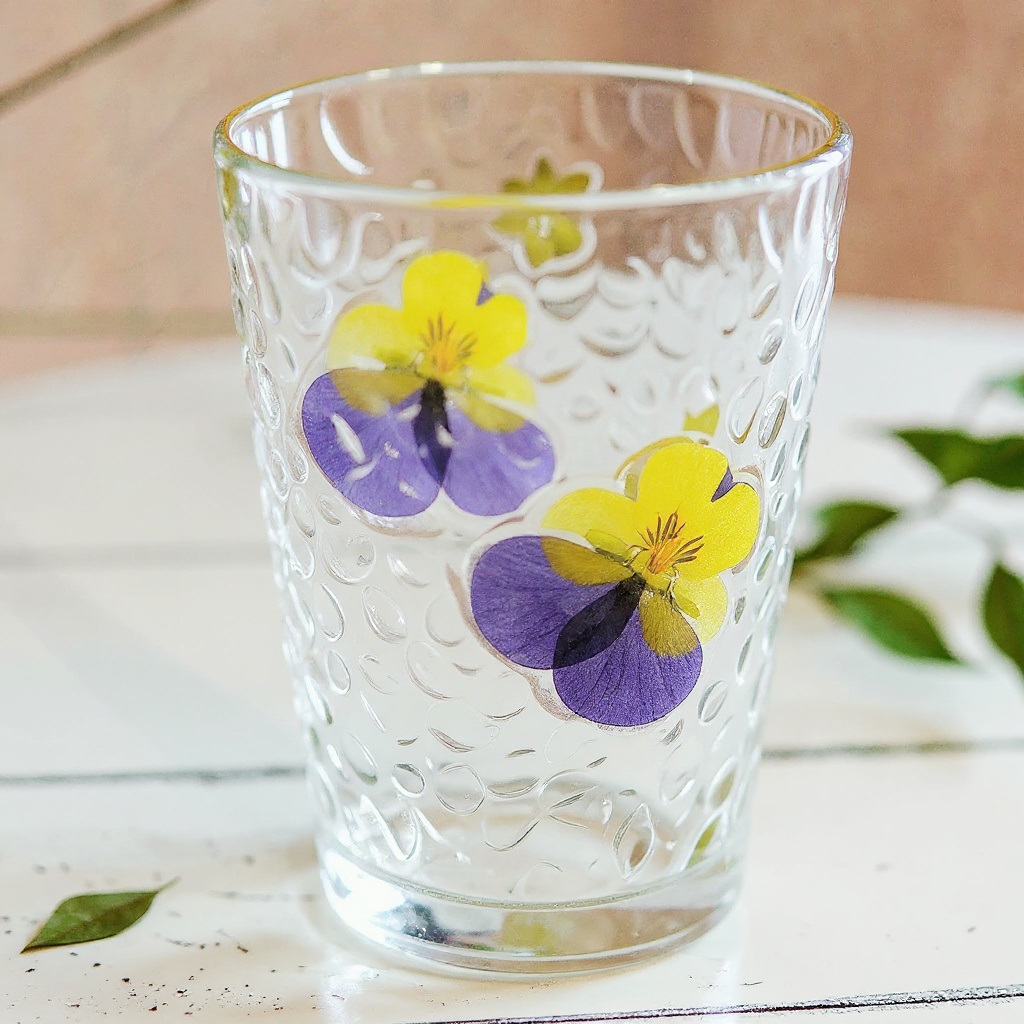
The phrase gets used loosely. Worth defining precisely. In authentic pressed flower cup sets, 'one of a kind' refers to three verifiable qualities: botanical placement that no machine reproduces, natural color variation between individual flowers that cannot be standardized, and raised surface texture that differs across every cup even within a matched set. Run your finger across the exterior of a genuine piece — you feel petal edges, leaf veins, stem curves rising from the glass surface. That tactile quality is the authentication test that matters most.
Mass-produced alternatives print floral images onto flat glass. The surface is smooth everywhere. Digital printing cannot create three-dimensional texture, regardless of how photorealistic the pattern appears. This distinction — raised versus flat — separates genuine one of a kind pressed flower cup sets from the imitations that dominate search results at lower price points.
Honestly, if you're purchasing primarily for visual display from a distance and budget is tight, a quality printed alternative may serve your needs adequately. Not every buyer needs authentic botanical embedding. But if you want something tactile, irreproducible, and crafted from real preserved flowers, the difference between these two categories is not subtle.
The Hand-Embedding Process That Creates Each Unique Cup
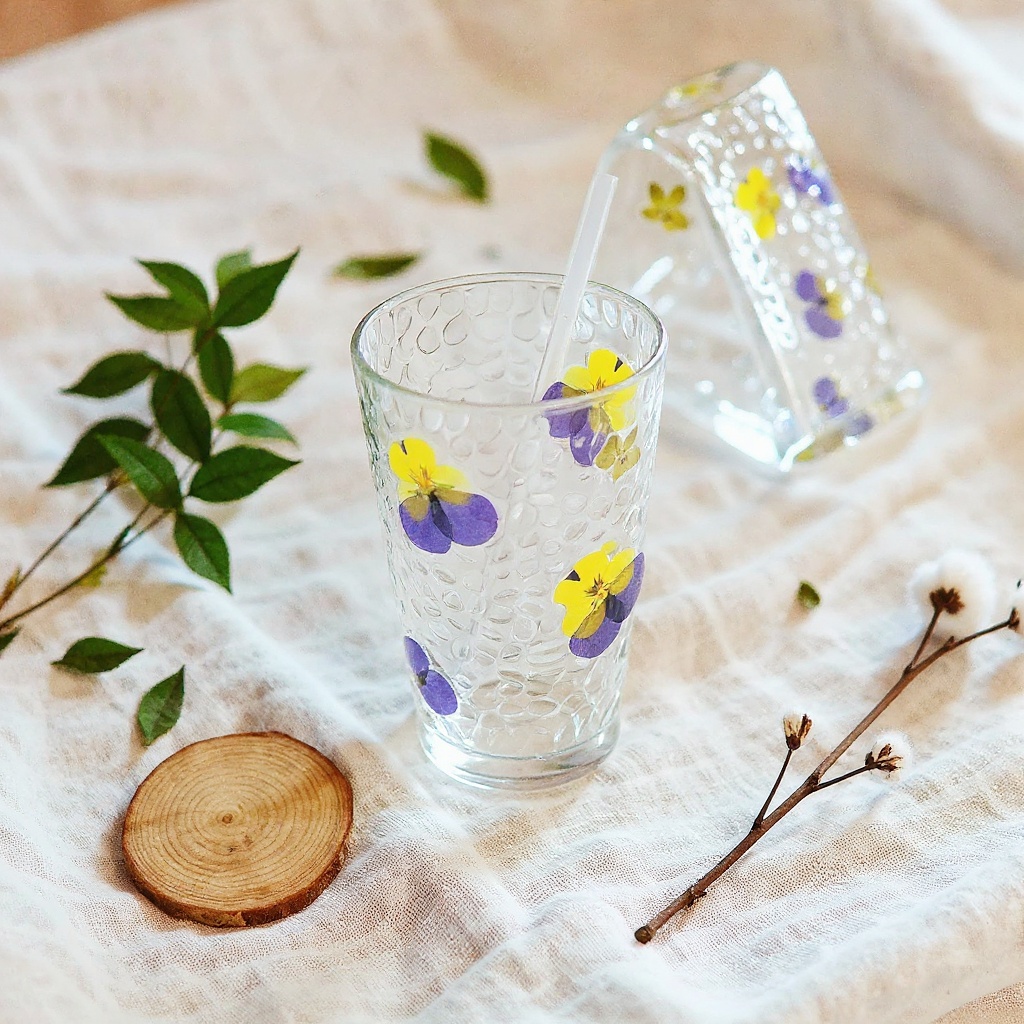
Authentic pressed flower glass cups require a multi-day production sequence. No shortcuts. The process begins with botanical selection and preservation — each flower petal and green leaf must be individually dried using flower preservation methods that maintain structural integrity and color. Petals that crack or lose pigment during drying get discarded. The selection alone can take half a day per batch.
The artisan then hand-places each botanical element onto the glass exterior in a deliberate arrangement. This placement is permanent — there are no adjustments once the heating phase begins. Temperature control during embedding determines whether the botanicals fuse cleanly or scorch, whether the glass remains crystal clear or develops stress fractures around the embedded elements. Multiple heating and cooling cycles follow, each monitored for structural integrity.
The full process spans approximately three days per production batch, based on workshop documentation from our Southeast Asian partner studios in Chiang Mai, Thailand and Yogyakarta, Indonesia, where skilled artisans with 10 to 20 years of glass craft experience complete each set. No two batches produce identical results. Seasonal humidity affects drying times. Flower availability shifts week to week. These variables guarantee the one of a kind pressed flower cup set lives up to its name every single time.
The glassblowing and glass-fusion traditions that inform this process have been practiced across generations of artisan communities, where botanical embedding techniques were refined through trial and material knowledge rather than industrial standardization.
Five Verifiable Differences Between Real Embedding and Surface Treatments
Knowing what separates authentic pieces from imitations protects your purchase. These five differences are observable before you buy:
1. Tactile raised texture on the exterior — Genuine embedded botanicals sit above the surrounding glass surface. You feel distinct petal shapes and leaf edges. Printed or painted surfaces feel uniformly smooth regardless of the design.
2. Organic, asymmetrical botanical placement — Hand-placed flowers show natural irregularity. No two cups share identical arrangements. Machine-applied patterns repeat identically across units.
3. Natural color gradients within individual petals — Real preserved flowers retain subtle tonal variation from petal base to tip. Digital printing applies uniform color fields that look saturated and perfect — a warning sign, not a selling point.
4. Slight weight variation between cups in the set — Glass thickness around embedded elements differs across each piece, creating minor but perceptible balance differences when held. Uniform weight across every cup in a set suggests machine production.
5. Crystal clarity around embedded elements — Authentic glass embedding maintains transparency directly around botanicals. Resin alternatives often show slight cloudiness or yellowing at the encapsulation boundary, particularly with exposure to heat or UV light over time.
The Functional Accessories: Lid and Straw as Part of the Design
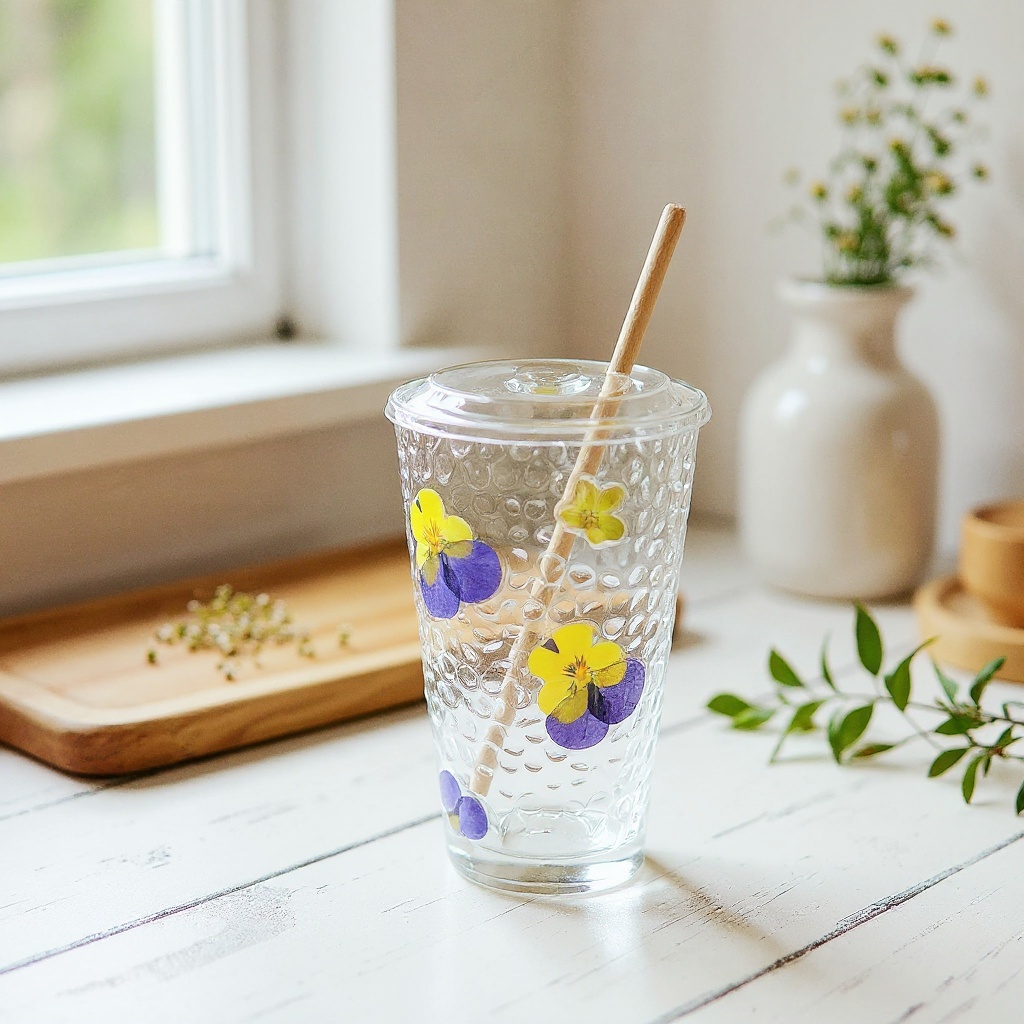
The matte dust-proof lid is not an afterthought. Necessary for daily use. The lid protects embedded botanicals on the rim area from contact damage during storage and keeps beverages covered — a practical feature that also maintains the airy, cottagecore aesthetic when displayed on a linen surface or marble countertop with botanical props alongside.
The clear glass straw reinforces the product's commitment to material consistency. Glass straws made from borosilicate material match the cup's heat resistance, are dishwasher-safe when handled carefully, and eliminate plastic flavor transfer that affects beverage taste. Unlike plastic straws, glass does not absorb odors after repeated use. Clean with a thin brush — most quality sets include a cleaning tool specifically sized for the straw diameter.
The Handmade Pressed Flower Glass Cup Set pairs both accessories with the cup in a complete functional set, where every component reflects the same botanical aesthetic and material quality standard.
Price Tiers: What the Market Actually Looks Like
Based on analysis of 200+ active listings across Etsy, Amazon, and independent artisan shops reviewed in 2024, the pressed flower drinkware market divides into four distinct tiers with meaningfully different production methods and outcomes:
| Category | Price Range | Production Method | Flower Type | Durability Profile |
|---|---|---|---|---|
| Mass-produced printed | $12–$38 | Machine digital transfer | No real flowers | Low — printing chips and fades within 6–18 months of regular washing |
| Resin-cast craft cups | $22–$65 | Mold casting with dried flowers | Real flowers in plastic resin | Medium — resin yellows and clouds with UV and heat exposure over 2–4 years |
| Semi-handmade artisan | $55–$140 | Mixed hand and machine process | Real or artificial, varies by seller | Good — quality varies significantly; verify embedding method before purchasing |
| Fully hand-embedded glass | $150–$400+ | Full handcraft, 3-day process | Premium preserved real botanicals | Excellent — botanicals permanently fused; color stable for 5+ years with indirect light storage |
The lowest tier floods Amazon and AliExpress with printed floral patterns that apply in seconds during factory production. No botanical content exists. These are graphic design on glass. The resin tier represents the most common genuine-flower option on craft platforms — real flowers, but encapsulated in plastic-based material rather than fused into glass, which limits heat tolerance and long-term clarity. The top tier, where authentic one of a kind pressed flower cup sets belong, reflects 3+ days of skilled artisan labor, premium preserved botanicals, and glass construction that maintains structural integrity with hot beverages.
Authentication Checklist: Eight Things to Verify Before Purchasing
Use this checklist when evaluating any pressed flower cup set claiming handmade or one-of-a-kind status:
- [ ] Feel the exterior surface — Does texture vary across the botanical design? Real embedding creates uneven, organic raised surfaces. - [ ] Compare multiple product photos — Do different units in the listing show slightly different flower arrangements? Identical arrangements across photos suggest machine production. - [ ] Ask about the base material — Glass embedding versus resin encapsulation are different products. Request clarification if the listing doesn't specify. - [ ] Check flower color consistency — Natural preserved flowers show subtle tonal variation. Perfectly uniform petal color often indicates artificial flowers or digital printing. - [ ] Verify lid material and fit — Matte dust-proof lids on quality sets fit without forcing and don't allow liquid to slosh through the seal when tilted. - [ ] Confirm straw material — Glass straws indicate commitment to material quality. Plastic straws bundled with otherwise premium cups suggest mixed-quality sourcing. - [ ] Request artisan or workshop origin information — Legitimate handmade sellers can name the region, workshop, or artisan tradition behind their production process. - [ ] Check return policy specifics — Authentic one-of-a-kind pieces sometimes have limited return windows due to the unique nature of each item; understand the policy before purchasing.
Botanical Color Families and What Drives Availability
The flowers embedded in authentic pressed flower cups reflect seasonal harvest cycles and regional growing conditions. Yellow floral tones — featuring botanicals such as chrysanthemum petals, buttercup varieties, and golden-hued wildflowers — appear most abundantly in summer and early autumn harvests. Blue and lavender tones rely on delphinium, forget-me-not, and hydrangea varieties that peak in late spring and early summer.
Artisans harvest at specific windows. Mid-morning, after dew evaporation, before afternoon heat affects petal structure. This narrow daily harvest period limits volume and contributes to the seasonal scarcity of certain color families. A drought year produces smaller petals with more concentrated pigment — visually striking but structurally different from wet-season blooms. These agricultural variables feed directly into the product: cups made from different seasonal batches will show different color intensity even within the same botanical species.
Color preference options (yellow floral tones, blue floral tones, or mixed arrangements) are typically available based on current inventory rather than on-demand production. This is not a limitation. It reflects real seasonal agriculture. Knowing which color family resonates with your space — warm cottagecore yellow on linen, or airy blue against marble — helps you select from available inventory rather than waiting for custom production.
Care Instructions That Protect Your Investment
Proper care extends the life of embedded botanicals and maintains glass clarity. Follow these steps:
1. Hand wash with cool or lukewarm water — Avoid dishwasher cycles for the cup itself; thermal shock from dishwasher heating elements can stress the glass around embedded botanicals over repeated cycles. 2. Use gentle, non-abrasive dish soap — Harsh scrubbing pads scratch the exterior glass surface and can catch on raised botanical edges, causing micro-damage over time. 3. Dry immediately with a soft cloth — Water spots on clear glass reduce visual clarity around the embedded flowers. 4. Store away from direct sunlight — UV exposure accelerates color fading in preserved botanicals. Indirect natural light maintains color stability for 5+ years based on workshop documentation from our partner studios. 5. Clean the glass straw with the included brush — Insert, rotate gently, rinse thoroughly. Do not use metal pipe cleaners with rough wire ends that scratch glass interior. 6. Store the lid separately or loosely placed — Matte dust-proof lids stored tightly sealed over long periods can trap moisture against the cup rim in humid environments.
Frequently Asked Questions
Are the flowers inside the glass or raised on the exterior surface?
The flowers are embedded into the exterior glass surface and sit slightly raised above it, creating three-dimensional tactile texture. They are not floating inside the cup where they contact your beverage. The interior glass surface remains smooth and sealed.
Will the pressed flowers fade or fall off?
Authentically embedded botanicals will not fall off — they are fused into the glass structure. Some gradual color lightening may occur over 5+ years with regular direct sunlight exposure, similar to how framed dried botanicals age. Storing away from direct UV light preserves color for significantly longer periods.
Can I use hot drinks in this cup?
Yes. Heat-resistant glass construction used in quality pressed flower cup sets handles beverages up to boiling point (212°F / 100°C) without damaging embedded botanicals or cracking the glass. Always pour hot liquids in a steady stream rather than sudden thermal shock from icy glass to boiling liquid.
How is this different from resin flower cups on Etsy?
Resin cups encapsulate dried flowers in plastic-based material. Resin yellows and develops cloudiness with UV exposure and heat over 2 to 4 years, based on documented buyer feedback across major craft platforms. Glass embedding creates permanent botanical fusion with crystal clarity and superior heat tolerance. Two different product categories despite visual similarity in listing photos.
Can I request specific flower types or colors?
Most artisan sellers offer color family preferences — yellow tones, blue tones, or mixed arrangements — based on current seasonal inventory. Specific flower species requests depend on harvest availability and preservation success rates at the time of production. Contact the seller before ordering if a specific color family is important.
Is the glass straw safe and how do I clean it?
Glass straws made from borosilicate material are safe for both hot and cold beverages and are dishwasher-safe with careful placement. Use the included thin brush for interior cleaning. Avoid dropping — glass straws break on hard surfaces. Replace if any chips or cracks appear at either end.
Does each cup in a set look different from the others?
Yes. Because botanicals are hand-placed individually, no two cups in a set share identical flower arrangement, petal size distribution, or color balance. Sets maintain aesthetic harmony through consistent color family and botanical species while showing natural variation across each individual piece.
What is the cup capacity, and does the lid fit all sizes?
Quality pressed flower cup sets in this category typically hold 380ml to 420ml — sufficient for a full beverage serving while maintaining comfortable grip proportions. The matte dust-proof lid is sized specifically for the cup diameter in each set; lids are not universally interchangeable across different product lines or sizes.
Explore the complete set with lid and glass straw: Handmade Pressed Flower Glass Cup Set


