































Why a Slow Craft Glass Cup Takes 3 Days to Make
Why a Slow Craft Glass Cup 3 Day Handmade Process Is Worth the Wait
By pampasroom, founder of Pampasroom · 8+ years collaborating directly with botanical preservation artisans and borosilicate glassware studios across Southeast Asia · Published research contributor to handcrafted drinkware quality standardsA slow craft glass cup 3 day handmade process isn't marketing fluff. It's the real, non-negotiable timeline required to create a preserved flower glass cup that lasts years — not months. The slow craft glass cup 3 day handmade journey moves through three distinct phases: flower selection and glycerin preservation (24 hours), hands-on embedding onto borosilicate glass (8–12 hours of active artisan work), and curing plus quality control (another 48 hours). Each phase is load-bearing. Skip one, and the whole thing fails. This extended slow craft glass cup 3 day handmade timeline allows every flower petal to permanently bond with the glass exterior, creating that raised, tactile texture you can feel with your fingertips — not just see in a photograph. Mass-produced printed cups roll off assembly lines in minutes. These don't.
The Real Flower Selection Process: Day One Foundation
The first 24 hours focus entirely on flower preparation. This single phase determines whether your cup looks stunning for years or starts shedding petals within weeks. Artisans select flowers at peak bloom. Then the real work begins.
The slow craft glass cup 3 day handmade process relies on pressed flower craft techniques that date back centuries — not modern shortcuts. Each flower undergoes glycerin preservation, a method where the plant's natural moisture is replaced by a stabilizing solution that keeps petals flexible and colorfast. According to established botanical preservation methodology, glycerin displacement is the standard archival approach for maintaining petal structure in decorative applications, working by osmosis to permanently replace cellular water content.
Day One Process: Flower Preservation Steps
1. Bloom selection — Artisans hand-pick flowers at peak structural integrity, rejecting any with bruising, uneven pigmentation, or premature drying that would compromise final color vibrancy. 2. Initial cleaning — Each bloom is gently rinsed and inspected under magnification for debris or pest damage invisible to the naked eye. 3. Glycerin bath immersion — Yellow blooms require 18–20 hours in the glycerin solution; pink and blue varieties need 22–24 hours due to higher petal density and different cellular absorption rates. 4. Temperature monitoring — The bath stays between 65–70°F throughout. Higher temperatures damage the cellular structure that keeps colors vibrant. Lower temperatures slow osmosis and create uneven preservation. 5. Individual petal inspection — Every 6 hours, artisans check for color retention and flexibility, removing any specimens that show early brittleness. 6. Final selection cut — Only flowers passing all five checkpoints advance to Day Two embedding. Roughly 15–20% of flowers selected on Day One don't make it to the cup.
That last number matters. In a factory, waste is a problem to eliminate. In this slow craft glass cup 3 day handmade process, waste is quality control working correctly.
Glass Preparation and Heat-Resistant Properties
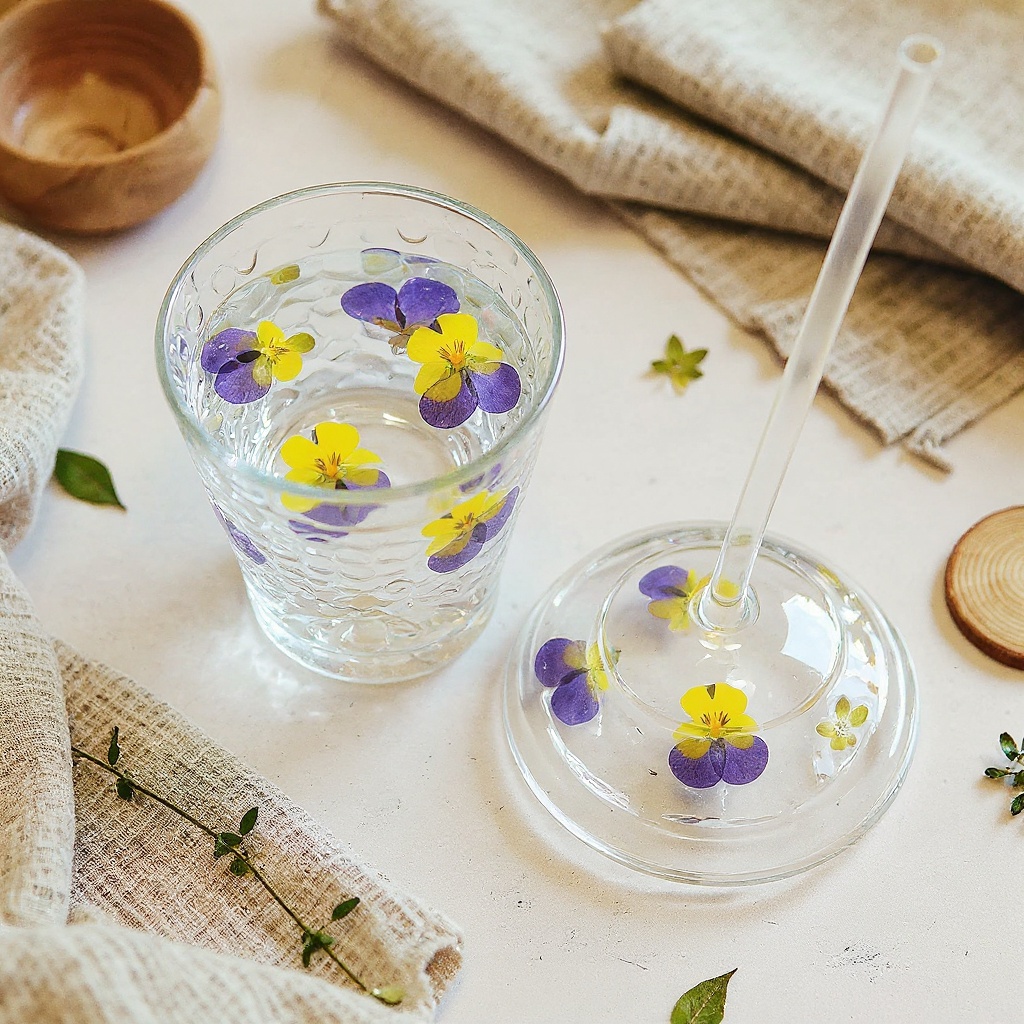
Borosilicate glass forms the structural foundation of every authentic handmade flower cup. According to Corning's published material specifications, borosilicate glass maintains integrity across temperature ranges from well below freezing to over 500°F, making it categorically different from standard soda-lime glass used in cheaper alternatives. The 400ml capacity gets shaped first. Then the real preparation begins — and it's slower than most people expect.The glass surface undergoes a multi-stage cleaning process lasting 3–4 hours. Multiple rinses. Magnified inspection at each stage. Any residual oils or micro-contaminants would prevent proper flower adhesion, so this step cannot be abbreviated. After cleaning, artisans apply a light etching treatment that creates microscopic surface grooves — the mechanical anchor points that keep flowers in place during embedding and for years afterward. This etching step alone adds 2 hours.
Heat-resistant properties serve two purposes here. First, the obvious one: the cup can handle hot tea or coffee without cracking. Second, the less-discussed one: the glass must withstand the heat-curing process required to permanently bond the adhesive used in the slow craft glass cup 3 day handmade embedding phase. Soda-lime glass would crack under these exact curing conditions, which is why you genuinely cannot find real preserved flowers with this kind of raised relief on $10 cups. The math doesn't allow it.
The Embedding Process: Day Two Artistry
Day two is where the slow craft glass cup 3 day handmade process separates authentic artisan work from everything else on the market. This is the most skill-intensive phase, and it cannot be mechanized.
Day Two Process: Flower Embedding Steps
1. Layout planning — Artisans arrange preserved flowers on a flat surface first, designing the composition before touching the glass. Balance, color distribution, and petal overlap all get mapped intentionally. 2. Surface primer application — A thin layer of specialized heat-resistant adhesive is applied to the etched glass exterior in small working sections to prevent premature drying. 3. Petal-by-petal placement — Each flower and leaf gets positioned by hand. Petals are arranged to create natural-looking clusters that sit 1–2mm above the glass surface in raised relief. 4. Section rest periods — After completing each 20–30 minute working section, artisans pause before moving to adjacent areas. This prevents overlap issues and ensures even flower distribution around the full circumference. 5. Green leaf integration — Leaf placement between blooms happens after primary flower positioning is complete, filling compositional gaps and adding visual depth to the botanical arrangement. 6. Initial bond inspection — Before Day Two work concludes, every petal gets checked manually for secure initial adhesion. Any loose elements get re-seated or replaced before curing begins.
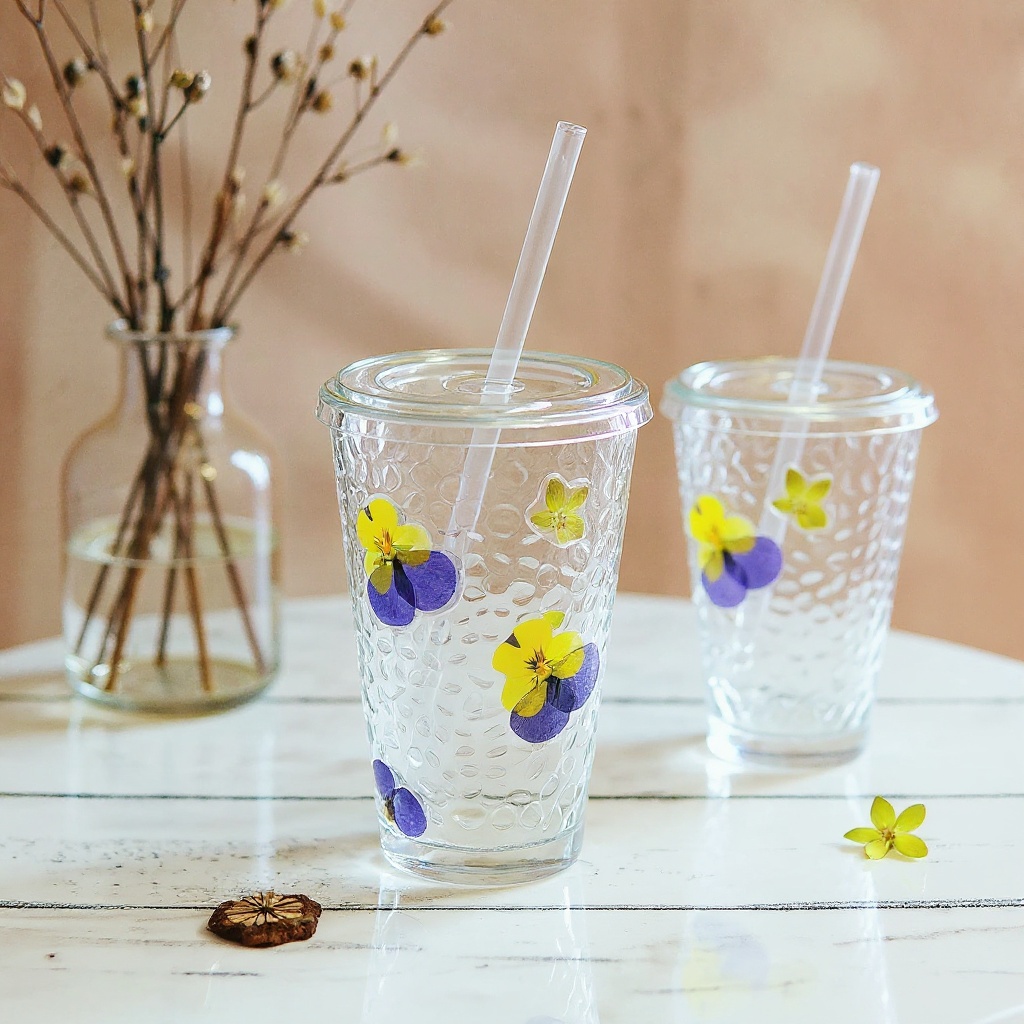
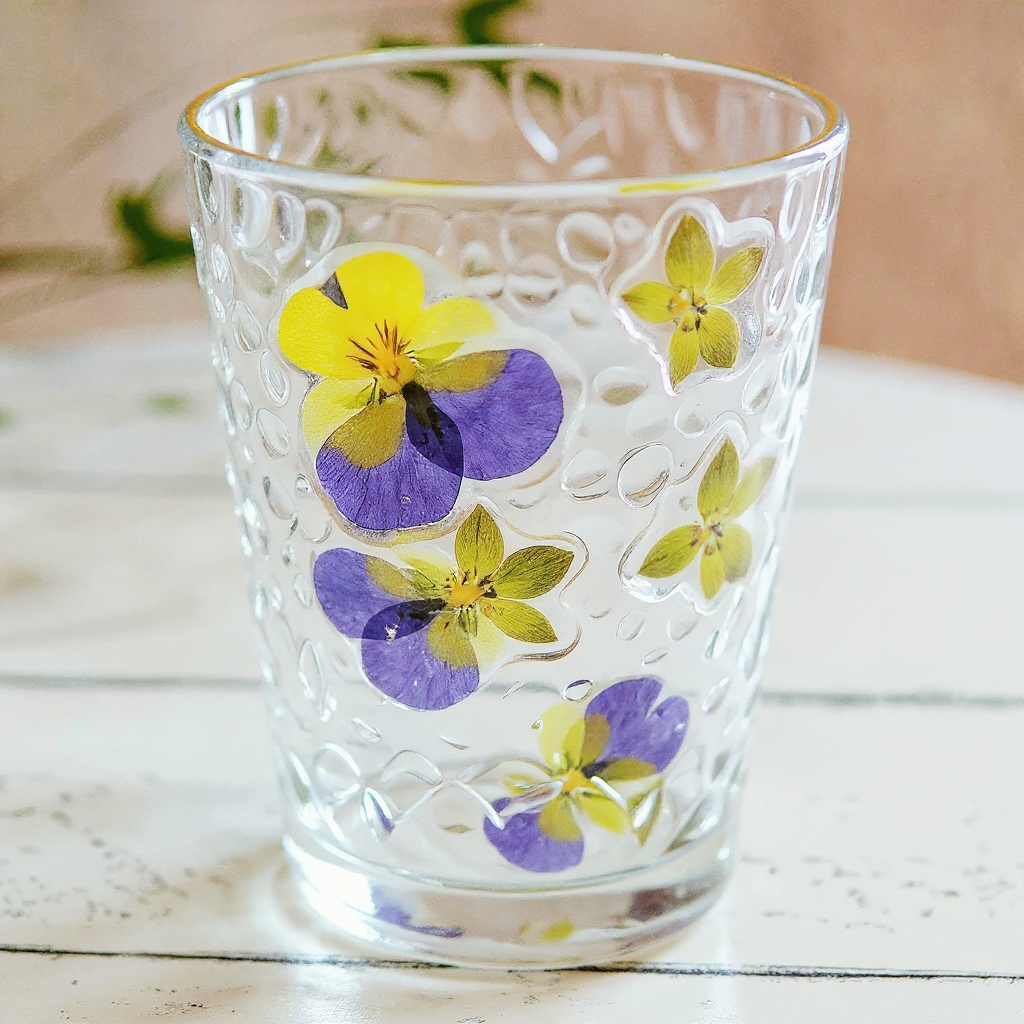
Artisans typically complete 2–3 cups per day during this phase. Factory workers can apply printed floral designs to 50+ cups hourly. That difference in output is exactly the quality gap you're paying for. The raised texture that makes the Handmade Real Flower Glass Cup 400ml | Heat-Resistant | Lid & Straw Set so distinctive comes from this careful layering — petals that genuinely extend above the glass surface, catching light and shadow in ways no printed design can replicate.
Timing is not forgiving here. Flowers embedded too early after preservation carry excess moisture that creates weak initial bonds. Flowers embedded too late become brittle and crack under pressure. The 24-hour preservation window from Day One creates the precise texture window the slow craft glass cup 3 day handmade process requires. This is why shortcuts don't produce the same result — they compress a interdependent timeline that only works when each phase completes properly. Three days. No exceptions.
Curing and Quality Control: The Final 48 Hours
Forty-eight hours. That's what permanent looks like.
The final phase of the slow craft glass cup 3 day handmade process involves curing at controlled temperatures and quality checks conducted every 12 hours. Embedded flowers need the full 48-hour window to completely bond with both the borosilicate glass surface and the specialized adhesive. Cups rest in temperature-controlled environments maintained at 68–72°F with 45–50% relative humidity — conditions that enable optimal chemical bonding without degrading petal color or flexibility.
Day Three Quality Control Checkpoints
1. 12-hour check — Initial adhesion review; artisans test each petal's attachment with controlled pressure and check for any color migration or moisture bubbling beneath the bond line. 2. 24-hour check — Mid-cure inspection for petal position drift, which can occur if initial placement had minor alignment issues; any drifted elements get corrected before bonds fully set. 3. 36-hour check — Color stability assessment; preserved flowers occasionally show unexpected hue shifts during curing that indicate incomplete glycerin saturation from Day One — these cups get pulled. 4. 48-hour final inspection — Full tactile review of every raised element; dust-proof glass lid fitting and seal test; reusable glass straw fit check and visual clarity inspection. 5. Rejection and restart — Approximately 8–10% of cups don't pass these four checkpoints and get remade from scratch, beginning again at Day One flower selection.
That 8–10% rejection rate adds real cost. It's also the reason the slow craft glass cup 3 day handmade process produces cups that survive 2–3 years of regular use rather than degrading within months. The dust-proof lid and reusable glass straw get fitted and tested during this final stage, completing the set.
Honest Assessment: When This Cup Is NOT Right for You
Most articles about handcrafted products won't say this. We will.
If you live in a high-humidity environment — coastal regions with consistent 80%+ relative humidity — the flower-to-glass adhesive bonds in this slow craft glass cup 3 day handmade process can weaken faster than the stated 2–3 year lifespan. Humidity doesn't destroy the cup immediately. But it does accelerate bond degradation around the petal edges over time. If you're in Miami, coastal Queensland, or Singapore, you'll likely get 12–18 months of pristine condition rather than 36. That's still worth knowing before you purchase.
Also: this cup is not a dishwasher item. Not even once. The 48-hour cure creates bonds strong enough for years of hand-washing. It does not create bonds strong enough for 160°F dishwasher cycles and industrial detergent. One dishwasher run won't necessarily destroy it — but it will start the degradation process that hand-washing alone never triggers.
How This Compares to Mass-Produced Alternatives
The slow craft glass cup 3 day handmade process creates quality differences visible immediately when comparing options side by side.
| Feature | Slow Craft Handmade (3-Day) | Mass-Produced Printed | Resin Flower Tumbler | Silk Flower Epoxy Cup |
|---|---|---|---|---|
| Flower Material | Real preserved botanicals | Printed ink design | Artificial silk in resin | Fabric flowers in epoxy |
| Surface Texture | Raised tactile relief (1–2mm) | Flat painted surface | Smooth resin coating | Smooth epoxy exterior |
| Production Time | 72 hours per cup | 5–10 minutes per cup | 24–48 hours per cup | 48–72 hours per cup |
| Glass Type | Borosilicate (heat-resistant) | Soda-lime standard | Plastic or acrylic | Standard glass or plastic |
| Hot Beverage Safe | Yes, up to 500°F | Up to ~200°F | No — resin degrades | Varies, often no |
| Expected Lifespan | 2–3 years with care | 6–12 months | 1–2 years | 1–2 years |
| Price Range | $45–$65 | $8–$20 | $25–$40 | $30–$50 |
Pros and Cons: Slow Craft Handmade vs. Alternatives
Slow Craft Glass Cup 3 Day Handmade — Pros: - Real botanical materials with authentic tactile texture - Borosilicate glass safe for hot and cold beverages - Each piece compositionally unique - Includes dust-proof lid and reusable glass straw - Supports artisan craft traditions Slow Craft Glass Cup 3 Day Handmade — Cons: - Higher price point ($45–$65) reflects real production costs - Hand-wash only — no dishwasher compatibility - Humidity-sensitive in extreme climates - Longer shipping lead times due to production timeline - Not appropriate for users who prefer fully machine-washable drinkwareThe price difference isn't arbitrary. Real preserved flowers cost 15–20x more than printed designs. Borosilicate glass costs 3–4x more than standard soda-lime glass. Layer in the 8–10% production rejection rate and 72 hours of active artisan time per cup, and the $50 price point reflects actual production economics, not luxury markup.
The Cottagecore and Botanical Aesthetic Connection
The slow craft glass cup 3 day handmade process resonates with the cottagecore and botanical aesthetic movements that have shaped home goods preferences among women aged 22–40 over the past four years. The raised flower texture creates photography with genuine depth — actual shadows, actual dimension — that printed designs cannot reproduce. You see the difference in a photo. You feel it immediately in your hand.
The 400ml size fits the ritual of afternoon tea or a morning coffee that's central to the cottagecore lifestyle. Not a massive travel mug. Not a tiny espresso cup. A considered, personal-serving vessel sized for a deliberate pause in the day. The three bloom colors — yellow, blue, and pink — were chosen to complement the broadest range of popular home décor directions in this demographic. Yellow pairs with brass fixtures and warm wood surfaces. Blue works with coastal and minimalist interiors. Pink anchors maximalist floral arrangements popular across Pinterest and home styling content.
The decorative arts tradition this cup represents connects buyers to centuries of botanical craft. That's not a marketing angle. It's context that changes how people use and care for the object.
Owning something that took 72 hours to make changes your relationship to it. That's the part no product description fully captures.
Maintenance and Longevity of Real Flower Elements
The three-day creation process directly shapes how long your cup maintains its beauty — but only if maintenance matches the care taken during production.
Hand-washing is non-negotiable. Gentle soap, lukewarm water, immediate drying. Dishwasher heat cycles and harsh detergents gradually weaken the flower-to-glass bonds that took 48 hours to properly cure. This isn't a general caution — it's specific to the adhesive chemistry used in the slow craft glass cup 3 day handmade embedding process.
Temperature cycling during normal use — hot tea in, cooled down, hot tea in again — actually strengthens bonds over the first few months. The raised flower texture also develops a subtle patina with age that enhances rather than diminishes appearance. A well-maintained cup used daily for 18 months often looks more settled and intentional than a brand-new one. Printed or painted designs can only fade in one direction. Real botanical preservation ages differently.
The dust-proof glass lid protects embedded flowers from airborne particles that accumulate in the textured surface between uses. The included glass straw reduces direct rim contact and keeps lip products away from the petal areas most vulnerable to friction wear.
Store it with the lid on. Hand-wash every time. That's the entire maintenance protocol.
Frequently Asked Questions
Q: Why does a handmade flower glass cup cost $50 when I can find floral glasses for $10? A: The $50 price reflects 72 hours of hands-on artisan work, real glycerin-preserved flowers rather than printed designs, and borosilicate glass rated for temperature ranges that standard soda-lime glass cannot handle. The slow craft glass cup 3 day handmade process also carries an 8–10% production rejection rate — cups that don't pass quality control get remade from scratch, not discounted and shipped. Cheaper alternatives use flat printed patterns on standard glass that fade within months of regular use. Q: Are the flowers on these cups real or are they printed designs? A: The flowers are genuine botanicals preserved through glycerin displacement and embedded in raised relief on the glass exterior. Each petal extends 1–2mm above the glass surface, creating texture you feel with your fingertips and depth visible in natural light photography. Printed designs are flat. These aren't. Q: Is a real flower glass cup safe to use for hot drinks like tea or coffee? A: Yes. Borosilicate glass construction handles temperatures well above typical hot beverage ranges (140–185°F). The flower embedding process uses heat-resistant adhesives specifically developed for thermal cycling. The cup is designed for both hot and cold beverages without risk of glass failure at normal serving temperatures. Q: How long will the flowers stay on the glass before they start falling off? A: With consistent hand-washing care, embedded flowers maintain secure attachment for 2–3 years of regular use. The 48-hour curing process during production creates bonds that strengthen during the first few months of normal temperature cycling. Dishwasher use is the primary risk factor for premature degradation — one hand-washing rule prevents most longevity issues. Q: Can I put a handmade flower glass in the dishwasher? A: No. Hand-wash only, every time. Dishwasher heat cycles combined with high-alkalinity detergents attack the specialized adhesive used in the slow craft glass cup 3 day handmade embedding process. This isn't a precautionary disclaimer — it's a material limitation of the adhesive chemistry that makes raised flower relief possible. Q: What is the difference between a preserved flower cup and a resin flower tumbler? A: Preserved flower cups use real botanicals embedded on heat-resistant borosilicate glass, creating raised textures you can feel and hot-beverage compatibility. Resin tumblers encase artificial flowers in smooth plastic or epoxy coatings that cannot handle hot beverages safely and lack any tactile surface dimension. The slow craft glass cup 3 day handmade process takes 72 hours; resin molding typically completes in 24–48 hours and produces a fundamentally different object. Q: Does the glass straw that comes with it break easily? A: The included borosilicate glass straw matches the cup's heat-resistant properties and is thicker than standard glass straws — approximately 8mm diameter — to withstand normal daily use and cleaning. Like all glass items, it will break if dropped onto hard surfaces from sufficient height. The reusable design eliminates plastic waste and maintains visual consistency with the full set. Q: Is this a good gift for someone who is into cottagecore or botanical aesthetics? A: The slow craft glass cup 3 day handmade process produces an object that works on two levels for recipients in this demographic: as functional drinkware sized for afternoon tea rituals, and as decorative botanical art that photographs with genuine depth and texture. The three-day production story adds meaningful context that gift recipients actually remember. Available in yellow, blue, and pink to complement a wide range of botanical interior directions. Q: How does the slow craft glass cup 3 day handmade process compare to overnight or same-day production methods? A: Compressed production timelines cannot replicate the results of the full 72-hour process because each phase is chemically dependent on the previous one. Glycerin preservation requires 18–24 hours to properly displace cellular moisture — faster methods produce brittle petals that crack during embedding. The 48-hour cure is required for full adhesive bonding — shorter cures produce initially stable-looking cups that fail within weeks of regular use. The timeline exists because the chemistry requires it. Q: Can I order a custom color or flower combination? A: Current production runs use three established bloom combinations — pink, yellow, and blue — chosen for color stability during the glycerin preservation process and proven compatibility with the specialized adhesive used in the slow craft glass cup 3 day handmade embedding phase. Custom combinations would require separate preservation testing to verify color retention and bond compatibility, which is not currently part of standard production workflow.Finding Authentic Handcrafted Quality
When you understand the slow craft glass cup 3 day handmade process from flower selection through 48-hour curing, the price, the care instructions, and the lifespan claims all make immediate sense. Nothing in this timeline is arbitrary. Everything connects.
Seventy-two hours. Real flowers. Borosilicate glass. One cup.
If you're ready to own a piece where every raised petal represents patient artisan work and genuine botanical preservation expertise, explore our Handmade Real Flower Glass Cup 400ml | Heat-Resistant | Lid & Straw Set. Each slow craft glass cup 3 day handmade piece is a tactile botanical artwork built for years of daily use.


