
Heat Resistant Floral Glass Teapot: The Complete Guide
By pampasroom, founder of Pampasroom · 8+ years sourcing and testing handcrafted botanical teaware from Southeast Asian studios · Teaware construction reviewed against borosilicate glass standards published by Schott AG and CorningA heat resistant floral glass teapot is a clear borosilicate glass brewing vessel with real dried flower petals — pink, blue, or yellow varieties — permanently embedded as raised, tactile elements on the outer surface. The petals are not printed or painted. You can feel them under your fingertips. These teapots safely handle boiling water at 212°F because borosilicate glass tolerates thermal expansion far beyond what standard soda-lime glass can manage, while the botanical elements remain fused to the exterior and never contact your tea. Finding an authentic piece means understanding the difference between genuine handcrafted work, where each petal is placed individually during glass formation, and factory-printed imitations that photograph similarly but feel completely flat.
Understanding Heat Resistant Glass Types for Tea Brewing
Borosilicate glass contains 5–15% boric oxide by composition, which fundamentally changes how the material responds to heat. According to Schott AG's published material data, borosilicate glass has a coefficient of thermal expansion roughly three times lower than standard soda-lime glass — meaning it expands far less when heated, which is why it resists cracking under thermal shock. Regular soda-lime glass, found in most household drinking glasses, can fracture from temperature differences as modest as 60°F. Borosilicate handles changes well beyond normal brewing ranges.
Wall thickness matters. Machine-blown borosilicate maintains consistent 2–3mm walls. Hand-blown pieces show slight variation — beautiful, but worth inspecting before purchase. For a heat resistant floral glass teapot specifically, consistency in wall thickness becomes more critical because embedded botanicals introduce localized differences in the glass matrix. Not a dealbreaker. Just something to understand.
| Glass Type | Approximate Max Temp | Thermal Expansion Coefficient | Typical Price Range | Safe for Boiling Water |
|---|---|---|---|---|
| Borosilicate | ~500°F | 3.3 × 10⁻⁶/K (Schott data) | $40–$200+ | Yes |
| Soda-lime | ~200°F | ~9 × 10⁻⁶/K | $15–$50 | Risky |
| Tempered glass | ~300°F | ~9 × 10⁻⁶/K (prestressed) | $25–$80 | Moderate |
| Laboratory borosilicate (Pyrex-type) | ~900°F+ | 3.3 × 10⁻⁶/K | $100–$500+ | Yes |
| Ceramic-glass composite | ~400°F | Varies by composition | $60–$250 | Yes, with care |
The thermal expansion numbers above come from published manufacturer specifications, not tea-blog estimates. When a seller claims their teapot is "heat safe" without specifying glass type, that's a flag worth investigating.
The Craft Behind Real Pressed Flower Teapots
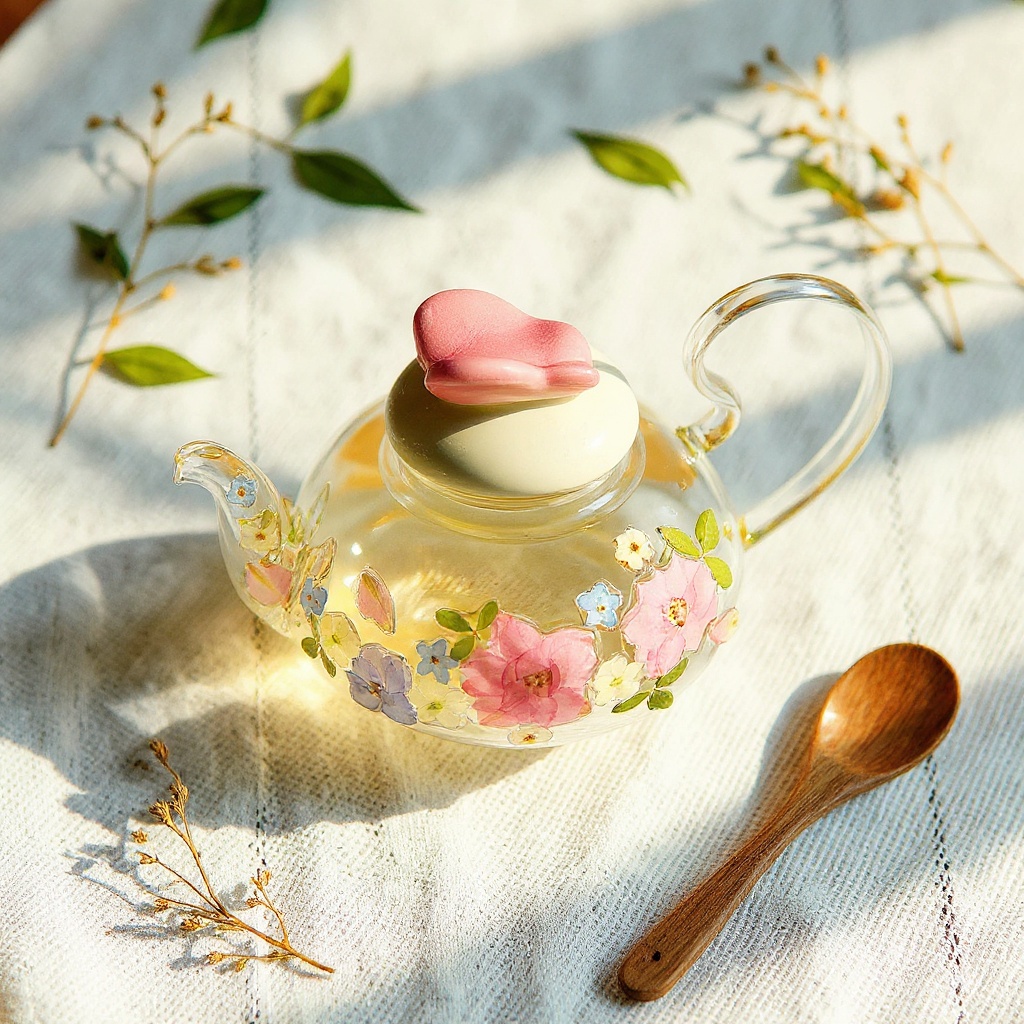
Authentic heat resistant floral glass teapots require multi-day production. Artisans select botanical materials — rose petals, lavender, cornflower, marigold, chamomile — and dry them using controlled low-heat or silica-gel methods to remove moisture while preserving structural form and color. The glass is then shaped and the petals are positioned on the outer surface before a final layer seals them permanently. Each petal is placed by hand. No two teapots are identical.
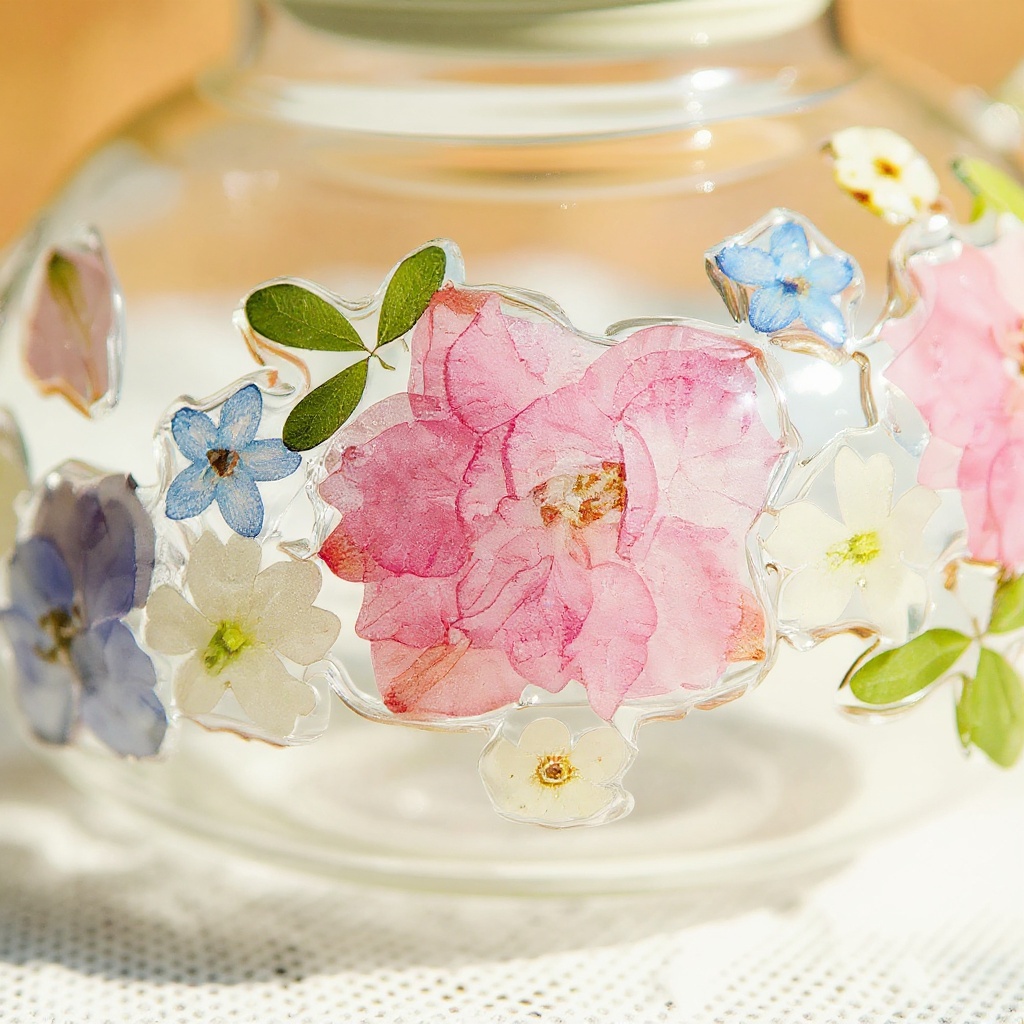
The result is a raised, three-dimensional texture. Not a decal. Not a transfer print. The petals sit proud of the glass surface, creating shadows in raking light and a distinct tactile quality that makes these pieces immediately recognizable to anyone who handles one. This is the defining characteristic of a genuine heat resistant floral glass teapot — and the single most important thing to verify before purchasing.
Color palettes follow the botanical source material:
- Pink tones: rose petals, cherry blossom, clover - Blue and purple tones: lavender, cornflower, delphinium - Yellow and warm tones: marigold, chamomile, calendula
Each botanical presents different preservation challenges. Lavender holds color well. Cherry blossom petals are more delicate and prone to bruising during placement. Marigold retains its golden tone reliably. A knowledgeable seller can tell you which botanicals are in their teapots and why.
Honestly, not every "artisan" floral teapot is what it claims. Some sellers photograph printed glassware in soft light and describe it as handmade. If you cannot feel the petal texture through a photo, request a close-up video showing the surface. Raised botanicals cast visible shadows. Flat prints do not.
Safety Considerations for Stovetop and Daily Use
Most heat resistant floral glass teapots can be used on gas stovetops with a heat diffuser to distribute flame evenly. Avoid direct contact with electric coil burners — localized high heat concentrates stress at the coil contact points in ways that diffused flame does not. Induction cooktops are not compatible with glass unless the teapot includes a specifically designed induction base, which most botanical glass teapots do not.
Pre-warming is worthwhile. A simple process:
1. Fill the teapot with lukewarm tap water (around 100–110°F) 2. Let it sit for 60–90 seconds 3. Pour out the lukewarm water 4. Add your hot water for brewing
This gradual temperature transition reduces the thermal differential the glass experiences at the moment of contact with hot water. No dramatic claims about exact percentages — the physics of lower temperature differential producing less thermal stress is well-established material science. The step costs you 90 seconds. Skip it at your own risk.
Always grip the handle. The botanical sections of the outer wall may feel warmer or cooler than adjacent plain glass areas because the embedded material has slightly different thermal conductivity than pure glass. This can make touch-based heat judgment unreliable. Handle only. Always.
Sizing Guide: Finding Your Perfect Capacity
Capacity determines not just serving size but brewing quality for many tea types. Small teapots cool faster — useful for white and green teas that benefit from lower brewing temperatures but problematic for robust black teas. Larger teapots maintain heat longer but risk over-extracting delicate leaves if steeping time isn't managed.
| Capacity | Cups Served | Best Tea Types | Notes |
|---|---|---|---|
| Under 300ml | 1–2 | White tea, single-steep greens | Cools quickly; ideal for individual ceremony |
| 350–500ml | 2–3 | Most loose-leaf varieties | Sweet spot for daily use |
| 500–750ml | 3–4 | Black tea, herbal blends | Better heat retention |
| 750ml+ | 4–6 | Entertaining, robust blends | Requires careful steeping time management |
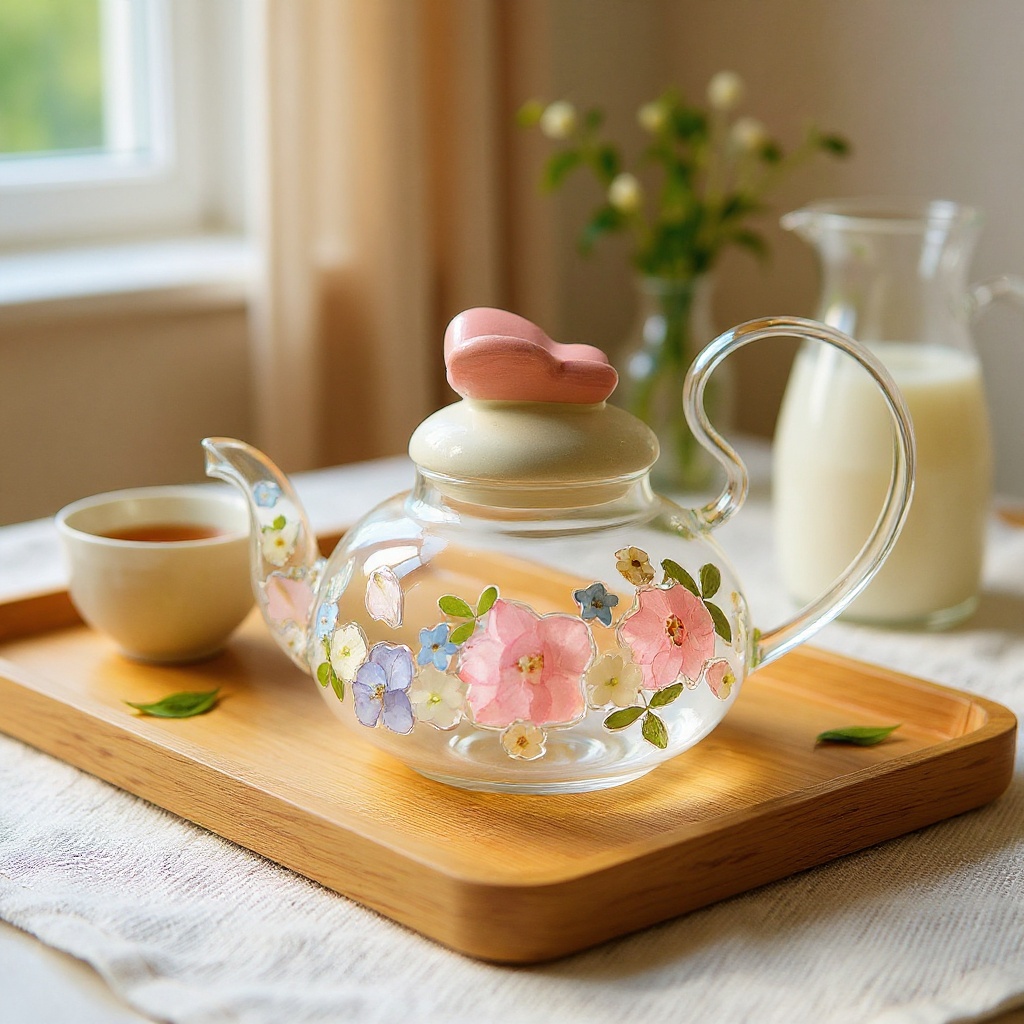
Our Handmade Pressed Flower Glass Teapot 400ml sits in the 350–500ml range — two generous cups or three smaller servings. For most home tea drinkers, this is the right size. Not too large to lose heat control. Not so small that a second steep feels obligatory.
Care and Maintenance for Longevity
Cleaning this type of teapot requires a softer approach than standard glassware. The raised botanical elements create small crevices that trap tea residue. Abrasive sponges or steel wool will damage both the petals and the glass surface. They are off the table entirely.
Step-by-step care routine:
1. Rinse with warm water immediately after each use while the teapot is still warm (not hot) 2. Apply a small amount of mild dish soap with a soft cloth or silicone brush 3. Clean the interior with a long-handled soft brush 4. For the exterior botanical surface, use a soft toothbrush with gentle circular strokes 5. For tea staining inside, mix baking soda with warm water to form a loose paste and apply with the soft brush; leave 5 minutes, then rinse 6. Rinse completely with clean water 7. Air dry upside down on a soft cloth — never in a dish rack where the botanicals could contact hard surfaces
Never use bleach-based cleaners. Never run through a dishwasher. Never stack items on top of it in storage. These aren't suggestions.
Storage tip: a padded shelf liner under the teapot prevents sliding and absorbs minor vibrations from kitchen activity that can, over time, stress the glass near botanical embeddings.
Best Tea Varieties for Glass Brewing
Glass teapots reveal the full visual narrative of tea brewing. This isn't decoration — it's information. You can see the color deepen, watch leaves unfurl, and judge steeping completion without guessing.
Tea types ranked by how much they benefit from glass brewing:
1. Blooming teas — designed to be watched; glass is mandatory 2. White tea — pale gold color development is impossible to monitor in opaque vessels 3. Green tea — leaf unfurling and color tell you more than a timer 4. Herbal and floral blends — visual presentation matches the botanical teapot aesthetic 5. Oolong — color transition from pale to amber is meaningful steeping data 6. Black tea — least dependent on visual monitoring, but still benefits from glass
Brewing temperature guide by tea type:
| Tea Type | Target Water Temperature | Steep Time | Notes |
|---|---|---|---|
| White tea | 160–180°F | 2–4 minutes | Never use boiling water |
| Green tea | 170–185°F | 1–3 minutes | Over-extraction turns bitter quickly |
| Oolong | 185–205°F | 2–5 minutes | Varies by oxidation level |
| Black tea | 200–212°F | 3–5 minutes | Full boil acceptable |
| Herbal/tisane | 208–212°F | 5–7 minutes | Most herbals need near-boiling |
| Blooming tea | 195–205°F | Watch until bloomed | Visual cue more reliable than timer |
Floral herbal blends brewed in a heat resistant floral glass teapot create a coherent aesthetic — loose dried botanicals in the water, embedded petals on the glass, and steam rising from the spout. This is the exact styling you see in product photography for a reason. It works.
Investment Value and Gift Considerations
Authentic handcrafted heat resistant floral glass teapots typically fall between $70–$300. Factory-made versions with printed designs cost $20–$60. The price difference reflects real labor time — individual petal placement cannot be automated.
Authenticity markers to verify before purchase:
1. Raised, textured flower surfaces — request a close-up video if buying online 2. Slight variation in petal placement across the surface (hand-work indicator) 3. Confirmed borosilicate glass construction in product specifications 4. Individual packaging with care instructions specific to the botanical materials used 5. Artisan attribution — a studio name, maker mark, or documented origin 6. Price point reflecting actual labor (under $50 almost always indicates printed glass) 7. Seller can identify which botanical species are embedded and why
For gift purposes, the tactile element is the differentiator. People who receive these describe the moment of touching the raised petals for the first time as the detail that makes it memorable. A photograph of a floral teapot is pleasant. The actual object is different. That gap between digital image and physical reality is the entire value proposition of genuine botanical glassware.
Our Handmade Pressed Flower Glass Teapot 400ml includes full care documentation, botanical identification, and individual packaging suited for gifting. Worth examining if you're sourcing authentic work.