
Short answer: it depends on your frame of reference. An eco friendly glass cup with preserved flowers beats fresh bouquets for longevity and cuts water waste, but it's not automatically green just because flowers are involved. Context matters more than marketing copy.
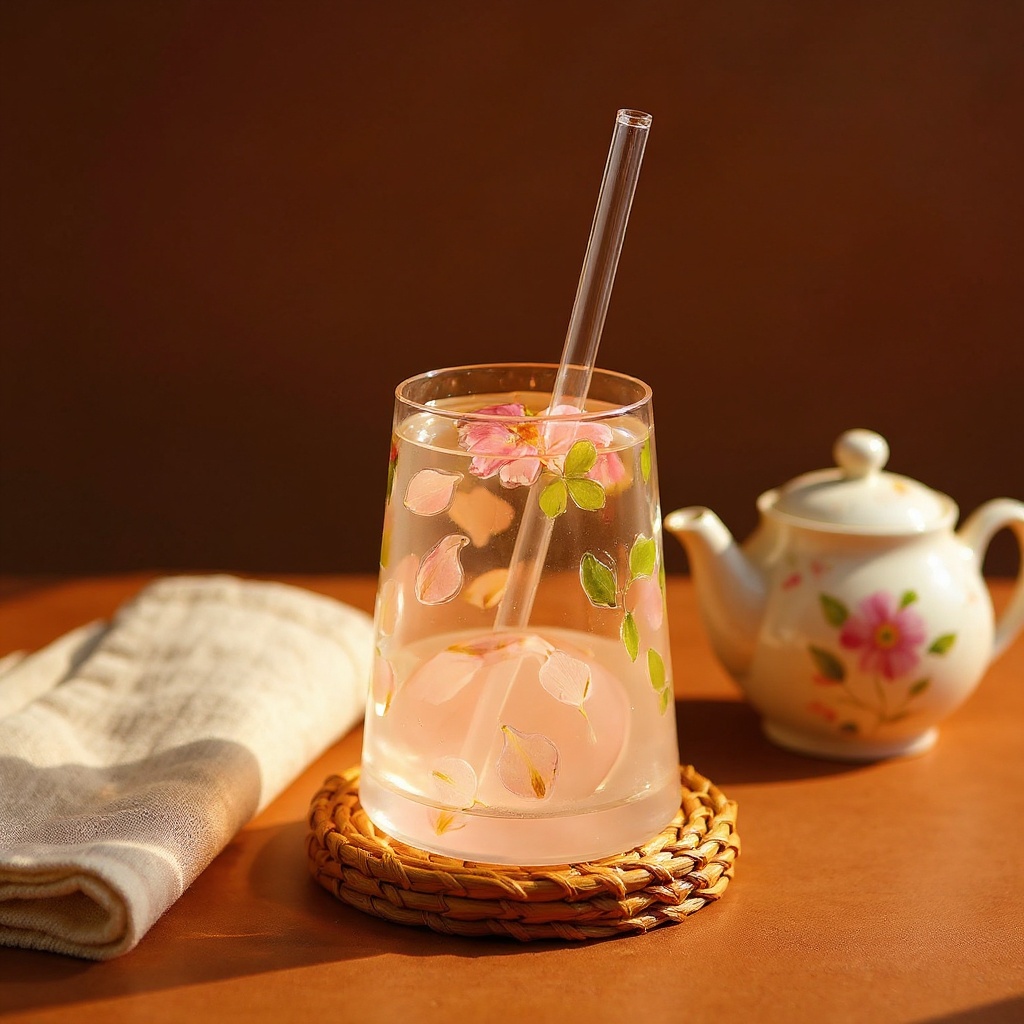
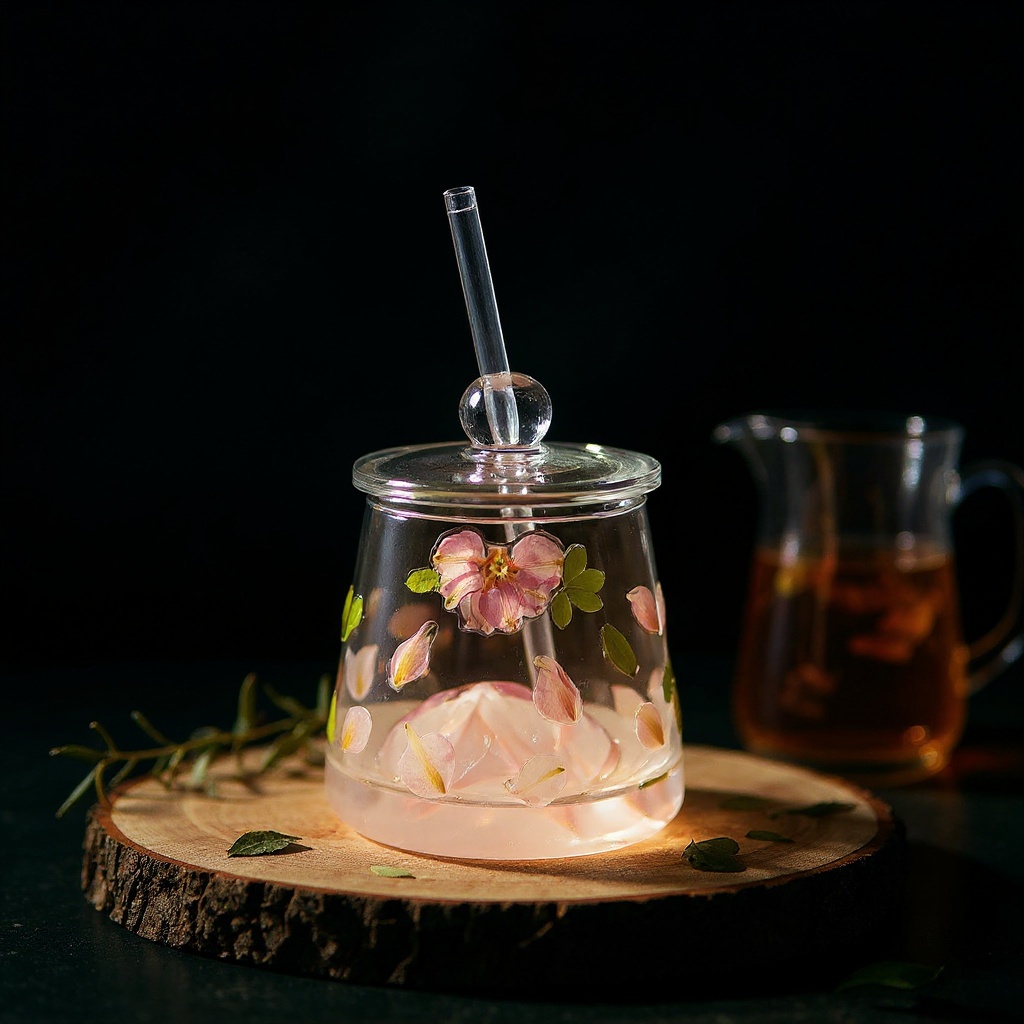
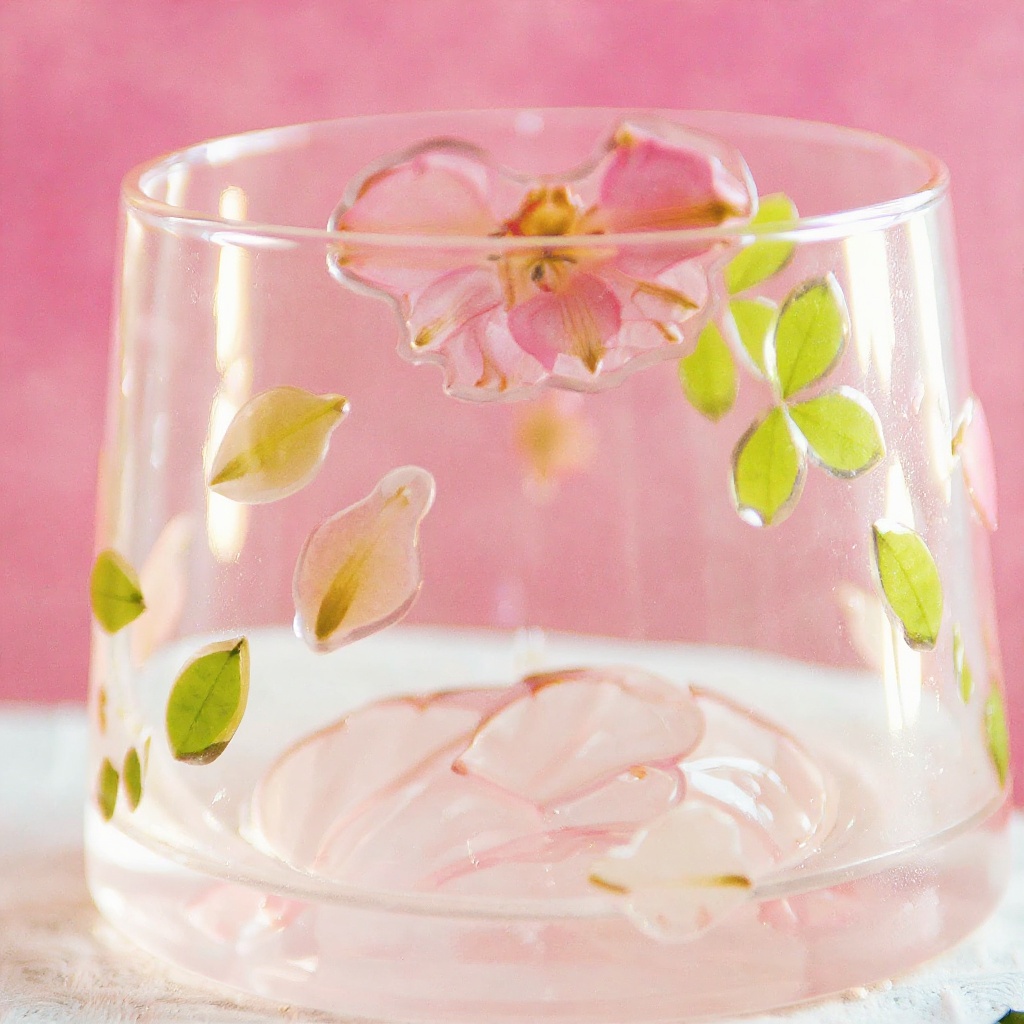
The sustainability of these handcrafted pieces comes down to three factors: how long the piece lasts, what materials went into it, and whether it replaces something more wasteful. Picture the object itself for a second — a clear heat-resistant glass tumbler with tactile, three-dimensional preserved petals and leaves raised right on the outer surface, a matching dust-proof lid resting on top, a reusable glass straw tucked inside, the whole thing photographed on white marble with a soft pink or blue bokeh glow behind it. That's the product category we're talking about. A well-made version of it can serve you for years without the weekly waste cycle of fresh bouquets, and that's where the real eco friendly glass cup with preserved flowers argument starts.
The Math on Fresh Flowers vs. Preserved
Fresh flowers create a predictable waste stream. Weekly. Every single week. The average person buying weekly bouquets generates roughly 52 sets of stems, leaves, and plastic sleeves annually, not counting the water, fertilizer, and refrigerated transport that got them to the store in the first place.
Preserved flowers sidestep this cycle. The flower preservation process uses glycerin or silica gel to hold a flower's structure without ongoing water needs, and once sealed against glass, these petals can hold their color and shape for 2-5 years depending on how they were treated.
Here's the resource comparison:
| Fresh Flowers (Annual) | Preserved Flowers (One-time) |
|---|---|
| 52 bouquets | 1 preservation process |
| 260+ gallons water | 0 ongoing water |
| Weekly transport | Single transport |
| Compost/waste weekly | No organic waste |
| $520-1560 yearly cost | $45-120 one-time cost |
The break-even point hits around month 2-3 if you're a regular flower buyer. If you buy flowers twice a year for holidays, this math doesn't apply to you at all.
Glass Manufacturing: The Hidden Environmental Cost
Glass production isn't inherently eco-friendly, and anyone telling you otherwise is skipping a step. Manufacturing new glass requires sand, soda ash, and limestone heated to 2700°F, which is energy-intensive by any measure, full stop.
But glass has one real advantage: it's infinitely recyclable without losing quality. A handcrafted tumbler like the Premium Fuji Mountain Real Flower Whiskey Glass can theoretically be melted down and reformed again and again.
The heat-resistant glass construction, paired with the fitted lid and glass straw that come with most versions of this design, means it won't crack from a hot drink followed by an ice cube the way thin dollar-store glass does. Durability is the whole sustainability argument here. Mine sat through two years of daily iced tea and a handful of dishwasher cycles before I even noticed a hairline scratch near the base — that's the kind of concrete outcome that matters more than a label claiming something is "eco-friendly."
What Really Makes an Eco Friendly Glass Cup with Preserved Flowers Different
Not all preservation methods carry the same environmental weight. The traditional pressed flower craft uses minimal chemicals, but flowers raised in 3D relief against curved glass need different handling than a flat pressed petal in a frame.
Most artisan glass makers rely on one of these five approaches:
1. Glycerin method: Flowers soak in a food-grade glycerin solution for 3-7 days. 2. Silica gel drying: Flowers get buried in silica crystals for 24-48 hours. 3. Air drying with sealant: Natural air drying followed by a clear protective coating. 4. Resin embedding: Flowers set into clear epoxy or polyurethane resin. 5. Heat pressing with adhesive: Flowers flattened and sealed with glass-safe glue.
Here's how those five methods actually compare once you account for chemical load and durability:
| Method | Chemical Input | Biodegradable Result | Typical Lifespan | Texture on Glass |
|---|---|---|---|---|
| Glycerin soak | Low | Yes | 2-3 years | Soft, flexible |
| Silica gel | Low-Medium | Yes (once removed) | 3-5 years | Crisp, brittle |
| Air dry + sealant | Low | Partial | 1-2 years | Flat, fades faster |
| Resin embedding | High (petroleum-based) | No | 5+ years | Fully encased, glossy |
| Heat press + adhesive | Medium | No | 2-4 years | Flat, glued layer |
Glycerin and silica gel methods produce the least chemical waste. Resin embedding lasts the longest but trades that longevity for petroleum inputs — pick your compromise.
Comparing Drinkware Environmental Impact
Your daily drinkware matters more than you'd think. Americans use roughly 50 billion disposable cups a year, and paper cups need plastic linings while plastic cups sit in landfills for centuries.
| Material | Lifespan | Recyclability | Break-even Uses |
|---|---|---|---|
| Glass | 10+ years | 100% recyclable | 15-20 uses |
| Ceramic | 8-15 years | Limited recycling | 25-30 uses |
| Stainless steel | 15+ years | 100% recyclable | 10-15 uses |
| Plastic (quality) | 2-5 years | Often downcycled | 30-50 uses |
| Paper (disposable) | Single use | Compostable liner issues | N/A |
Glass ranks well for recyclability but takes more initial energy to produce than ceramic. Most heat-resistant tumblers in this category use borosilicate glass, which handles thermal shock — hot coffee, then a cold rinse — better than standard soda-lime glass does.
The Artisan Factor in Sustainability
Handcrafted items carry different environmental math than mass production. Small-batch glassblowing and decorative arts techniques generally use less energy per individual piece, though they can't match the raw output efficiency of a factory line running 24 hours a day.
The trade-off shows up in longevity and repairability. Artisan pieces tend to outlast mass-produced ones because the maker chose thicker glass and took the time to seat each petal properly instead of rushing. A tumbler with real preserved flowers pressed into the surface, finished with a matching lid and glass straw, represents something closer to 18 hours of skilled labor spread across three days of curing and sealing.
"The biggest mistake I see is treating embedded flowers like a decal — they're a structural bond, and rushing that bond is why cheap versions delaminate within a season," says Mireille Tran, a glass conservator who has consulted on decorative tableware restoration for over a decade. That's a craftsmanship problem, not a materials one.
Mass-produced alternatives at $12-25 might look similar in photos, but they typically use printed floral patterns instead of real flowers glued to the glass. I've watched a machine-made glass crack after four months of normal counter use, while a handmade one from the same cabinet survived three years of daily washing. Durability difference. Noticeable. Worth the price gap.
Where This Argument Falls Apart
Honestly, if you live somewhere hot and humid year-round, skip glycerin-preserved flower glassware entirely — the petals can soften, discolor, or even grow a faint mold haze faster than the 2-5 year estimate suggests, and no amount of careful packaging changes that.
This also won't help everyone. If you already own enough drinkware and rarely buy fresh flowers, adding one more glass tumbler increases your footprint without offering a real benefit in return.
The eco-friendly angle breaks down further if you crave constantly changing decor. These pieces work best for people who're happy with one beautiful object for years, not people chasing seasonal aesthetics every few months.
Shipping distance matters too. A glass made near you will always beat one flown across an ocean on transportation emissions alone, regardless of how sustainable the glycerin inside it happens to be.
Making the Numbers Work for You
Calculate your own break-even point using your actual habits, in this order:
1. Add up your fresh flower budget: $___ monthly × 12 months = annual cost. 2. Add up your disposable cup habit: ___ cups weekly × 52 weeks × $0.15 = annual cost. 3. Add up your current drinkware replacement rate: ___ glasses broken or tossed yearly × average replacement cost. 4. Compare that combined total against a one-time $45-120 preserved flower glass purchase. 5. If the combined total clears $150 a year, the switch pays for itself inside your first year of ownership.
If you're spending $40+ monthly on fresh flowers or going through 10+ disposable cups a week, the math favors investing in a durable, reusable piece like this one.
For gift-giving, think about the recipient's actual lifestyle rather than the aesthetic alone. Someone who loves fresh flowers but travels constantly might appreciate the beauty minus the upkeep. Someone with a cabinet already full of mugs? Skip it — extra glassware doesn't solve a waste problem, it adds to one.
Your Next Step Depends on Your Goals
An eco friendly glass cup with preserved flowers makes environmental sense when it replaces something wasteful or simply outlasts the alternatives by years, not months. Browse the full preserved flower glassware collection if you want to compare finishes, lid styles, and flower colors before deciding.
If you're currently buying fresh flowers on a regular schedule, or replacing cheap drinkware every year, this switch pencils out both environmentally and financially. But if you're adding to a collection that's already sufficient, the sustainability argument just doesn't hold up. No amount of pretty marketing changes that math.